It is estimated that by 2050 the demand for passenger and freight mobility will double in Latin America and the Caribbean, a region that is home to more than 662 million people. And to anticipate this scenario, last week authorities from the transport who agreed to the creation of a regional network. This new network will be co-chaired by the Inter-American Development Bank and the International Transport Forum (ITFfor its acronym in English) of the OECD.
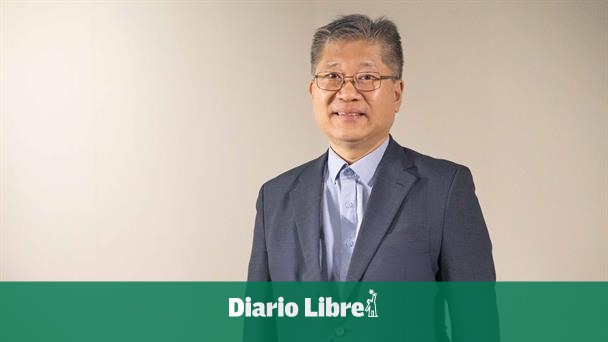
Free Diary spoke with Young Tae Kim, general secretary of the ITFwho provides a broad vision on the subject.
—What is the International Transport Forum and what is its role within the institutional framework of the Organization for Economic Cooperation and Development (OECD)?
He ITF is a intergovernmental organization which brings together 69 countries and acts as a global platform policy dialogue transport. We are the only global organization mandated to work on all modes of transport: from the transport maritime and aviation to railways, transport road and active mobility.
He ITF connect to governmentscompanies and civil society to exchange experiences and build concrete solutions that make mobility more sustainable, safe and efficient. At the same time, we are a think tank, developing evidence-based analyzes and recommendations.
—What are the main areas of work of the ITF? How does it contribute to guiding public transportation policies at a global level?
He ITF works on all key dimensions of the transport: ensuring that people have access to mobility, that systems are secure and resilient, that innovation and technology are integrated effectively, and that networks of transport are well connected, both within each country and between regions. We analyze which solutions work in different contexts, which don’t and why, and use that knowledge to generate concrete recommendations that governments can apply.
For example, the Council of Ministers of Transport adopted two Public Policy Recommendations this May 2025: one about Road Safetyand another about Artificial intelligence applied by the Authorities of Transport. These two recommendations were promoted by Chile as the then Presidency of the ITFand have good practices adopted by different countries, and serve as a standard for the Dominican Republic shape your policies at the national level.
By 2026, under the Presidency of the ITF of Azerbaijanthey are working on two Public Policy Recommendations: one envelope transport urban, and another about digitization for international runners.
—What specific benefits does being part of said organization bring to the Dominican Republic?
The Dominican Republic is he most recent member of the organization, having been admitted to May 2024 by the other countries. For the Dominican Republicbe a member of the ITF It means being part of a global community of learning and cooperation. It not only guarantees direct access to international good practices, but also offers the opportunity to participate in projects that generate improvements in mobility, safety and efficiency of the transport. Likewise, the Minister is invited to the World Summit of Ministers of Transportwhich is celebrated every year in Germany.
In addition to strengthening the institutional capacitiesmembership in the ITF provides international visibility to the country’s progress, positioning it as an active actor in the global conversation about transport and connectivity.
—What have been your expectations regarding the celebration of this regional dialogue?
I hope this regional dialogue serve as a catalyst to strengthen the collaboration among the countries of the region. By bringing all of these together ministers and authorities, we seek to listen to their experiences, priorities and lessons, ensure that their voices contribute fully to the regional agenda and project the role of Latin America and the Caribbean in global scenarios such as the next Annual Summit of Ministers of Transport of the ITFwhich will be held in Leipzig, Germany, from May 6 to 8, 2026.
My expectation has been that each minister leaves the event with new ideas and renewed ambitions to improve systems transport in their own country, but also with the certainty that there is a regional network with which they can learn and advance together.
—How do you perceive the rapprochement of the Dominican Republic currently with the OECD? How can the ITF serve as a bridge to strengthen this relationship?
Approach the OECD reflects an interest in aligning their public policies with international standards and a strategic decision to strengthen its institutions. He ITF is part of this family of organizations, and improve the policies of transport positively impacts other sectors such as international trade, environmental policieseconomic policies, among others, which can bring the country closer to the other areas of the OECD in terms of their practices and way of working, including evidence-based policy-making methods.
—What opportunities and challenges are identified for the development of the transportation sector both in our country and in the region?
The challenges of the transport in the region are important: for example, countries must maintain and accelerate their efforts to better meet the changing needs of transport of people and their economies. The region’s population is expected to grow from 663 million people to more than 730 million by 2050. Consequently, the transportation demand will also grow, and transportation demand of passengers and freight will almost double by 2050. The growth of populations and economies will double the transportation demand until 2050. This creates pressure on existing infrastructure and on the capacity of transportation systems. transport.
Added to that, the increasing levels of uncertainty have exposed gaps in policy design and implementation, as well as the vulnerabilities of the systems transport current events: from geopolitical tensions, cyber attacks to disruptions massive caused by weather events extremes and the COVID-19 pandemic. It seems likely that the disruptions increase rather than decrease in the coming years, exceeding the capacity of the governments to respond through conventional policy cycles and approaches.
talking about resiliencethis becomes increasingly crucial in the face of growing and cumulative interruptions, which may arise from geopolitical events, cyber attackspandemics or extreme weather events. These crises tend to complicate each other and amplify their impacts on the connectivity and logistics chains. A recent example is the drought that affected the Panama Canal, which showed how environmental phenomena can disrupt networks transport vital at a regional and global level.
Prioritize the resilience of infrastructure not only reduces risks and minimizes interruptions, but also generates opportunities: more reliable systems facilitate the mobility of people and goods, support the economic competitivenessoptimize public investment and promote a transport more efficient and safer for everyone.
Beyond infrastructure and vehicles, transportation is what connects people to opportunities, education, employment and well-being. It is the circulatory system of our societies, and its proper functioning has a direct impact on everyone’s quality of life. Therefore, the role of each actor is fundamental. The private sector brings innovation, new technologies and practical solutions; The public sector must ensure the necessary regulation, planning and security so that these solutions can be deployed effectively and equitably. Across the world, we have also seen the value of collaboration: countries sharing experiences, learning from good practices and facing common challenges as a community. The ITF is honored to accompany the Dominican Republic and the other countries of Latin America and the Caribbean on this path, offering support, analysis and spaces for dialogue that help transform ideas into transportation systems that truly improve people’s lives.