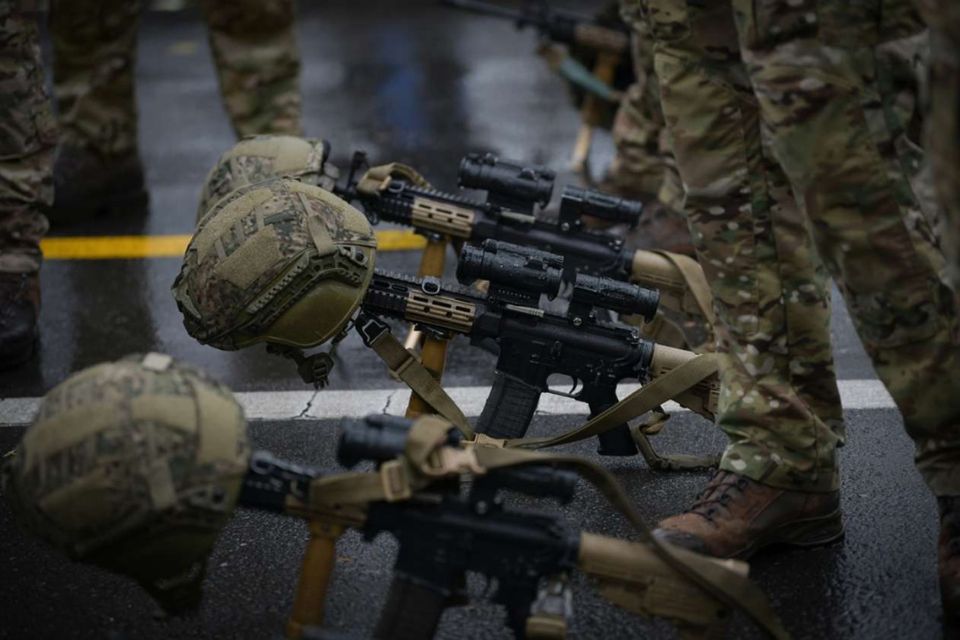
Global military expenditure reached a record figure in 2024, with a total equivalent to $ 334 for each of the more than 8,000 million inhabitants of the planet, reveals a new UN report
After a decade of military development, the world military spending reached a record of 2.7 billion dollars in 2024, an increase of more than 9% compared to 2023, reveals the new UN report “the security we need: to rebuild military spending for a sustainable and peaceful future”, published on September 9.
The bulky figure is equivalent to an expense of $ 334 for each person on Earththe study points out, and warns that, if the current trend continues, that amount will reach a total of 6.6 billion dollars in 2035.
In the presentation of the report, the UN Secretary General acknowledged that governments have legitimate responsibilities in terms of security and must protect the civilian population, safeguard critical infrastructure and address immediate threats.
However, lasting security cannot be achieved solely with military spending, added António Guterres.
According to the publication, Military expenditure of 2024 is thirteen times greater than the official amount of development aid of the richest countries in the world to the most backward nations, and exceeds 750 times the UN ordinary budget.
The reasons for the increase
Amid the growing tensions and global and regional conflicts, military spending has increased as an indication of governments’ priorities to address global and regional security concerns through military force and deterrence.
When some countries are involved in conflicts, neighboring nations can increase military spending to mitigate what the report describes as “external risks of conflict propagation.”
Military spending has also increased in its proportion to the world economy. Between 2022 and 2024, it went from 2.2 % to 2.5 % of the global gross domestic product (GDP). More than 100 countries increased their military expenditure by 2024, and the 10 that spent the most represented 73 % of world expenditure.
Invest in people
Among the most outstanding points, the report asserts that today’s high military expenditure diverts the essential investments in health, education, employment creation, protection of people against the effects of climate change and expansion of opportunities for women and young people.
“Investing in people is investing in the first line of defense against violence in any society,” said António Guterres in this regard.
The report maintains that the budgets are options and can be readjusted, changing the assignments to each sector. That is, it notes, a better world is attainable.
Less than 4% of the budget would eradicate hunger
The interim administrator of the UN Development Program (UNDP), Haoliang Xu, argues that when people’s life improves in terms of access to services and opportunities, dignity and self -determination, societies and the world will be more peaceful.
He adds that with 93,000 million dollars, less than 4% of the 2.7 billion dollars assigned to military expenditure, hunger could be eradicated by 2030.
He also said that with just over 10% (285,000 million dollars) all children would be vaccinated, and that with five billion dollars, the world could finance twelve years of quality education for all children in low and low -medium income countries.
More diplomacy
The study points out the urgency of giving priority to diplomacy and guaranteeing transparency and accountability in defense budgets, while promoting development to development.
“We need a new vision of security, focused on the human being and rooted in the Charter of the United Nations. A vision that protects people, not only to the borders; and that prioritizes institutions, equity and planetary sustainability,” emphasized the high UN representative for disarmament issues, Izumi Nakamitsu, the other presenter of the report.
The Secretary General considered that evidence is clear: “an excessive military expense does not guarantee peace.”
On the contrary, he often abounded the Socava, feeds the arms race, deepens distrust and diverts resources from world stability foundations.
“A safer world begins by investing at least both in the fight against poverty and wars,” Guterres concluded.
Historical increase for the next few years
This year, at the NATO Summit held in the month of June, the 32 Member States of the Atlantic Alliance agreed to increase their defense expenditure up to 5% of their respective national GDP from here to 2035. This after the demand of the president of the United States, Donald Trump.
The 5% increase in GDP in Milirar spending, considered ambitious and historical, will force the European members of the Alliance and Canada to spend much more on their safety and multiply capacities, manufacturing cadences and armament purchases. The goal until now was 2%, a threshold achieved last year by 22 of the member countries.
The 5% objective, by the year 2035, is the sum of two components: the first is a minimum of 3.5% of military expenditure in the strict sense (salaries, pensions, operations, acquisition of equipment, maintenance tasks). Each country must inform every year of how it is doing to reach that level.
The second – which will be added to 3.5% – is 1.5% investment in broader areas such as infrastructure, innovation and border protection, both civil and military.
With information from the UN/IPS/RFI
*Journalism in Venezuela is exercised in a hostile environment for the press with dozens of legal instruments arranged for the punishment of the word, especially the laws “against hatred”, “against fascism” and “against blockade.” This content was written taking into consideration the threats and limits that, consequently, have been imposed on the dissemination of information from within the country.
Post views: 219