In the complex board of the Peruvian economy and investment, there is a tool that has achieved something that many considered impossible: aligning the interests of the fiscal fund with the agility of the private sector. It is about Works for Taxes (OxI), a mechanism that since 2009 allows private companies to advance the payment of their income tax to finance and execute priority public investment projects.
At the beginning of February 2026, the Private Investment Promotion Agency (Proinversión) reported that the OxI mechanism closed the first month of the year with marked dynamism in the awarding of projects: 42 interventions for a total amount of S/681 million, marking a growing participation of private companies in the development of public infrastructure. Making a quick comparison, the amount awarded in the first month of this year exceeds by more than seven times the result registered in the same month of 2025, when eight interventions were awarded for a total of S/ 94 million. Unlike the traditional scheme, here there is no cash that passes through municipal hands directly for construction, but rather direct management by the executing company that guarantees that each sun is transformed into brick, cement or technology.
Communities transformed
The impact of OxI is not measured in macroeconomic reports, but in the quality of life of the regions. Emblematic cases show that the arrival of schools and hospitals under this modality changes the destiny of thousands. The results are palpable, especially in two aspects:
- Education: Schools that were previously precarious structures now have robotics laboratories and high-speed connectivity. One of OxI’s greatest successes has been the construction of High Performance Colleges (COAR), thanks to companies in the mining and banking sector that have led the construction of these headquarters in regions such as Áncash, Ica and Piura. Previously, the most outstanding students from the provinces had to migrate to Lima to access competitive education. Today, they have residences, biotechnology laboratories and smart classrooms in their own region. A relevant piece of information indicates that the educational infrastructure gap could be reduced up to 20% faster under OxI than through traditional public works, thanks to the fact that the technological equipment is delivered installed and operational from day one.
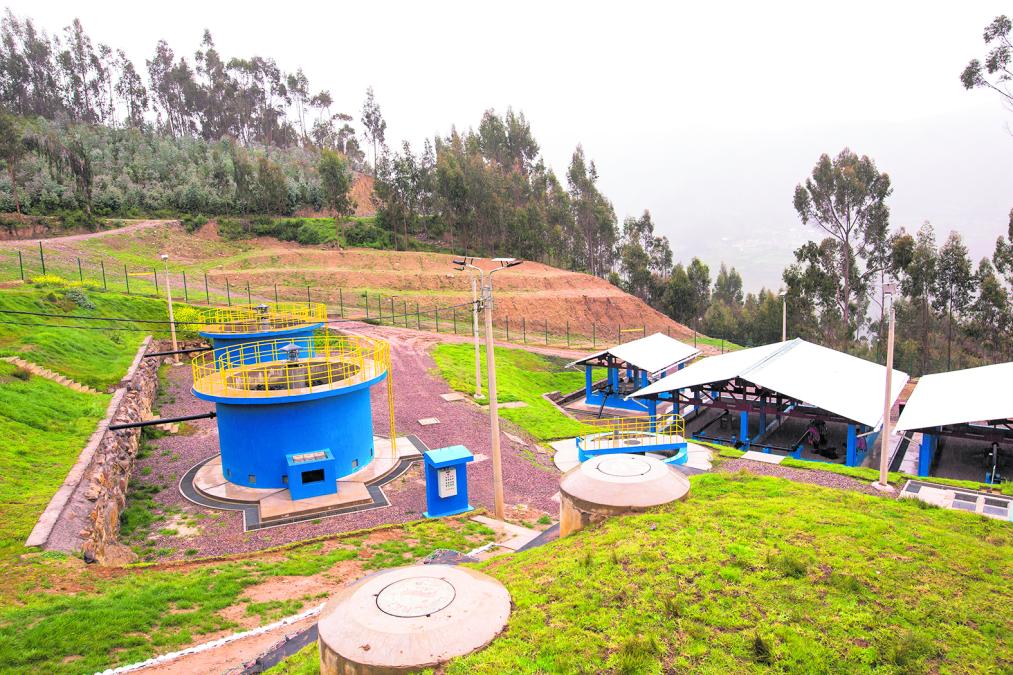
- Health and Sanitation: The implementation of drinking water treatment plants has drastically reduced anemia and infectious diseases in rural communities, where the central State took decades to arrive. The case of the Huari Hospital (Áncash) or the San Juan de Yanac Health Center (Ica) are references. Under the traditional scheme, these projects used to be “stuck” due to deficiencies in the technical file. As they are executed by private companies with international standards, not only the urban area is guaranteed, but also the cold chain for vaccines and telemedicine systems. One of the most important results is that the maternal mortality rate has been reduced in areas of mining influence thanks to the fact that emergency care is now 20 minutes away and not a 6-hour trip away. Regarding sanitation, in districts such as Yarabamba (Arequipa) or areas of Moquegua, the OxI mechanism has made it possible to finance drinking water treatment plants (PTAP) that the municipal budget could not cover at once. Access to safe water 24 hours a day has reduced childhood gastrointestinal diseases by 15% in these communities.
Against paralyzed works
The great cancer of public investment in Peru has historically been abandoned work. However, the OxI model presents an enviable continuity rate.
Private efficiency in hiring and oversight eliminates incentives for endless addendums. Since the company itself is interested in liquidating its investment certificate, the deadlines are strictly met, without bureaucracy involved.
This operational agility ensures that the works are delivered in a timely manner, avoiding the social cost of having half-built white elephants.
According to official information updated as of the first month of 2026, the projection for the end of the year amounts to S/3,099 million in awards. If finalized, the figures would consolidate the OxI mechanism as one of the main modes of execution of public investment with business participation, indicated a couple of weeks ago the deputy director of the Decentralized Investments Directorate of Proinversión, Dolly Lozano.
OxI’s historic investment, since its implementation in 2009, accumulates 1,130 interventions awarded for S/17,544 million, with a sustained portfolio of projects in key sectors such as education, health, institutional management and urban services.
Regional development ecosystem
Investment through OxI generates an immediate multiplier effect, positively impacting local employment, the supply chain and management capacity. The unskilled labor comes directly from the area of influence, injecting capital into local families. Small businesses such as hardware stores, food services and regional logistics are energized. On the other hand, local governments learn from the quality standards of the private sector, raising the bar for public management.
For 2026, the debate about the relevance of OxI focuses on how far it can go. The approach prioritizes the maintenance of the work, meaning that it is no longer just about building, but about ensuring that the infrastructure is sustainable for decades. Technological innovation is another important point and refers to the financing of innovation centers and digitization of citizen services or Smart Cities. In terms of citizen security, the implementation of video surveillance centers with artificial intelligence would be an interesting option given the poor response from the State.
In this context, OxI and Public-Private Partnerships (PPP) are no longer isolated efforts, but rather act as a united front. While PPPs are in charge of national-scale megaprojects – such as ports or subways –, OxI acts as the solution to the urgent needs of the provinces.
The synergy between both models is allowing Peru to maintain its competitiveness compared to other markets in the region, demonstrating that when the State trusts in private execution, the citizen is the one who always wins.
RECOMMENDED VIDEO