He world changes at an unprecedented pace and work is one of the areas where this transformation is manifested with greatest intensity and repercussions in daily life.
“In 2026companies will focus more than ever on their employees as their main asset and as a strategic investment, while the productivityprofitability and welfare of human teams”, they anticipate experts of the labor market.
Within this trend, the hybrid model —with a few days of face-to-face work and others remotely—and flexible in terms of the place of performance, according to IWG, a global platform specialized in work spaces.
“Continuous improvements in technologyincluding the AIand new training and development approaches will be key drivers of productivityhe commitment and employee loyalty,” he says. Mark Dixonfounder and CEO of IWG.
This evolution “will allow companies to create a workforce and an environment prepared for the future, which drive business growth,” he adds.
According to Dixon, the change in the geography of work, whose center of gravity will move towards the local communities and new formats of work spaces.
The advances in cloud technologies, data analysis and video conference —essential for hybrid work effective – mean that employees no longer need to travel long distances daily.
In the case of IWG, the growing demand for more localized work has led to the majority of new centers being located in local communitiessuburbs and rural areas, which reduces long trips.
“The productivityhe commitmentas well as the attraction and retention of talent, increasingly depend on how, when and with whom you collaborate, and not so much on the physical place where you work,” they explain from IWG.
The AInew co-worker
The AI will be routinely integrated into hybrid equipment as a “co-pilot” that automates tasks administrative tasks, optimizes agendas and facilitates access to knowledge, freeing up time for creativity and decision-making.
This change It is also driven by the intergenerational collaborationsince many employees of the generation Z They help older peers use these tools, which increases the productivity and opens new business opportunities.
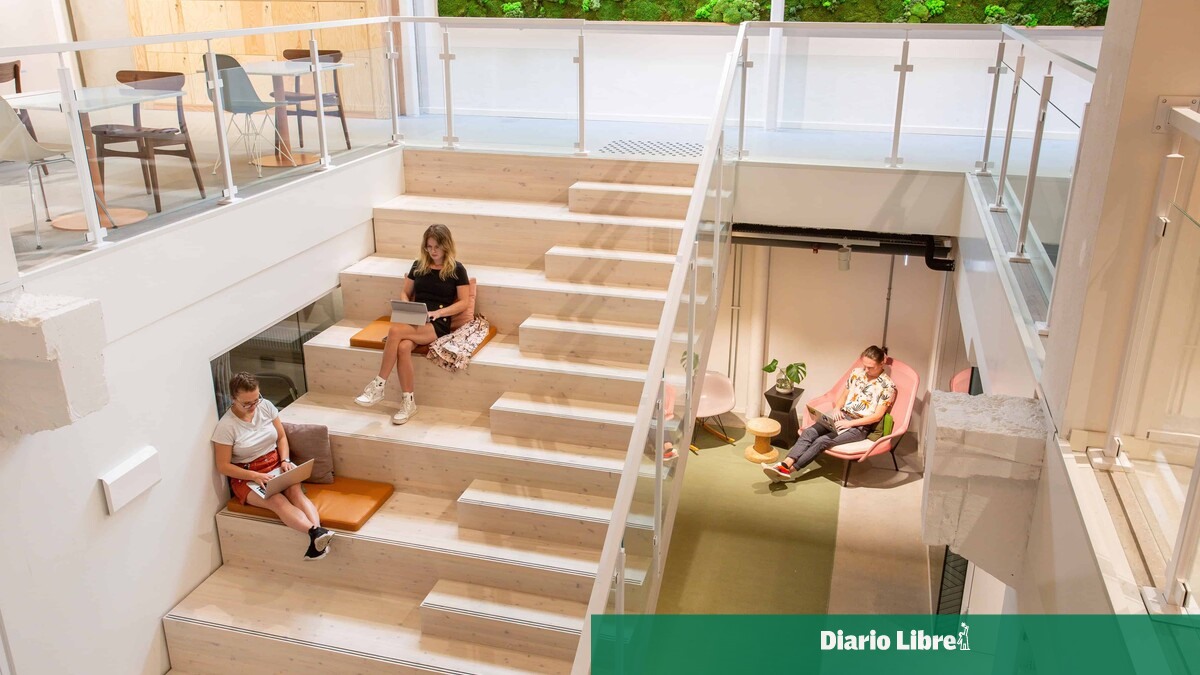
Another trend is for companies to adopt hybrid models further structured and decentralized. Instead of requiring presence at a single location, employees will be able to work from offices close to their residence or from networks of flexible spaces.
These spaces will offer an experience similar to that of a boutique hotelwith concierge services, quality gastronomic proposals and customer-oriented design welfareintegrating work and socialization.
This approach reduces unnecessary travel, improves conciliation and reinforces the commitmentwithout giving up the collaboration in person when necessary.
Specific certifications on the rise
In the near future, career paths will be more defined by skills than by academic titles. Hybrid workers will tend to accumulate microcertifications —credentials focused on specific competencies— rather than relying exclusively on traditional qualifications.
Companies will support this trend with on-demand learning platforms, facilitating more agile and larger talent pools. internal mobility based on transferable skills.
Welfare to stop the “silent creak”
It is expected that in 2026 increase the “quiet cracking” or “silent crunch”, the phenomenon of employees remaining in their jobs but feeling emotionally disconnected, which can lead to exhaustion or resignation.
To deal with it, companies will reinforce safety policies welfare and flexibilityincorporating technologies aimed at mental health, such as devices to measure stress, reminders based on AI and participatory programs.
Managers with specialized experience
Faced with economic uncertainty, more companies will resort to Fractional managerial talent: executives who contribute specialized experience partially or projects.
This model allows access to strategic leadership flexible without assuming the costs of traditional structures, in a context in which many executive directors (CEO) and financial directors (CFO) reduce operating expenses.
I work closer to home
The “15 minute city“, urban model which allows access to essential services in a maximum of 15 minutes on foot or by bicycle, will evolve towards environments designed from the ground up to integrate workhousing and leisure.
He hybrid work will make these ecosystems viable, since professionals will choose to live and work in local environmentswhile companies decentralize their presence and reduce costs associated with travel.
Offices per day
The offices for days will be consolidated as a solution for the hybrid workby offering professional spaces on demand, without long-term commitments.
These alternatives allow us to cover specific needs for concentration either collaborationmaintaining comfort standards and welfare.
The generation Z set priorities
In 2026the generation Z —born from the late 1990s to the early 2010s—will consolidate its influence in the labor market, prioritizing welfaremental health, flexibility time and purpose.
In a context of population aging and talent shortages, understanding their expectations will be key to maintaining business competitivenessconcludes the IWG report.