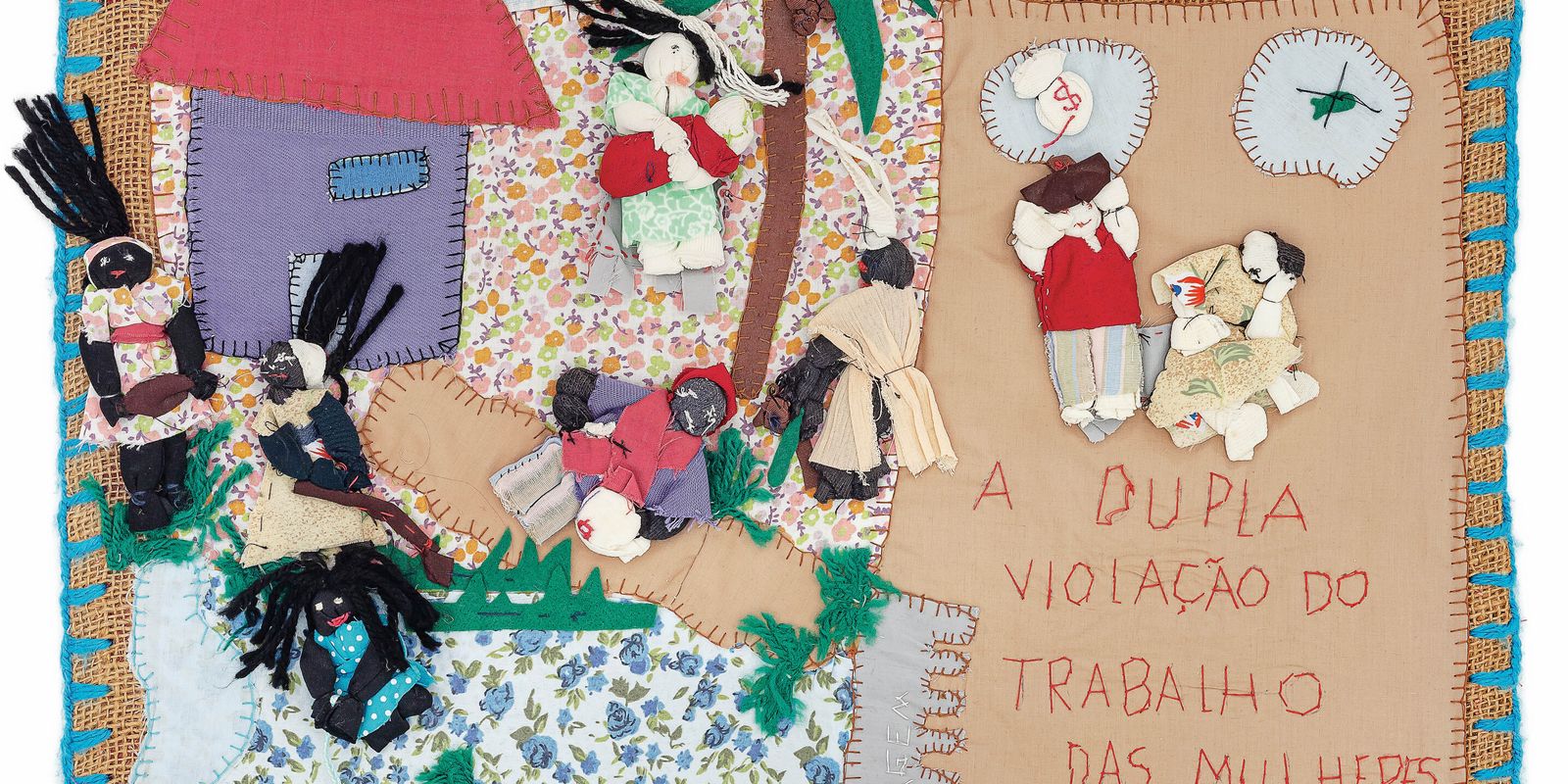
It is collectively that women are weaving, embroidering, sharing stories and denouncing the violations of human and social and environmental rights of which they are victims in Brazil. Gathered in workshops, these women – who are part of the Dam’s affected movement (MAB) – talk about the situations they face and, between flaps, lines and needles, turn their history into memories.
Part of these works produced in workshops has now been gathered and is on display at the São Paulo Art Museum (MASP), which this year works the theme of Ecology. Calling women affected by dams: embroidering rights, the exhibition presents 34 arpillers Produced by these women and that denounce mainly the social and environmental impacts caused by the construction, operation and breaking of dams in the country.
Arpillers It is a textile and politically engaged language that emerged in Chile, explained one of the curators of the show, Isabella Rjeille.
“During the 1970s, this language gained political tones because it was used by women to denounce human rights violations that were occurring during the Dictatorial regime of Augusto Pinochet,” she said in an interview with Agência Brasil.
Arpillera It means Jute, a fiber in which these women embroidered the stories they were witnessing. “Seeing their companions and their children be kidnapped by the military and all this kind of violation, this was a way for them to record these stories in these embroidery, as there was a lot of censorship,” explained the curator.
For her, a arpillera It is, in fact, a textile testimony of the social environment.
“One arpillera It does not end in the object on the wall. It is the whole process of making and the whole process of reading this later. ”
The workshops
The MAB women collective began to use this technique from 2013.
“We went to make a workshop in Argentina to learn this powerful technique and bring it to the movement. That’s how we started working and we already have more than 200 workshops held in all regions of the country,” said Iandria Ferreira, from the MAB National Coordination.
Each piece may take days to make and all are prepared in groups of at least five women, explained Caroline Mota, member of the MAB coordination in São Paulo and the National Secretariat of the Movement. “To the bustle They are embroidered directly on the jute. Sometimes we line the jute with cotton fabric but in principle we have to have the jute, otherwise it will not be a arpillera. In every beginning of the workshop we discussed a theme, either from the region or a theme that we suffer related to the price of light or floods, dams or climate change. We then make a debate with women, in a group of at least five people. We discussed the theme and then continued to make the embroidery, ”said Caroline.
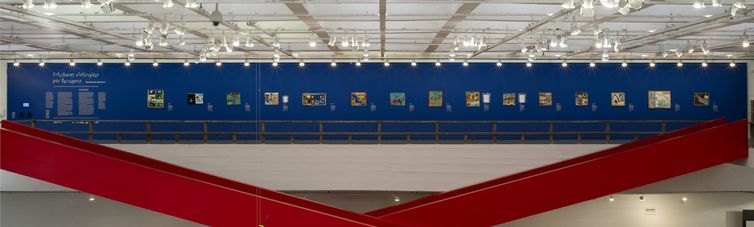
Exhibition on MASP brings works of women who denounce human and social and social rights violations in Brazil – Photo Women hit by Dams/Masp
While in Chile the pieces were produced individually, in MAB they were made collectively. “The tripod of our strategy is the struggle, formation and organization of action. As a social movement, we believe in a collective struggle. arpillers These are the space where this tripod happens, ”said Iandria.
“In these workshops there is a meeting of these women, that is, you create a safe space so that they can share, share and talk about the experience they are having in that situation of being hit. arpillera It’s not just an object, but also a popular education tool, ”said the curator.
During the exhibition, the public can be part of the experience. MAB will promote a workshop arpillers For the public, on April 27, from 10:30 am to 1:30 pm.
Denunciations
In MASP, the pieces on display denounce not only the breaking of the dams of Mariana and Brumadinho, but also labor reform, real estate speculation, food insecurity, sexual violence and even the consequences caused by the Covid-19 pandemic. “The artists [que confeccionaram essas peças] They are all hit by dams. All of them were hit by the energy model and this capitalist and patriarchal system. This is the beauty and denunciation we bring through arpillers”Said Yandria.
One of the pieces, for example, deals with deforestation. “As they deforest and destroy, we planted life,” women embroidered in this work.
“Nowadays, the idea of achieving and achieved incorporates many other issues, not only by dams, hydroelectric or mining, but also those affected by climate change,” said the curator. “Many of these arpillers They will talk about the loss of bond with the community, for example, because when a dam arrives, people are displaced. You are expelled from that region and go to another house that was built to receive these people. They are all impersonal houses, without any intervention of who will live there. And often these houses are only in the name of man. ”
Each arpillera It comes accompanied by a letter, written by these women. “ arpillera There is always a letter that takes the message of complaint to the whole country and even out of it, ”explained Iandria.
On the show, the public will have access to the selection of six handwritten letters. “All pieces have a letter that is collectively produced by women who have done it. Not all are handwritten: some are typed, but all have a letter that is stored in a embroidered pocket behind the piece,” said the curator.
More information can be found in the website show. The museum has free admission on Tuesdays and also on Friday nights, from 18h. Schedule for entry into the museum is mandatory in the website MASP.