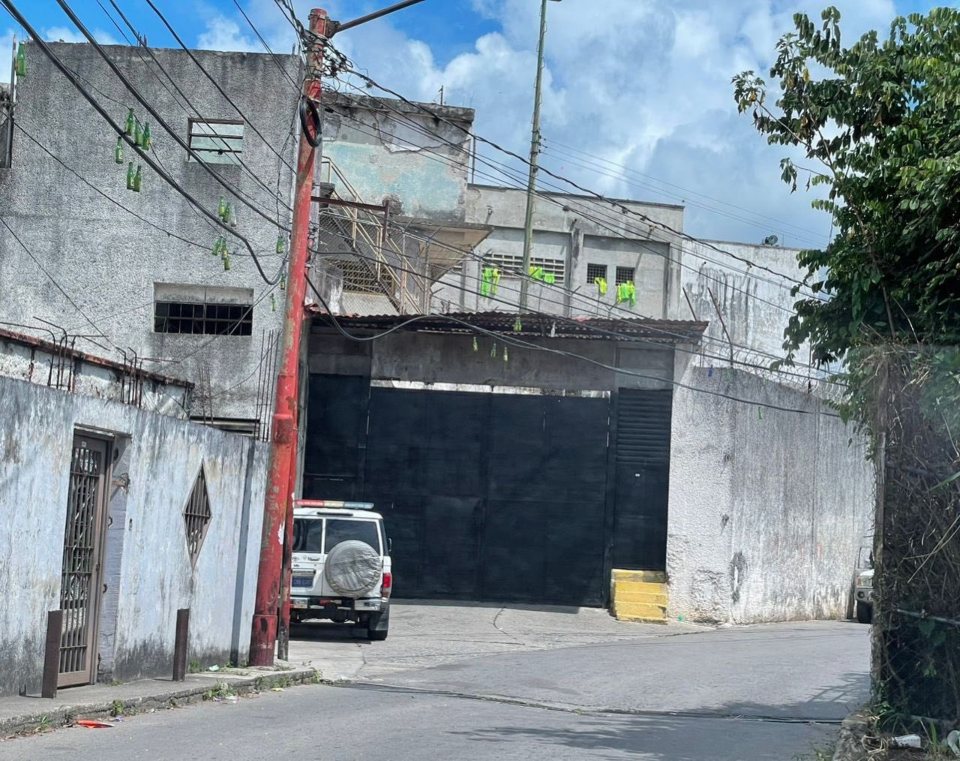
The Committee for the Freedom of Political Prisoners recalled that several women detained for political reasons remain held in La Crisálida, and are “subjected to conditions that constitute serious violations of their human rights.”
The Committee for the Freedom of Political Prisoners denounced that the women detained in the La Crisálida detention center, located in Los Teques (Miranda state), are in a situation of isolation and have been denied entry of basic supplies such as food.
«Reception of parcels is being denied, which has left inmates without sufficient access to food. They do not have mandatory family visits. “They are in a situation of isolation, with activities in the yard suspended, which significantly aggravates their confinement conditions,” warned the Committee on social networks.
The organization, which brings together relatives of political prisoners, reported a day earlier on restrictions on family and legal visits for detainees, in a context of militarization of the country after the capture of Nicolás Maduro by the United States.
The Committee recalled that several women detained for political reasons remain held in La Crisálida, and are “subjected to conditions that constitute serious violations of their human rights,” although a number was not specified.
According to the Penal Forum, there are 106 women imprisoned in the country for political reasons.
*Read also: Relatives of Colombians detained in Venezuela protest again at the border
The organization demanded that the authorities responsible for the prison, as well as the Ministry of Penitentiary Service, immediately cease these practices and political repression. Likewise, they demanded the closure “of all torture centers and facilities used to detain people detained for political reasons, which total at least 90 places throughout the national territory.”
“We reiterate that all people detained for political reasons must be released immediately, fully and unconditionally, and not transferred to new detention centers to perpetuate injustice,” they highlighted.
*Journalism in Venezuela is carried out in a hostile environment for the press, with dozens of legal instruments in place to punish the word, especially the laws “against hate”, “against fascism” and “against the blockade”. This content is being published taking into consideration the threats and limits that have consequently been imposed on the dissemination of information from within the country.
Post Views: 154