Scotiarise, global social impact program and support for the Community of Scotiabank, arrived in Peru in 2024. Since then it has financed high -impact projects in the categories of financial education, employability and environmental impact. The bases of the next project call can be reviewed in the Web page. Only in 2024 more than 200 projects postulated.
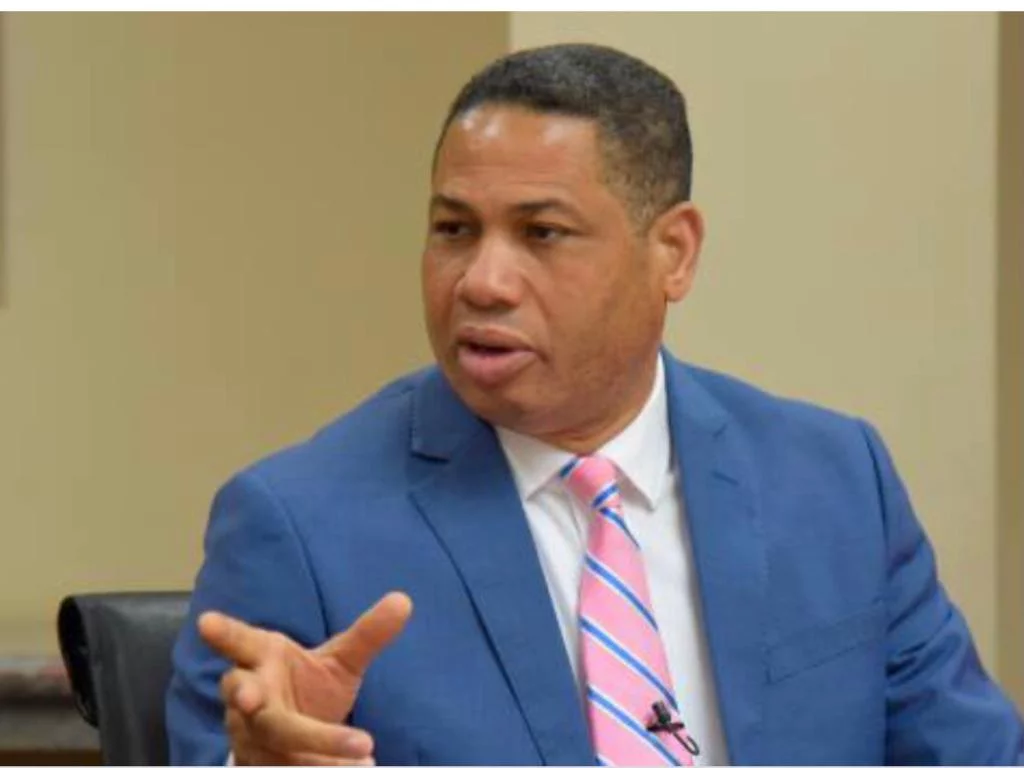
To know this initiative thoroughly, which currently has an active portfolio of eight projects in seven regions of the country, we talked with Giuliana Pacheco, director of Corporate Affairs and Sustainability of Scotiabank Peru.
How does Scotiarise work?
Scotiarise is a competitive fund that allows us to give our social investment to high -impact projects that generate social or environmental change. We open a contest for all non -profit organizations that are already generating a change or that want to generate a change in Peru. We seek that this impact be replicable, sustainable over time and that generates the necessary conditions so that vulnerability groups can have development opportunities.
Could you tell us any?
We seek to have intervention in financial education, employability, climatic action and inclusion. In the projects, we see, for example, that there is an ecosystem of alliances, that the organization is prepared to articulate with the UGEL, with educational institutions, with associations that are representative for the community. Thus, after the intervention we can systematize learning, methodologies, knowledge, skills that remain in the area and that do not depend on a third party. With a positive impact and that becomes that country that we all want.
What difference does it have in Scotiarise against other financial programs?
Scotiarise is not just a donation, it is part of a global initiative that Scotiabank has in all the countries in which it operates. What differentiates us is that beyond delivering an economic contribution, we seek to choose the projects based on the replicability design. We do not want to intervene in an area without knowing it first. It is very important that the ally with whom we work has knowledge of the cause and deep of the area and the group with which it is going to work, as well as the vision of how this initiative will influence public policies so that it really has a multiplier effect, which generates development conditions and that is sustainable over time.
What are the main achievements they have had so far?
Throughout the last four years globally, about S/450 million has been invested in this type of project. In Peru we have already benefited more than 200,000 Peruvian families who have already acquired tools, knowledge and skills to face challenges today and in the future, which makes us very proud. There are projects that we have, for example, reading comprehension in Loreto where 83% of children have already improved this capacity. There are employability projects where 70% of young participants were formally inserted into the working world. We have many indicators, but all we want is to generate the conditions to have an increasingly resilient and inclusive society.
How are they contributing to close financial education gaps in rural areas, especially among young women?
About 6.2% of women between 24 and 34 years in rural areas end higher education, only 6.2%. For the system in which we were immersed in our education and in our country and the inequalities that exist, there are a number of obstacles that generate this type of gaps. With Care as ally we provide financial education, knowledge of entrepreneurship, employability, technology, stem, science, mathematics so that girls and young women in Lima and Cajamarca, about 1500 beneficiaries, may have economic independence. And we have amplified this in Arequipa, Amazonas; And in other places such as Lambayeque, also to teachers, mothers, teachers so that they can have those same opportunities that at the time did not have. Thanks to these types of projects you can learn how to make a plan, a business, how to acquire knowledge of even advanced technology that in regular basic education or in their environment will not achieve. They become a multiplier effect on their community and their family.
What strategies are applying to improve youth employability?
In addition to moving knowledge, we seek that projects have components of technology, innovation components and above all that among the projects can connect with each other. We very trust the power of alliances. As Scotiabank see you as an entity that can articulate different actors, not only for the economic resources to invest but also for the knowledge of our leaders, of the talent we have.
We share that knowledge through work mentoring and advice on how to assemble your CV, what are those socio -emotional skills so that you can get a job today in 2025 and in the future.
What learning does the Educational Inclusion project leave for life?
In Loreto we have managed to work in the community in Punchana, which has a series of difficulties and gaps at the level of education, issues of violence, difficulty in access to public services, what we are working there covers different stages as an understanding of reading in early childhood and training in values of values through sport, in entrepreneurship issues and parenting workshops with tenderness for parents. 83% of children have improved their reading comprehension and many of them have taught their parents to read.
Thirty -six young people have already formally registered their ventures in Sunat, something that for them was almost impossible.
They also work in environmental conservation from a community approach in the Amazon.
It is a project that we have together with the NGO Cesal, where we are working and protecting the Amazon with indigenous communities and, at the same time, seeing entrepreneurship issues with young people.
Recommended video