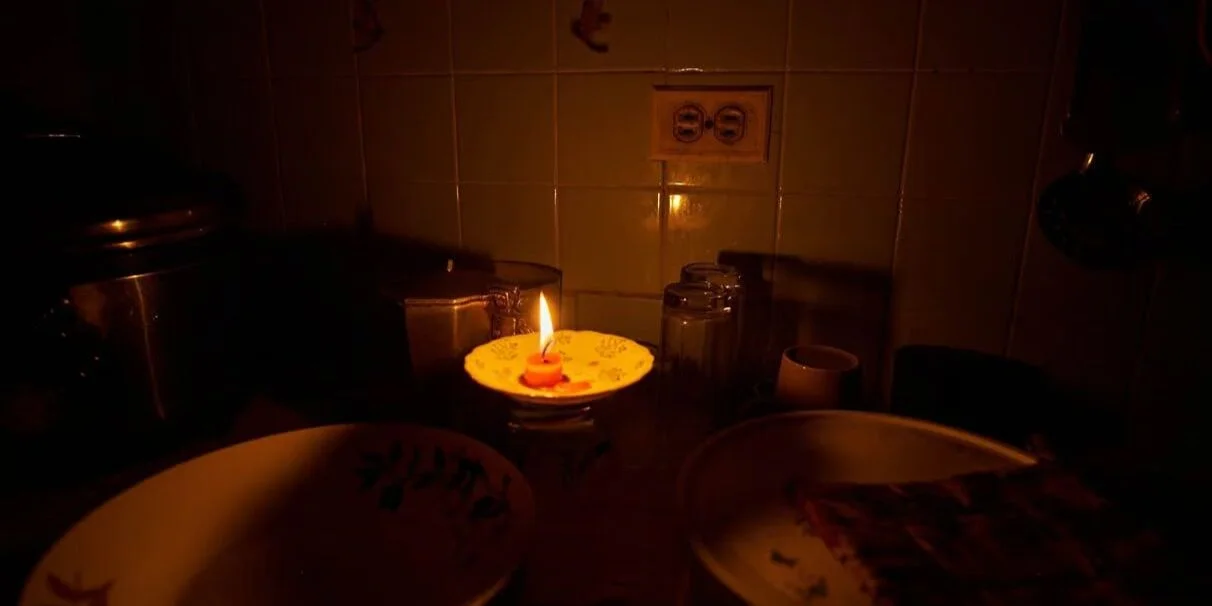
The energy crisis seems to exceed official figures and the perception of Cubans the day before was that of an almost general blackout.
LIMA, Peru – Blackouts in Cuba continue to worsen with more than 12 hours of consecutive interruption even in the capital, according to a survey conducted by Cubanet on their social networks.
Although the Electrical Union has predicted damages of around 1,800 megawatts (MW) in recent days, the real dimension of the crisis seems to exceed the official figures and the perception the day before was that of an almost generalized blackout on the Island.
In contrast, the state electricity company recognized this January 25 that last Saturday the 24-hour service was affected and the maximum impact due to a deficit in generation capacity was 1,969 MW at 6:20 p.m., more than 110 MW than initially estimated.


The situation for this Sunday shows no signs of improvement, according to the conservative part offered by UNE. The National Electric System (SEN) once again faces a critical generation deficit that will cause prolonged and simultaneous outages in more than half of the country.
According to official information, for the hours of greatest demand—afternoon and night—an availability of only 1,325 MW is expected, compared to an estimated demand of 3,100 MW, which implies a deficit of 1,775 MW. Consequently, the UNE estimates an impact of up to 1,805 MW, which is equivalent to simultaneous blackouts in about 58% of the national territory.
The report indicates that nine thermoelectric units They remain out of service due to breakdowns and maintenance. The affected plants are Unit 5 of the Mariel thermoelectric plant (CTE), Unit 3 of the Carlos Manuel de Céspedes CTE, Units 5 and 6 of Nuevitas, Unit 2 of the Felton CTE and Units 3 and 6 of the Antonio Maceo CTE. Meanwhile, repairs are being carried out in Unit 2 of the Sata Cruz CTE and Unit 4 of the Carlos Manuel de Céspedes CTE in Cienfuegos.
Added to this is the paralysis of dozens of distributed generation plants due to lack of fuel, as well as the unavailability of electric motors due to a lack of diesel and lubricants.