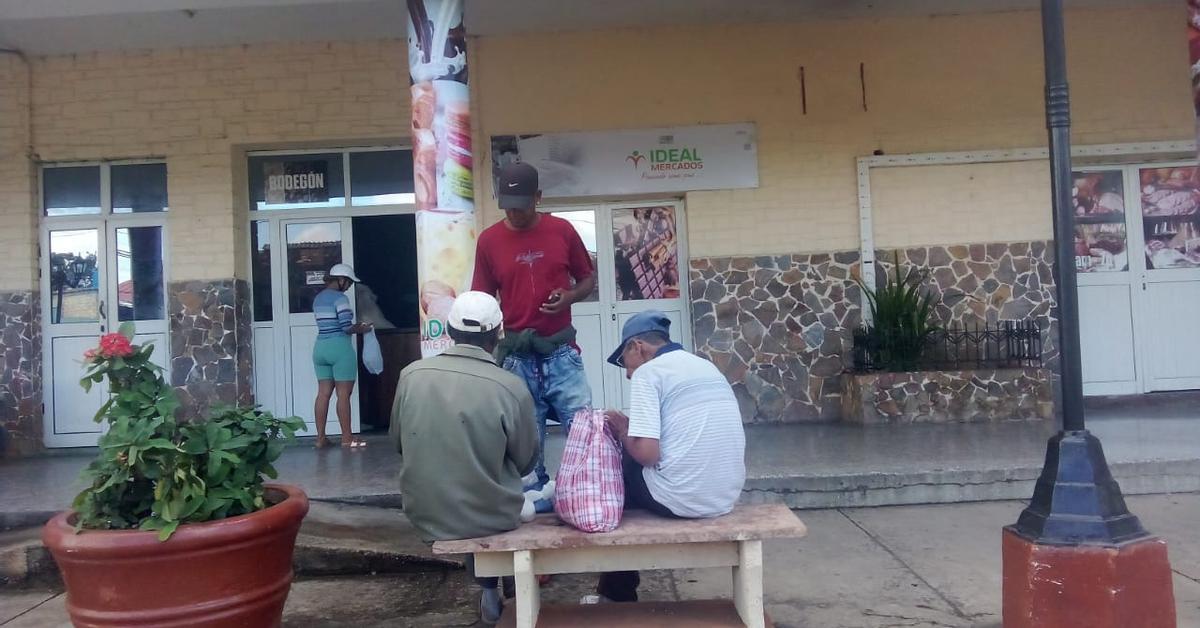
San José de las Lajas/At seven in the morning, when the sun has barely finished rising, Aurelio is already sitting on his usual bench, in front of the El Turquino Ideal Market, in San José de las Lajas. He places a worn-out bag at his feet, from which he carefully removes nylon bags. At 74 years old, that minimum sale – two bags for 20 pesos, sometimes three for 50 – makes the difference between having a hot lunch or going to bed hungry.
However, selling jabitas has become increasingly difficult. Not only for him gardeo constant inspectors and police who look closely at informal sellers, but because the market has had such a meager supply for weeks that it barely attracts customers. “These are the last ones I have left,” Aurelio says, holding up a handful of crumpled bags. “But it took me a long time to sell them, because people have nothing to add to them.”
The market blackboard confirms his words. There is only salt, at 40 pesos a pound. At twelve o’clock in the morning, when the heat begins to press under the portal of stained flagstones, El Turquino closes its doors. “Because you don’t have it, you don’t even have flies on the counter,” ironically says the retiree, who returns home every afternoon with less than 200 pesos in his pocket and the feeling of having wasted the entire day. “When there is merchandise, things get better. The same people in line come looking for me without calling them. But now not even five customers gather.”
Near Aurelio are the white doors of the market, open just a foot, the “Still Life” signs on empty display cases, the cement benches occupied by older men waiting, not so much to buy, but for something to happen. A parked motorcycle, a column covered with advertisements for bread and sweets that are no longer sold, flower pots that try to put green where wear and tear dominates. The scene repeats itself day after day, like a ritual of waiting without reward.
/ 14ymedio
An El Turquino employee, who asks not to be identified, explains that the lack of products does not respond solely to the current fuel crisis. “This has been going on for years,” he says, leaning against the door. “It’s all bad management by the Trading Company. They notify us when the truck is already parked. We unload whatever comes, and that lasts two or three hours at most.” In December, he remembers, bags of donated rice arrived and were sold in a matter of minutes. “Sometimes a queue forms just because of the rumor that sugar or beans are going to come in. Then it turns out to be false.”
Uncertainty also hits workers. Market hours depend on whether there is something to sell, and rumors of job relocation circulate as lightly as those of merchandise. “If they send us for another activity, I will ask for leave,” says the employee, from inside a darkened store where it is difficult to distinguish the empty shelves.
A few meters from Aurelio, Alicia arranges her bags inside a large cloth bag. She is another retiree who survives by selling bags in front of the market. In his case, indignation weighs as much as fatigue. “When they release something, the first ones to arrive are the resellers,” he says. “They find out from the employees themselves and then everyone comes out with their share. What we have here is tremendous dealing.” She, on the other hand, is being persecuted for selling jabitas.
The drop in commercial offers not only empties market shelves; It also leaves those who depend on its movement without a livelihood. The elderly who sell bags depend on circulation: on the line, on the package, on the rush to carry something home. Age, the minimum pension and the lack of alternatives force them to live day to day, attentive to a market that no longer sells almost anything. The crisis in San José de las Lajas is also measured in bags that no one buys.