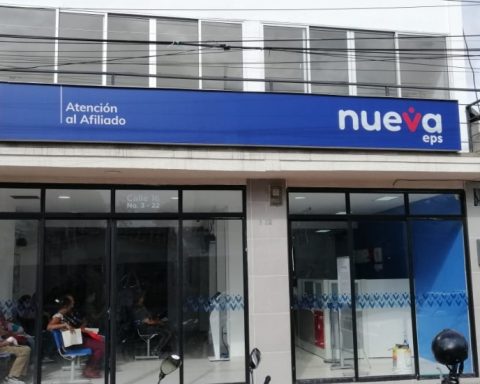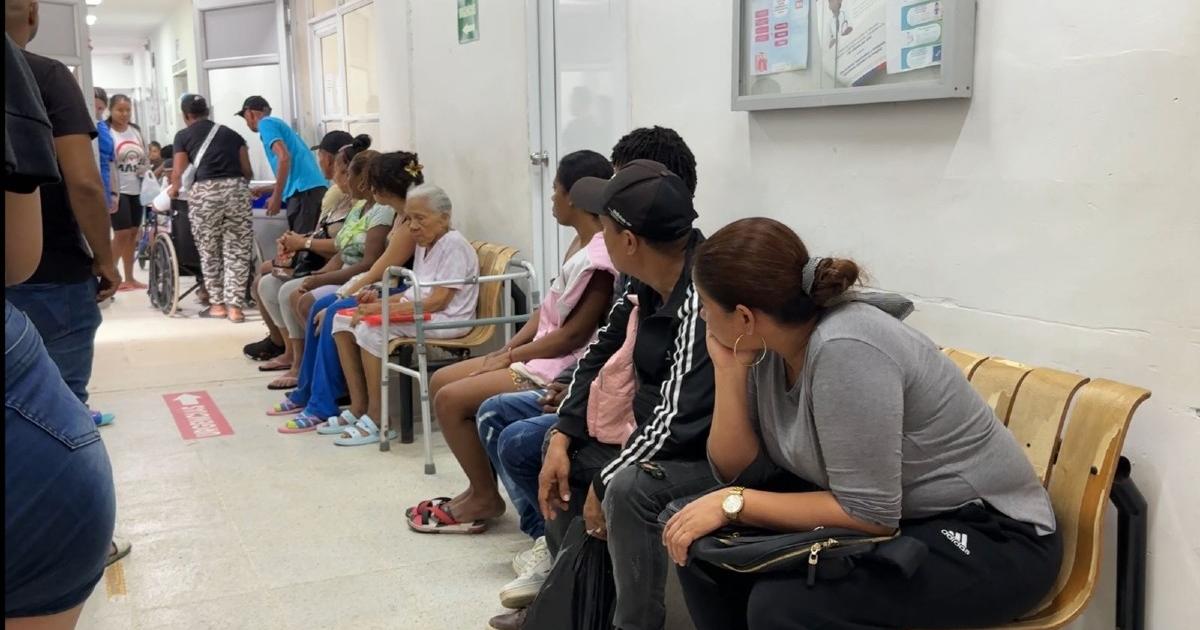
The decree signed in the last hours defines the functions of EPS transformed into health managers.
The Minister of Health through Decree 0858 launches the health reform that is processed in the Congress of the Republichaving a special approach to the preventive, predictive and resolution model as a national policy for the guarantee of the fundamental right to health.
This new model says that It seeks to structurally transform the provision of health services in the country, prioritizing primary care, territorialization of services and intersectoral coordination to improve people’s well -being and reduce regional inequities.
More information: At risk health reform? Government lost the presidency of the seventh commission of the Senate
Loading …
The model is based on five strategic pillars:
- Governance, governance and territorialization.
- Integral and integrated territorial health networks (RIITS).
- Dignal work for human talent in health.
- Sovereignty and knowledge management.
- Integrated information system for primary health care (SI-APS).
According to the document through these axes, the State seeks to reorganize the health system, promoting functional networks that include public providersprivate and mixed, guaranteeing equitable, continuous and quality access to health services throughout the national territory.
The new approach recognizes the country’s cultural and geographical diversity, and bets on attention adapted to the specific needs of each region. To do this, functional regions and subregions will be established for integral territorial management in public health, without altering the current political-administrative division.
Likewise, the resolutive capacities of the first level of attention will be strengthened, through the implementation of Primary Health Centers (CAPS), The deployment of territorial health equipment and the improvement in infrastructure and endowment, with special emphasis on rural and scattered areas.
It also has a chapter for what will be citizen and community participation. The decree underlines the importance of the active participation of citizens, Community organizations, ethnic peoples and social sectors in the adoption, implementation and evaluation of the model.
To do this, Territorial Social Security Councils in Health are strengthened, The Community Participation Committees (Copacos), the Tables of Victims and other spaces for social dialogue.
In the case of labor formalization in the health sector, it says that this is one of the key components of the decree is the promotion of decent and decent work for human talent in health. A labor formalization process will be promoted that guarantees stability, adequate conditions and continuous training opportunities for workers in the sector.
The decree also establishes the integration of the medical emergency system to the new model, strengthening the reference and counter -reference processes, and the use of predictive information to anticipate and prevent diseases. Effective coordination is expected between assurance, provision and public health, for the benefit of universal access to quality services.
Schedule and implementation
The Ministry of Health and Social Protection It will have a period of three to six months to regulate key operational aspects of the modelamong them, the qualification of the IRits, the guidelines for the CAPS and the integration of the Occupational Risk Administrators in the Primary Care Strategies.
In this new scheme, The health promoting entities (EPS) and the Primary Health Care Centers (CAPS) have a key role in the reorganization of the system, with emphasis on the first level of attention and territorial coverage.
The EPS: Health Managers
Within the framework of the new model, EPS will transform into health managers and have the responsibility to organize and coordinate their affiliates access to health services, fully integrating into the integral and integrated territorial health networks (RIITS). These networks will be made up of public providersprivate and mixed, and will have coverage defined by regions and functional sub -regions, according to the needs of each territory.
EPS must guarantee:
- The reference and counter -reference process between care levels.
- The population assignment of users to Caps.
- The articulation with providers and other actors to ensure continuity in care.
- The implementation of actions for promotion, prevention, diagnosis, treatment, rehabilitation and palliative care.
In addition, they must participate in the Coordination Committees of the Integral and Integrated Networks of Health Services (RIITS) and contribute to the territorial planning of the services, together with the local authorities and the providers.
The CAPS: entrance door to the health system
The Primary Health Care Centers (CAPS) are considered the functional basis of the new model. The public, private, private or mixed health services (IPS) institutions that are organized as CAPS will be responsible for the first contact with the population. These centers will not change their legal nature, but they must meet specific conditions of territorial functioning, continuous attention and integrated services.
CAPS will have as main functions:
- Develop universal, systematic and resolutive actions of primary health care.
- Attending to the population assigned longitudinally, that is, with continuous and close monitoring.
- Integrate territorial health teams (doctors, nurses, social workers, etc.) with emphasis on family and community care.
- Coordinate with sectors other than health to intervene in social determinants that affect the welfare of the population.
Likewise, the CAPS must comply with standards defined by the Ministry of Health and Social Protection, which in the next three months will issue the technical guidelines for its implementation.
Hiring, networks and articulation
The decree establishes that the EPS must hire services with the CAPS of the primary level, guaranteeing effective access through territorial networks. Occupational Risk Administrators must also integrate into the model, particularly in promotion and prevention.
CAPS and EPS will operate within the integral and integrated networks of Health Services (RIITS), which in turn will be articulated with local, departmental and national health plans. Territorial ascription, patient monitoring, health technologies and intersectoral collaboration are key elements of this new dynamic.
Source: Integrated information system