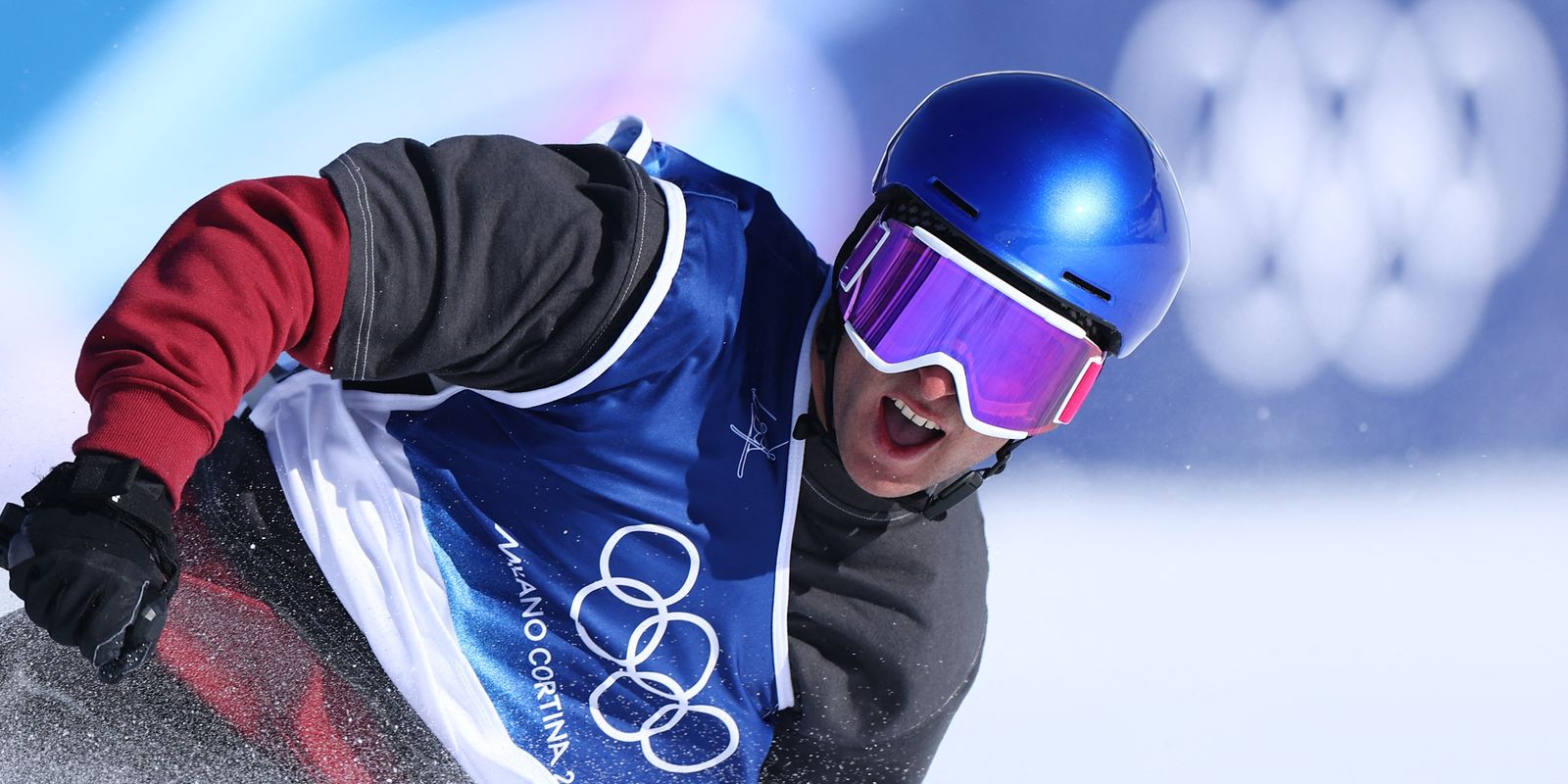
The Winter Olympics in Milan-Cortina, Italy, which began this Friday (6), exposed the effects of global warming. Data gathered by the Talanoa Institute shows that 85% of the snow used in the 2026 competitions will be artificial, a trend that has intensified since the 2014 Sochi Games.
To make the events viable, the organizers will produce 2.4 million cubic meters of artificial snow, the operation requires 946 million liters of water. For comparison purposes, the volume is equivalent to transforming the Maracanã stadium, in Rio de Janeiro, into a large reservoir, with a third of the space full.
To guarantee the competition tracks, more than 125 snow cannons were installed in places such as Bormio and Livigno. They are supported by large high-altitude water reservoirs.
Reliance on technology to generate snow dominates recent Winter Games. In Sochi (2014), around 80% of the snow was produced by machines. In PyeongChang (2018), the rate reached 98%, and in Beijing (2022), 100% of competitions took place with artificial snow.
The number of climate-reliable locations to host the Games is shrinking rapidly. Even with technology, global warming has shortened winters, made snow maintenance difficult and increased uncertainty for outdoor competitions.
Between 1981 and 2010, 87 locations on the planet were considered climatically reliable. In projections for the 2050s, this number drops to 52, and in 2080 it could reach just 46, even in an intermediate scenario of reducing greenhouse gas emissions.
Beyond sport
The reduction in natural snowfall is linked to broader changes in the climate system. Winters are getting warmer and less predictable. Satellite observations indicate that Arctic sea ice extent remains below historical averages.
In September 2012, the smallest extension ever observed was recorded: 3.8 million km². On December 31, 2025, the area reached 12.45 million km², still lower than the standard for the period 1991-2020.
According to the Talanoa Institute, the impacts go beyond sport. Snow acts as a natural reservoir of water, releasing it gradually throughout the year. Less snow means lower river flows, pressure on reservoirs, damage to mountain tourism and imbalances in ecosystems adapted to the cold, affecting local economies and entire ways of life.
Created in 1924, in the French Alps, the Winter Olympic Games were born from the abundance of natural snow. Traditional headquarters are concentrated in mountainous areas and high latitudes, historically associated with cold winters, such as the European Alps, Canada, the United States and northern Asia.
A century later, data indicates that without machines, snow cannons and large volumes of water, the event simply would not happen. Which, for researchers and environmentalists, is a portrait of how climate change impacts and reshapes consolidated global traditions.