Local authorities call for dialogue to avoid further disturbances and restore public order.
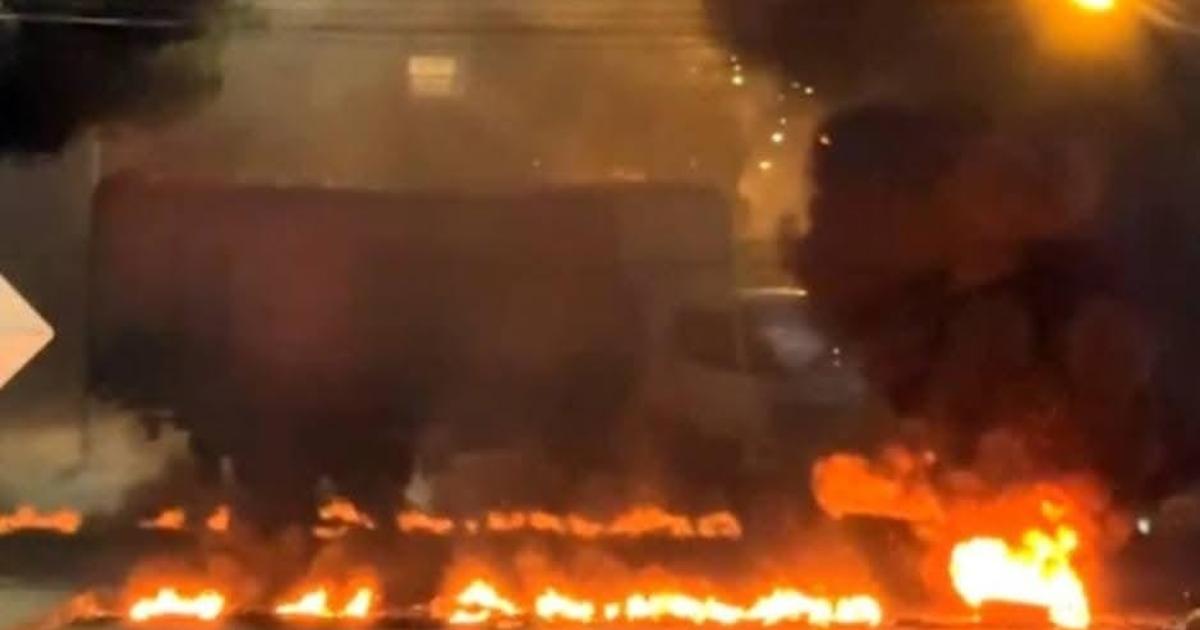
A group of miners has blocked the road that connects Medellín with the Atlantic coastin the municipality of Caucasia, Bajo Cauca, Antioquia, in the sector known as Mandingas. The protesters set tires on the road, which has affected mobility on this important road.
Why are they protesting?
According to protest leaders, There is disagreement on the part of the mining union because the authorities have carried out operations against artisanal mining. Now, we are already talking about the effects that this entails in terms of mobility and the transportation of products.
You may be interested in: Inflation in Colombia rises to 5.18% in September and completes three months of growth
This was indicated by Juan Pablo Acosta, president of the Passenger Transport Association of Antioquia: “At the moment there are damages on the road that connects Medellín with the Atlantic Coast at the level of the municipality of Caucasia. These damages clearly harm the mobilization of passengers taking into account that we are in School Recess Week. We ask the National Government for a greater presence to guarantee the Right to free movement.”
You may be interested in: The EPS pay their debts or we liquidate them: MinSalud issues ultimatum
Both local authorities and representatives of the National Army are holding talks with the protesters to achieve the unblocking and restore mobility on this important road axis in the north of Antioquia.
In other news corresponding to blockades on roads that connect with Medellín
The Quibdó Medellín road remains blocked after failing to reach agreements between authorities and miners
Following the announcement made by the Association of Agro-Environmental Miners of Chocó, ASOMACHO and the Federation of Miners of Chocó, Indefinite strike on the road that connects Quibdó with Medellín “Due to the failure of the National Government to comply with the commitments to formalize mining and the lack of will of the Ministry of Defense to build a route that allows stopping anti-mining operations.”
José Elido Correa Rentería, legal representative of ASOMACHO, pointed out that they have made progress in conversations with departmental and national authorities, however, no agreements have yet been reached so the blockade continues: “Thanks to the dialogue of Governor Nubia Carolina Córdoba, we were able to take an important step by having a rapprochement with the Ministry of Defense, Environment and the Interior. That is the route so that they can listen to us and advance in the formalization process in Chocó, we have been in a struggle for more than 15 years where what governments do every day is waste our time.”
Source: Integrated Information System