The crime with the most firepower
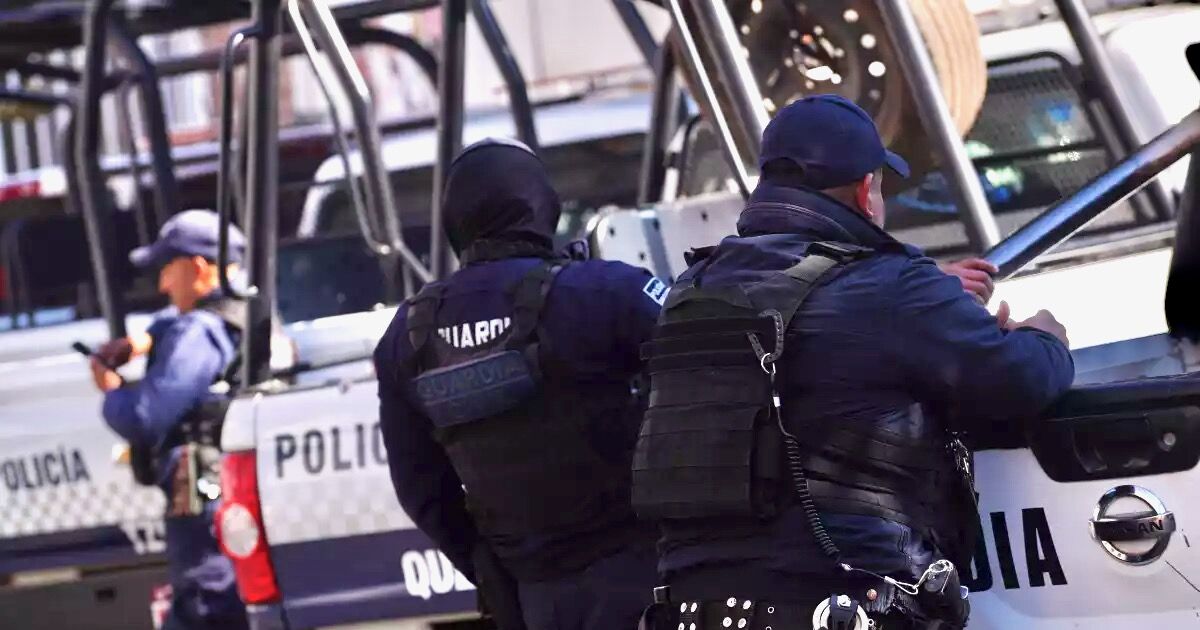
The personnel deficit is not the only challenge that municipal or state corporations face, they also operate without the necessary equipment despite the fact that they have to face everything from robberies to activities of organizations that have high-caliber weapons such as barrets in their possession.
Former mayor Manzo criticized the power that members of organized crime have in their hands. “In a country like Mexico, the only thing it reflects is a failed State and that crime is given advantages so that they act against people who want to do their job well and against citizens,” he said last October 7.
The Mexican government has recognized that guns empower organized crime. More than 70% of them come from the United States.
In the hands of crime there are barrets, machine guns, AK47 and R15 assault rifles, grenades and 9 millimeter pistols and more. While the police in Mexico usually confront crime with .45 or 9mm semi-automatic weapons used exclusively by the army and shotguns.
“If they are given equipment with bulletproof armor, not all of this equipment supports the caliber of weaponry that organized crime has such as the barret or the goat horn, because they are level three armor, for that level four or level five armor is required,” adds Asael Nuche.
(Photo: Cuartoscuro.)
The lack of equipment is explained by the lack of resources with which the police operate, which even leads them to use their salary to purchase vests, uniforms, and even gasoline to carry out tours.
“In interviews with police officers they told us that they don’t even have enough for gasoline or that they have to save money on their patrol trips to be able to use fuel when there are chases. That’s how serious the situation is. There are even police officers who huachicolean,” says the Causa en Común expert.
The US Bureau of Alcohol, Tobacco, Firearms and Explosives recently said in a statement that it works “closely with national and international law enforcement partners to combat illegal firearms trafficking.”
The agency detailed that cartels use a wide range of weapons including the Barrett M82 .50 caliber semi-automatic rifle, a weapon designed to pierce light vehicles and fortified positions.
With the budgets they have it is not enough
According to an analysis by Jorge Cano, from México Evalúa, in 2014, local governments received 18.5 billion pesos from the Federation, however by 2026 the outlook is very different because federal subsidies in security and prevention will have 2.1 billion pesos.
“We are facing a drop of 88% compared to 2014. This is 16.4 billion pesos less in a context of persistent violence and growing social demands,” said the expert.
🛡️💰Although local police are the main lines of defense in the territories, by 2026 the money that the government will give to municipalities and states to strengthen these security forces is limited, so it would be advisable to reinforce these programs.
🔴It is… pic.twitter.com/i6eKQape2A
— México Evalúa (@mexevalua)
October 10, 2025
The expert explained that in 2014, the funds were distributed to local governments through three programs: the Municipal Public Security Subsidy (Subsemun)which supported more than 280 municipalities with police training, equipment and professionalization; he Creditable Police Subsidywhich promoted the creation of single command in the states; and the National Program for the Social Prevention of Violence and Crime (Pronapred)focused on addressing risk factors in vulnerable communities.
But they were displaced or replaced by others, for example the Subsemun was replaced in 2016 by the Security Strengthening Program (Fortaseg)which although it supported about 300 municipalities, did so with a smaller budget, explained the specialist. Meanwhile, in 2021, Fortaseg was extinguished, which left the municipalities without direct federal support for two years until the Fund for the Strengthening of Public Security Institutions (Fofisp).
This fund, unlike its predecessors, which focused resources on the municipalities with the highest crime incidence, distributes support among the 2,478 municipalities in the country, according to their number of inhabitants. “The problem is evident: with a budget of just 1.2 billion pesos in 2026, resources are diluted to the point of losing real transformation capacity,” he explained.
The police, of course, are abandoned, of course they require resources to progress, to strengthen themselves, above all, if they intend to increase the state of force by 25% by 2029.
Asael Nuche, from Mexico Evaluate