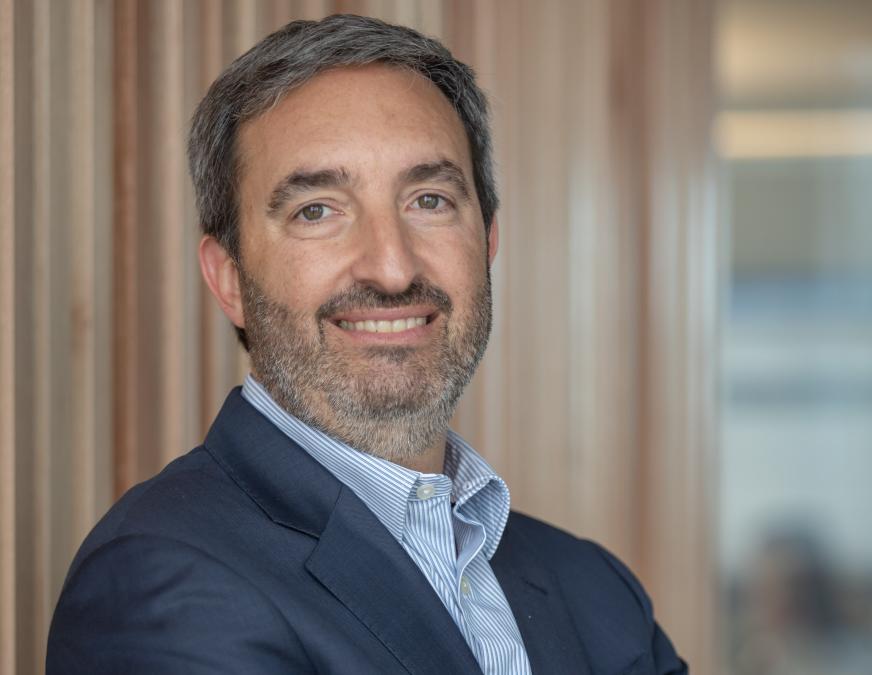
Ezequiel Tavernelli, executive director of Acerero, warns of the impact of Chinese steel on the Latin American industry.
What is the panorama at the moment of steel at the region level?
He steel is facing unfair competition in particular China. Currently, China exports to the material region with very high subsidies. A report that we prepared together with the OECD and presented a few weeks ago shows that the level of subsidies that China receives for this industry is ten times greater than any other producer.
How do these subsidies affect our countries?
Today in Latin America we produce 56 million tons of steel when they were usually between 64 and 65 million. Our production has been declining year after year for this unfair competition. According to the OECD report, the subsidies of the Chinese State cover the entire industrial process: from the purchase of raw material, through the production process, the financing of working capital and much more lax environmental regulations, to the management and dispatch in the ports. We are not competing against companies, but against a country.
How would it be harming Peru?
Peru is a market of approximately 3.5 million tons, of which 1.4 million occur locally and about 2 million are imported. Of that imported volume, China used to participate with about 300 or 400 thousand tons, but today it concentrates 1.3 million. It has displaced the rest of imported materials and is also affecting local producers. In just two years, China already equals the production level of Peruvian companies, which have been investing for years. Therefore, we talk about unfair competition.
What measures is your organization demanding?
We are asking Latin American governments to balance the court as soon as possible. We have a trained industry, of very high technology, very well prepared, with the best talent and, fortunately, with an average carbon footprint much lower than that of the rest of the world. All we ask is to compete, but on equal terms.
I understand that in Peru Indecopi already took measures …
Yes, but only for a small part of the market, which is the wire, and not for other affected products, such as steel bars for construction, pipes, tubes or profiles. The import market is 2 million tons, much more than the tariff item that Indecopi has in analysis. We are losing industry, and it is not just steel, but about the entire value chain. The most serious case in the region was Chile, which had to close Huachipato, the largest steel. We cannot afford another huachipato in Latin America.
Peru, recently, “optimized” his commercial agreement with China. What can your authorities do about it?
We have explained it to the Minister of Economy and the produce team: All free trade agreements include a section that, under the WTO, allows the field to be balanced when it is uneven, as happens now. We need to restore that balance and, as we always say, countries are already taking measures; The last to do so will be the most affected. Therefore, it is key to aware that Peruvian companies need to produce steel in equal conditions.
How many families in the steel industry are being affected?
In Latin America we are 1.4 million families who work in the value chain of steel, and in Peru there are around 45,000 families between direct and indirect jobs.
Where should Peruvian authorities begin?
For example, Peru, being a seismic country, does not require the steel importer to certify the local technical standard that guarantees that a housing, a hospital or school has the necessary rod to resist an earthquake. Today we need to level the court not only in the commercial field, but also in quality and security. We deserve a first level construction.
Receive your Peru21 by email or by WhatsApp. Subscribe to our enriched digital newspaper. Take advantage of discounts.
Recommended video