William I. Robinson*
AND
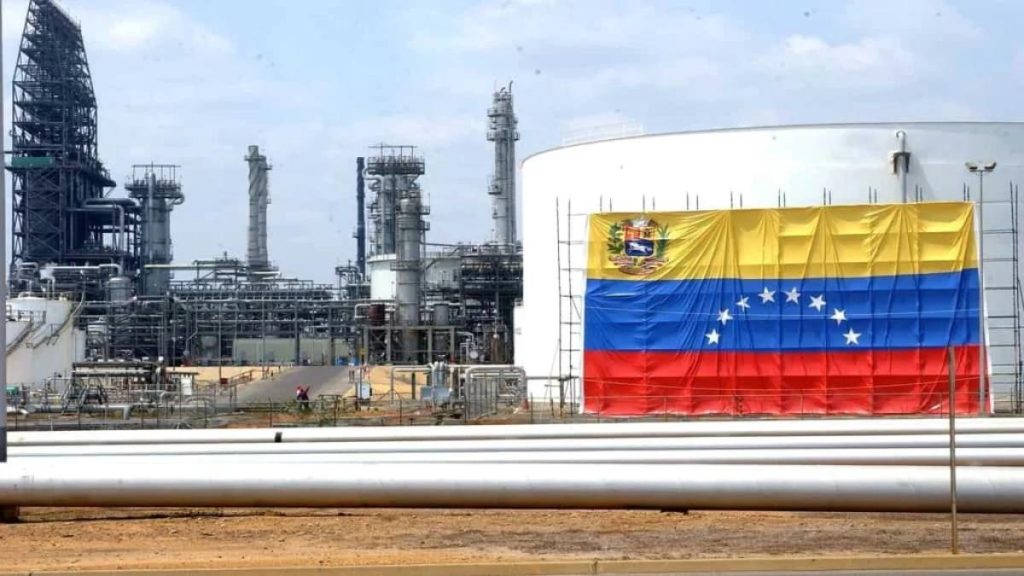
l attack and takeover of Venezuela by the United States have shocked the world. As we digest these events, let’s pause for a moment and consider their broader world-historical context. The world capitalist system is in transition from one historical epoch to another, the outcome of which is far from predetermined. The different dimensions of this epochal crisis – economic, social, political and ecological – are coming together in an explosive mix.
On the economic level, global capitalism faces a crisis of overaccumulation, chronic stagnation, and a declining rate of profit. The transnational capitalist class (CCT) has accumulated enormous amounts of surplus capital that generates intense pressure for expansion. Backed by capitalist states, the CCT has launched a new round of predatory expansion involving extractive resource appropriation, wars, displacement and repression. This campaign to seize resources is fueling one conflict after another, from Ukraine to Palestine, Sudan and the Congo, among others, and is now focused on Venezuela.
What I will call Global Trumpism is one of several pathological political symptoms that are emerging around the world in response to the crisis. Global Trumpism is a fine-tuned instrument of this wave of expansion, as power blocs are reconfigured and capitalist states adopt authoritarian, dictatorial, and even fascist forms. Far-right projects have encountered resistance from below and face acute internal contradictions as the world moves towards increasing class conflict, chronic political instability, civil and interstate wars, social collapse and anarchy.
Hundreds of millions of people have been displaced by climate change, economic collapse, wars, natural disasters and political persecution. Entire regions and countries face collapse as rival warlords, political and economic mafias, paramilitary organizations and criminal gangs fill the power vacuums. Nepotistic elites engage in the most blatant corruption, fraud and deceit, enjoying impunity as long as they continue to serve the interests of the transnational capitalist class.
During the last half century of globalization, the dominant sectors have fought to dismantle social welfare states and replace them with social control states. New digital technologies will rapidly expand the ranks of the excluded and at the same time enhance the ability of the ruling classes to surveil, repress and control them. Businesses use AI to maximize profits and outperform rivals through automation. States are using new digital technologies for mass surveillance, social control, and the repression of disaffected populations, as war itself becomes digitalized.
The crisis of social reproduction feeds the political crises of domination, state legitimacy and capitalist hegemony. Global Trumpism combines the structural power of transnational capital with the projection of military power to align states, economies and political systems with its agenda. The CCT does not need the social reproduction of the excluded sectors, since they do not generate surplus value or consume enough to constitute an important market. Global Trumpism proposes to corral, contain and expel those who are not necessary. They are expendable and susceptible to extermination, especially if they stand in the way of valuable resources, as in Palestine, Sudan and the Congo, as well as to being abandoned and subjected to violent containment, as in Haiti or the indigenous territories of Guatemala, Colombia, Peru and Mexico.
The United States is losing its dominant position in the international system. Emerging regional centers of political and geoeconomic power compete with each other, but no state, no matter how powerful, can control the global accumulation process. This dilemma between a globalized economy and a system of political authority based on the nation-state generates enormous geopolitical tensions that are currently manifested in the Americas. The world is immersed in a process of rapid remilitarization, as war and repression take root in the global economy and society. Global military spending reached a record $2.7 trillion in 2024, an increase of nearly 10 percent from the previous year, with more than 100 countries increasing their military budgets, many by double-digit percentages.
There is an alarming convergence of the political, economic and military dimensions of US policy towards Latin America, where the structural power of transnational financial and technological capital is combined with military capital. The brazen attack against Venezuela constitutes a projection of power beyond that Caribbean nation that seeks to be the military vanguard for a more complete appropriation of Latin America by transnational capital, its local counterparts and its political agents. The “war on drugs” never had anything to do with the fight against drug trafficking, but rather provides a pretext for the application of state and paramilitary violence, in order to access this wealth and contain resistance to pillage. If the historic crisis of global capitalism presents grave dangers, it also presents a historic opportunity for radical emancipatory struggles from below. The analysis of the failures of the institutional left and the mass struggles from below will be addressed in another context.
*Distinguished professor of sociology at the University of California, Santa Barbara.