During the Round Table, the Ministry of Economy detailed that access to foreign currency will depend on administrative criteria, sources considered legal and prioritized sectors.
MADRID, Spain.- During the This Thursday’s Round Tablethe Minister of Economy of Cuba, Joaquín Alonso Vázquez, detailed how it will work the new system of foreign currency transactions, which conditions the use of the dollar on state authorization, reinforces banking control and excludes those who do not fit into the areas defined by the regime.
The day before, the Cuban Government offered new details on the operation of Decree-Law 113, which regulates foreign currency transactions within the national economy, and made it clear that access to the system will not be free or general, but will be conditional on economic actors developing activities considered “prioritized” by the State.
During the broadcast of the Round Table, Joaquín Alonso Vázquez linked these regulations to the number one objective of the Government Program to “correct distortions and reinvigorate the economy”, focused – as he said – on the macroeconomic stabilization of the country.
An “unwanted” but assumed dollarization
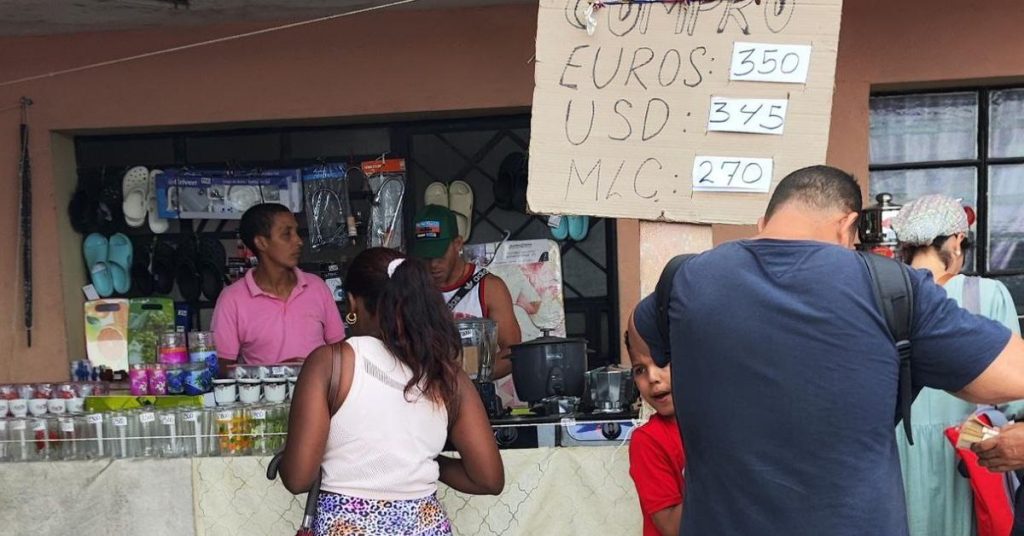
Alonso Vázquez recognized that Decree-Law 113 is part of a process of partial dollarization of the economy, a condition that he described as “undesired,” although he stated that it is “essential” in the current context. As explained, the rule creates the legal framework so that foreign currency transactions can be carried out officially in the country, in a scenario where different economic actors already operate under multiple exchange rates and differentiated monetary circuits.
The minister maintained that the objective is to prevent these relationships from “affecting or benefiting one or the other”, although the design of the system establishes new hierarchies of access, determined by the Government’s economic policy.
State control over currency
Among the explicit objectives of the norm is to organize the system of management, control and allocation of foreign currency, which implies – according to the official explanation – that first the State concentrates the foreign currency, then controls it and finally decides how it is distributed.
Operations to and from bank accounts in foreign currency are also regulated, the sources considered “legal” for access to foreign currency are defined, and what internal transactions will be authorized are specified. At this point, the official stressed that access to foreign currency cannot occur “at any cost” and must comply with the rules of the State and the Constitution.
Who will be able to operate in currencies?
The minister explained that the system covers all economic actors, but clarified that it is only about those who carry out economic activity. This group includes state companies, state and private MSMEs, agricultural and non-agricultural cooperatives, self-employed workers, farmers, artists, as well as foreign or mixed legal entities, international economic association contracts and operators of the Mariel Special Development Zone (ZEDM).
Natural persons who do not carry out economic activity are explicitly outside the scope of the rule, which excludes a large part of the population from direct access to the system.
Furthermore, only those actors whose activities are linked to exports, import substitution or other prioritized productive and service areas will be able to operate in foreign currency, a criterion defined unilaterally by the State.
Sources of foreign exchange and banking surveillance
The Government recognized as valid sources of foreign currency income from exports, electronic commerce from abroad, external financing and pre-financing, donations, cooperation projects, sales to the ZEDM, operations with electronic means of payment, purchases in the exchange market, centralized allocations and others determined by the competent authority.
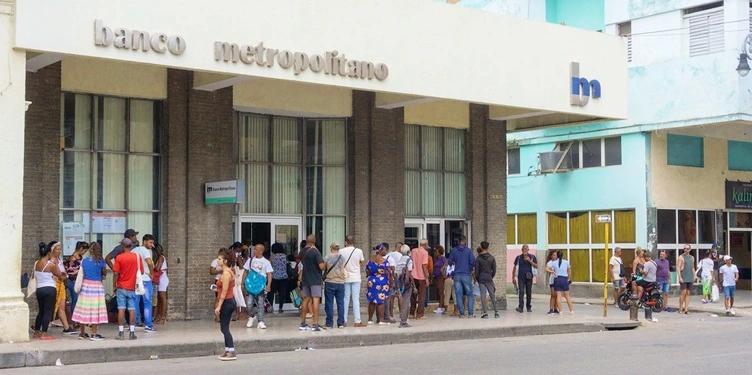
To operate, authorized actors must open foreign currency accounts in the Cuban banking system, a process that will be regulated by regulations of the Central Bank of Cuba. Applicants must inform who their suppliers and clients are, what their economic activity is and submit to established procedures, which reinforces the control and traceability of each financial operation.
Currency retention and Central Cash
In the case of state export companies, the minister said that self-financing schemes will be applied that will allow them to retain up to 80% of their income in foreign currency, while the remaining 20% will be contributed to the Central Bank. For other state entities with less need for foreign currency, the allocation will be “strictly necessary,” and any remainder will also be delivered to the State.
Alonso Vázquez justified this mechanism by alleging that state companies receive subsidies in national currency, such as energy and infrastructure at prices lower than their real cost in foreign currency.
Legalize the shortage
During the Round Table, the minister admitted that many economic actors face difficulties paying for supplies and resort to informal mechanisms that place them in illegality. The solution proposed by the Government, however, does not eliminate the root causes of this situation, but rather legalizes access to foreign currency only for those who meet state requirements and priorities, keeping out of the system those who do not fit into that scheme.
Far from opening the exchange market, the clarifications offered confirm that the new model consolidates a system of conditional access to the dollar, where the currency circulates under administrative authorization and permanent supervision of the State.