Why, if ideal leadership is increasingly associated with ethics, service and humanism, authoritarian or polarizing leaders are gaining popularity in the current political landscape?
In a world where organizations, academia and public opinion have extolled humanistic, collaborative and transformative leadership, it seems contradictory that the polls often reward figures whose rhetoric and leadership style are far from these ideals.
This contrast invites you to reflect on what we really are looking for in a leader and the reasons behind this apparent paradox.
The leadership ideal: service, ethics and humanism
Leadership models There are many. However, in recent decades, organizations have focused on styles that move away from authoritarianism and verticality.
Among them, the humanistic, ethical and service leadership, three approaches that share a common nucleus: the leader as facilitator of the growth and well -being of others. In other words, be a leader for and for others.
- Service leadership: proposed by Robert K. Greenleafthis model positions the leader as a server at the service of others. The approach is not in power or control, but to empower people to develop their maximum potential. As Greenleaf points out, “the great leader is the one who wants to serve first and lead later.” This model finds practical applications in companies and communities that prioritize sustainability and equity.
- Ethical leadership: In a complex and globalized world, ethical leadership, based on values such as justice, integrity and transparency, has gained ground. James MacGregor Burnsknown for its concept of transformational leadership, highlights: “truly moral leadership elevates followers and promotes the common good.” This vision is fundamental in those areas where decisions not only affect results, but also human lives.
- Humanist leadership: In line with the thought of Carl Rogers either Abraham Maslowhumanistic leadership focuses on respect for people’s dignity, promoting authentic relationships and intrinsic motivations. Instead of imposing, the humanist leader inspires and accompanies, recognizing the unique value of each individual.
These models have proven to be effective in organizations that seek innovation, well -being and sustainability. However, in the political sphere, reality seems to move in another direction.
The political paradox: the rise of polarizing leaders
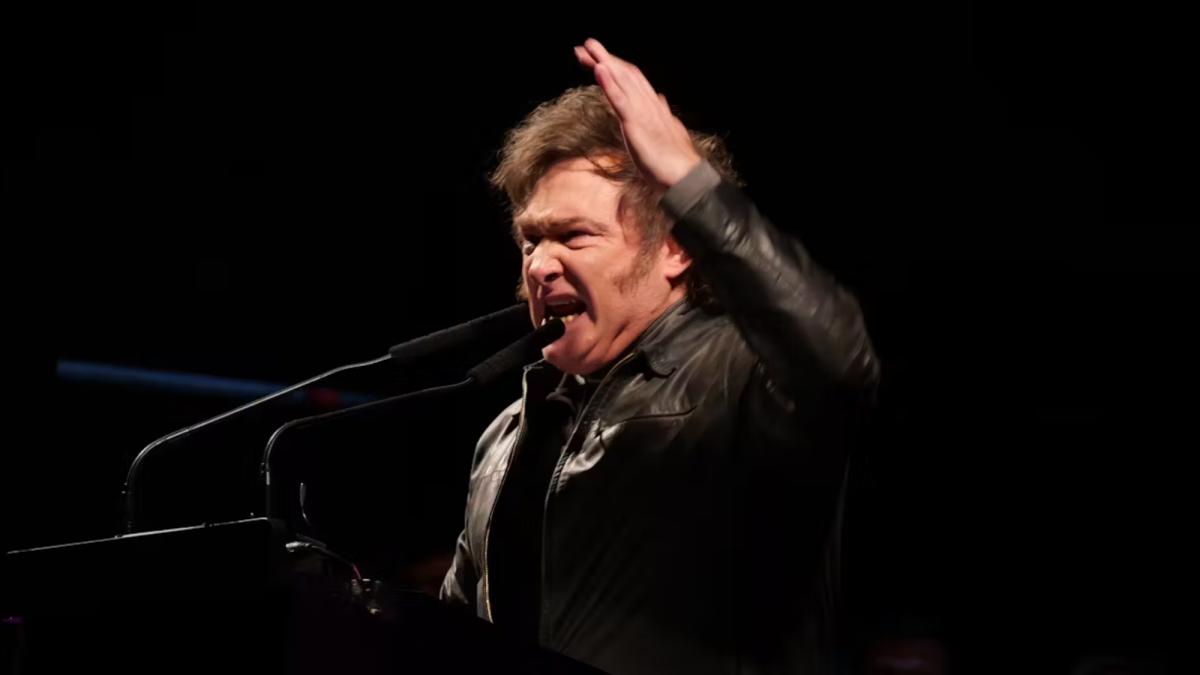
The leadership that is idealized in organizations is not always reflected in politics. Leaders such as Donald Trump, Giorgia Meloni or Javier Milei, characterized by divisive speeches and authoritarian strategies, have triumphed at the polls.
Why does this happen?
- Trusted crisis and certainty: In uncertainty contexts, such as economic, migratory or social crises, people tend to seek leaders who project security, although this implies giving up ethical values. As Daniel Kahneman points out, “Emotions dominate our decisions in times of uncertainty, eclipsessing reason.”
- Appeal for fear and outrage: These leaders usually connect with primary emotions, exploiting collective fears and offering simple solutions to complex problems. His speeches are not designed to collaborate, but to confront, creating external enemies that reinforce a feeling of internal unity.
- The amplifying role of social networks: Digital platforms have transformed political communication, favoring short, controversial messages, loaded with emotion and sometimes false. These characteristics benefit polarizing leaders, who dominate the narrative in a space where the virality prevails over depth.
- Disconnection with the democratic ideal: While in organizations empathy and service are valued, in politics the perception that a “strong” leader is necessary to face extraordinary challenges seems to prevail.
What kind of leadership do we need?
History offers valuable lessons on how different leadership styles can impact societies. Winston Churchillfor example, was chosen to lead the United Kingdom during World War II, thanks to its firmness and ability to mobilize the population at a critical moment. However, after the contest, his style was perceived as the best for war but not for peace, and was replaced by a more collaborative government.
On the other hand, humanistic and ethical leaders such as Nelson Mandela either Angela Merkel They demonstrated that it is possible to govern in complex contexts from empathy and commitment to the common good, without resorting to polarization or authoritarianism.
Leadership and Social Responsibility
The choice of our leaders reflects our values as a society. As citizens, we must ask ourselves if we are prioritizing those who inspire us to grow and collaborate, or who divide us in search of power.
The contradiction between the ideal leadership and the leadership we choose in reality is not a system failure, but a reflection of our own tensions as a society. We long for leaders to inspire, listen, build consensus, but in times of uncertainty we seek immediate certainties, even if they come wrapped in authoritarian speeches and dangerous simplifications.
Perhaps the problem is not only what kind of leaders we choose, but why we continue to believe that leadership is an individual phenomenon and not a collective process. An authoritarian leader thrives when society gives its voice in exchange for security. An ethical and humanistic leader, on the other hand, is only viable in a society that assumes his own responsibility in the construction of the future.
The crossroads of leadership is not only at the polls or speeches, but in the daily choice about what world we want to build. And there is a lot at stake in each of the decisions we make.