The Cuban state company has been sanctioned by OFAC since 2019.
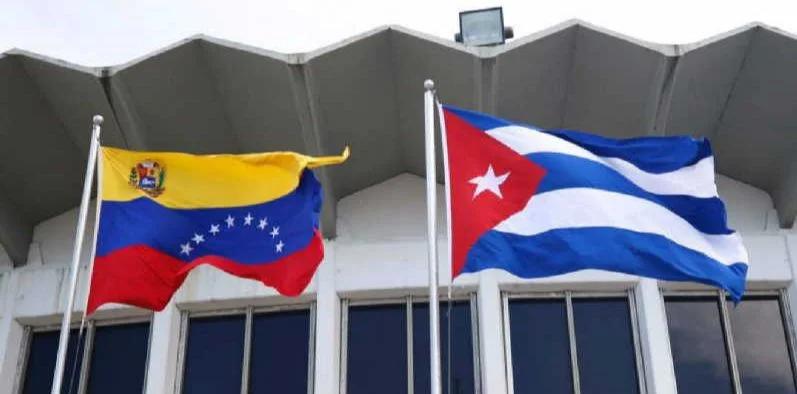
MIAMI, United States. – The state company Cubametales, in charge of importing and exporting oil, officially remains under sanctions from the United States Government more than six years after its inclusion on the Specially Designated Nationals (SDN) List of the Office of Foreign Assets Control (OFAC).
In an official statement On July 3, 2019, the Treasury Department explained that it had designated the Cuban state company “for its continued import of oil from Venezuela” and that “Cuba, in exchange for that oil,” continued to “provide support, including defense, intelligence and security assistance, to the illegitimate regime of the former president Nicolas Maduro”.
In the same text, the Treasury stressed that the measure was based on Executive Order 13850, aimed at sanctioning actors operating in the oil sector of the Venezuelan economy, and presented it as part of a strategy to “disrupt” Maduro’s attempts to use oil as a tool of political pressure.
“Treasury sanctions on Cubametales will thwart Maduro’s attempts to use Venezuelan oil as an instrument to help his supporters buy protection from Cuba and other malign foreign actors,” then-Treasury Secretary Steven Mnuchin said in briefing the move.
The role of Cubametales in the oil exchange between Havana and Caracas is included in the Comprehensive Cooperation Agreement signed by both countries, according to the official text available in Venezuelan legal bases. This agreement establishes that the Venezuelan oil company PDVSA undertakes to supply crude oil and derivatives to Cuba “up to a total of 53,000 barrels per day”, and specifies that “these volumes will be presented in a nomination program (…) by the companies CUPET and CUBAMETALES to PDVSA in the quantities and conditions that will be established annually.”

Following the 2019 designation, the Treasury documented attempts by Cubametales to maintain its operations through intermediaries. On November 26 of that year, in a new statementOFAC announced the sanction to the Cuban company Corporación Panamericana SA for acting on behalf of Cubametales.
In that text, the Treasury indicated that “since its designation on July 3, 2019, Cubametales, the Cuban state oil import and export company,” had faced “significant pressure” as other companies refused to do business with it as a result of its designation. Next, it stated that, “in response,” Cubametales had “repeatedly offered Corporación Panamericana SA as an intermediary to continue operations and evade sanctions.”
That same year, another Treasury statement on ships transporting Venezuelan oil to Cuba recalled that since the designation of the Venezuelan state oil company PDVSA on January 28, 2019, Cubametales and other entities based in Cuba had continued to “evade sanctions and receive oil shipments from Venezuela.”
Even in its 2020 annual report to the UN Regarding the impact of the US embargo, the Cuban Ministry of Foreign Affairs explicitly cited the sanction against Cubametales as part of the tightening of Washington’s unilateral measures.
This December 11, transcended that US forces had seized a VLCC supertanker – widely identified as the Skipper – after loading sanctioned Merey crude oil in the Venezuelan port of José.
International media such as Reuters and the Associated Press have described the seizure of the Skipper as an escalation in Washington’s campaign against oil exports to Cuba and other allies of Caracas, at a time when the island continues to depend on Venezuelan crude to cover a substantial part of its energy deficit.
The middle POLITICALciting a source familiar with the operation, reported that the ship “was heading to Cuba, where the state-owned company Cubametales planned to sell the cargo to Asian energy intermediaries.”
In short, the oil tanker seized by the United States was not going alone “from Venezuela to some uncertain place,” as US President Donald Trump himself suggested, but rather it followed an already known route: Venezuela–Cuba–Asia, with Cubametales as the central link. What the seizure did was expose that circuit where Venezuelan oil, the Cuban state apparatus and a “dark fleet” converge at the service of networks sanctioned for financing organizations considered terrorist by Washington.