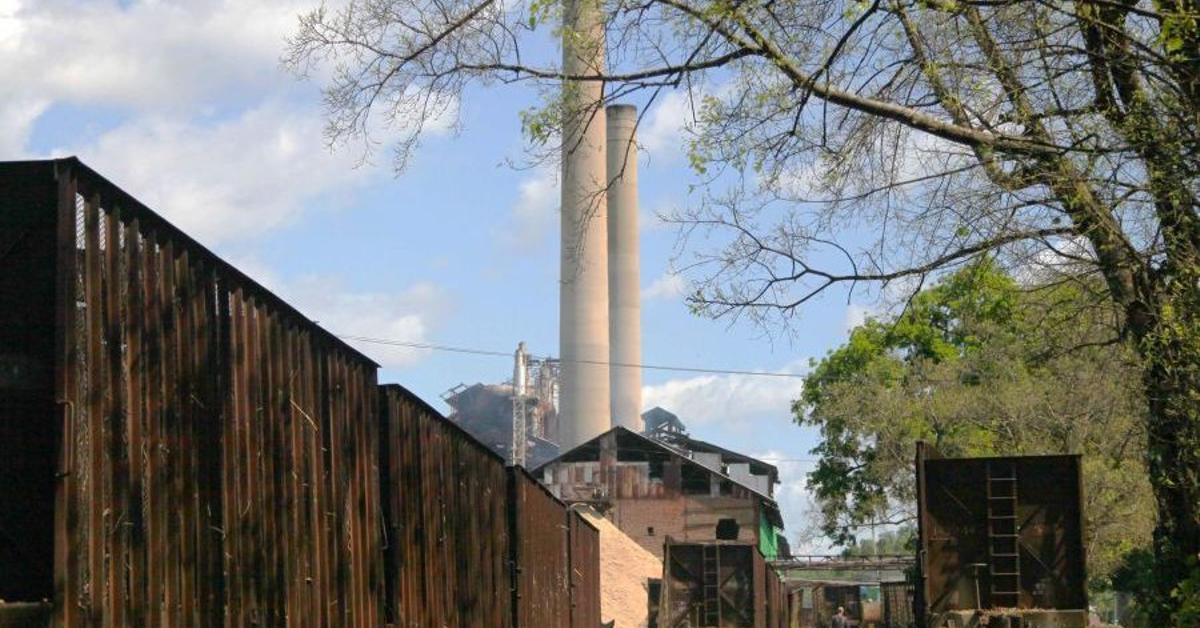
Madrid/The provincial press is once again the one that gives the most clues about the dire state of the sugar industry of Cuba, once the crown jewel of the country’s economy. This Monday, Escambray reveals that of the 106 “cage cars” planned so that, next December, when the harvest starts, they will carry the cane via rail to the mills, there are only 20 repaired.
Of them, 14 in the central defender Melanio Hernándezfrom Tuinucú, and six in Uruguay, located in Jatibonico. The repair in the workshop of this last mill, indicates the note, “has been slowed down by electricity problems associated with the lack of a transformer and the non-coincidence of the electrical fluid with the work day.”
The Sancti Spiritus newspaper states that the state company in charge of transporting the raw materials to the mills, Ferroazuc, “intends to enlist around 130 means”, an endeavor that it recognizes is “challenging”, “amid limitations and the time left for the start of the harvest.” Escambray warns that “Ferroazuc forces in Sancti Spíritus need to advance further.”
It is harder Newspaper 26 with the sugar panorama in Las Tunasby publishing a note titled In addition to cane, planting requires greater will and that directly questions whether there are mills in operation if there is not enough cane to process and the industry is “totally obsolete.” “For what power plants and derivative plants if their reason for being – sugar cane – is in crisis?” is the dilemma with which the author, Juan Soto Cutiño, concludes.
“Assuming all the complexity that a harvest entails, it is not feasible to mobilize all that equipment”
This explains why the provincial government put the central Antonio Guiteras at the head of the race, instead of Majibacoa, which is, it defines, “a mill technically in better condition, easier to repair, competent workforce and a productive career recognized by the country.”
The answer was given by Eddy Felipe, representative of Azcuba in the province: due to “the low availability of cane to be harvested in the supply areas of the Majibacoa plant.” There are 130,000 tons of cane declared “suitable for processing,” the text continues, an amount that at a rate of 4,550 per day and with 70% of the mill’s potential capacity, “would only be enough for 24 days of operations.”
“Let’s be realistic,” he urges. Newspaper 26. “Assuming all the complexity that a harvest entails – from the preparations to the launch of the large agro-industrial chain that makes it up – it is not feasible to mobilize all that equipment, with the high cost that it implies, to work for a few days and produce a little sugar.”
In addition, remember that the Majibacoa has had two campaigns in which it does not even produce sugar but molasses, just like the Colombia central, which has survived four races based on that unrefined syrup to which it is given various uses such as producing rum and which is treated, he says Newspaper 26of “a highly demanded assortment with a good price, which under current conditions is very healthy for the economy of said sugar company.”
The central room of Las Tunas, the Amancio Rodríguez, is, remember Newspaper 26“the most critical case and of greatest concern”: “it has been complete productive inactivity for several years and, from what is seen on the ground, this situation could extend for who knows how much longer.”
For this reason, he proposes establishing sugarcane planting as a priority. But the progress of this activity is also a disaster: the program – 97.8 hectares in Colombia, 143.8 hectares in Amancio Rodríguez, 562.6 hectares in Majibacoa and 1,092.5 hectares in Guiteras – “is running behind schedule, to a greater or lesser extent, in all of these companies.”
Juan Soto Cutiño remembers with nostalgia “those times in which the Sugar Union organized competitions on weekends, even among cattle ranchers, in which mobilizations in support of planting were frequent, in which the political and administrative leadership of the municipality demanded from the organizations concrete figures of areas to be served, in which the Union of Young Communists (UJC) assumed the challenge as a shock task.” But he is not deceived: “I recognize that current circumstances are nothing like those of that time.” Now, for him, he concludes, referring in passing to the United States embargo, “it would be a mirage to think of great results in the midst of the circumstances aggravated by the blockade.”
“It would be a mirage to think of great results in the midst of the circumstances aggravated by the blockade”
That there was not enough cane was something that Artemiseño farmers warned about last month. If “routines” do not change, there will be no sugarthey asserted. Then, the official press of the province confirmed that “history repeats itself.” “A panoramic view in any municipality with a sugarcane tradition in Artemisa shows hectares of weeds where yesterday there was sugarcane, hence only 47% of the sugarcane planned for this stage has been planted, 814 hectares of a plan of more than 1,700,” the report detailed.
Not to mention the lack of payments. One of the guajiros lamented before The Artemiseño: “Zafra by harvest, non-payment is the same. Contracts are violated, but we are still in the groove. Inputs are not a resolved issue either. I still have to go to the cooperative to collect the allocation of two guanchas and a pair of limes. Not a shirt, nor a hat, nor a pair of boots, nor gloves or long socks… Everything comes out of the pocket of the farmer, the one who to be a producer must also have thousands of pesos destined for acquire fertilizers, fuel…”
The 2024/2025 harvest was once again the worst in history in Cuba, although the real figures are unknown, because the regime does not provide them. Last August, the Spanish agency EFE made calculations based on the provincial press and concluded that, in the best of cases, they are more than 10,000 tons below of the terrible harvest of 160,000 tons produced the previous year.
15 sugar mills participated in this contest, of which 10 contributed their results to the official media, which added up to a total of 95,584 tons. The remaining five did not reveal their production, but it is known that between them they targeted 52,068 tons of sugar. That is, if they had complied with it, the harvest would amount to 147,652 tons.
A far cry from the 8.5 million tons that the Island produced in the mid-1980s, when the Soviet subsidy flowed and sugar was still considered an economic engine and its main export.
Miguel Díaz-Canel’s meeting, at the end of that August, with Zhang Anming, deputy general director of the state giant Guangxi State Controlled Capital Operations Group Limited –a leader in sugar production in his country–, with the aim of exploring “joint projects” indicates that Cuba also counts on China for the recovery of the sugar industry.
However, nothing else has been published by official authorities.