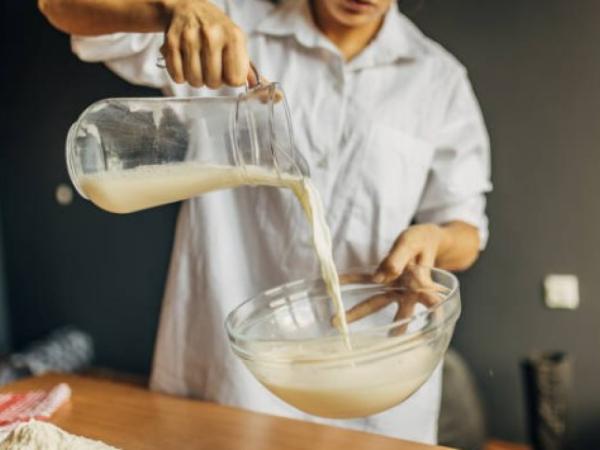
The controversy about the use of lactosuero in milk production has resurfaced in Colombia after the recent sanctions imposed by the Superintendence of Industry and Commerce (SIC) to four companies in the dairy sector.
(See: Lactalis Colombia rejects SIC sanction and defends the quality of its milk)
Gloria, Lactalis, Hacienda San Mateo and Sabanalac must pay fines that total approximately $ 21,000 million, After it was determined that they incurred acts of deception when marketing as a hygienized milk (UAT) a product containing lactosuero.
Milk consumption is a fundamental part of the diet of many Colombians, given their contribution in nutrients and vitamins. However, The use of lactosuero in its production is strictly prohibited in the country.
The current regulations dates back to 2006, when the then Ministry of Social Protection issued Decree 616. This established clear rules on the processing, packaging, transport and production of milk in Colombiaexplicitly prohibiting the addition of lactosuero anywhere in the production process.
(Read more: The dairy sector foresees a recovery by 2025, but also structural challenges)
Article 14 of the Decree stipulates that the commercialization of products called “milk” is not allowed if they have been modified in their natural composition by adding ingredients, additives or other unauthorized substances. The SIC determined that the sanctioned companies failed to comply with this regulation, which led to the imposition of the millionaire fines.
But what is lactosuero and why does its use generate controversy? Lactosuero is the liquid obtained after the coagulation of milk in the cheese processing process. Its color can vary between yellow and greenish.
In the food industry, This byproduct is widely used due to its versatility, since it can serve as raw material in the elaboration of sweets, enriched products and as a thickener in various preparations. It is not a harmful or toxic substance, but its composition differs from whole milk and its addition to this product modifies its quality and nutritional value.
(See also: The dairy sector foresees a 2025 with better prices dynamics)
Milk
Istock
One of the reasons why some companies resort to lactosuero in milk production is their low cost. Being considerably cheaper than raw milk, its use allows to increase the performance of dairy products, generating greater gain margins. However, This practice attempts against the sanitary and commercial norms established in the country, which has motivated the intervention of the authorities.
(Read: ‘Milk powder is essential for Colombia’s food security’: USDEC)
The National Institute for Food and Medication Surveillance (INVIMA) has been monitoring the use of lactosuero in dairy production for several years. In 2021, it implemented a specific plan to detect and sanction the addition of this substance in milk. According to the entity, this plan is in the execution, monitoring and evaluation phase.
“If, as a result of inspection, surveillance and control actions, breach is evidence“The Invima explained.
The entity also performs controls in processing plants, verifying the volumes of raw and processed milk compared to the acquired lactoser volumes for use in other products.
(See more: Meat exports improve: DANE reported sales for US $ 90.1 million to November)