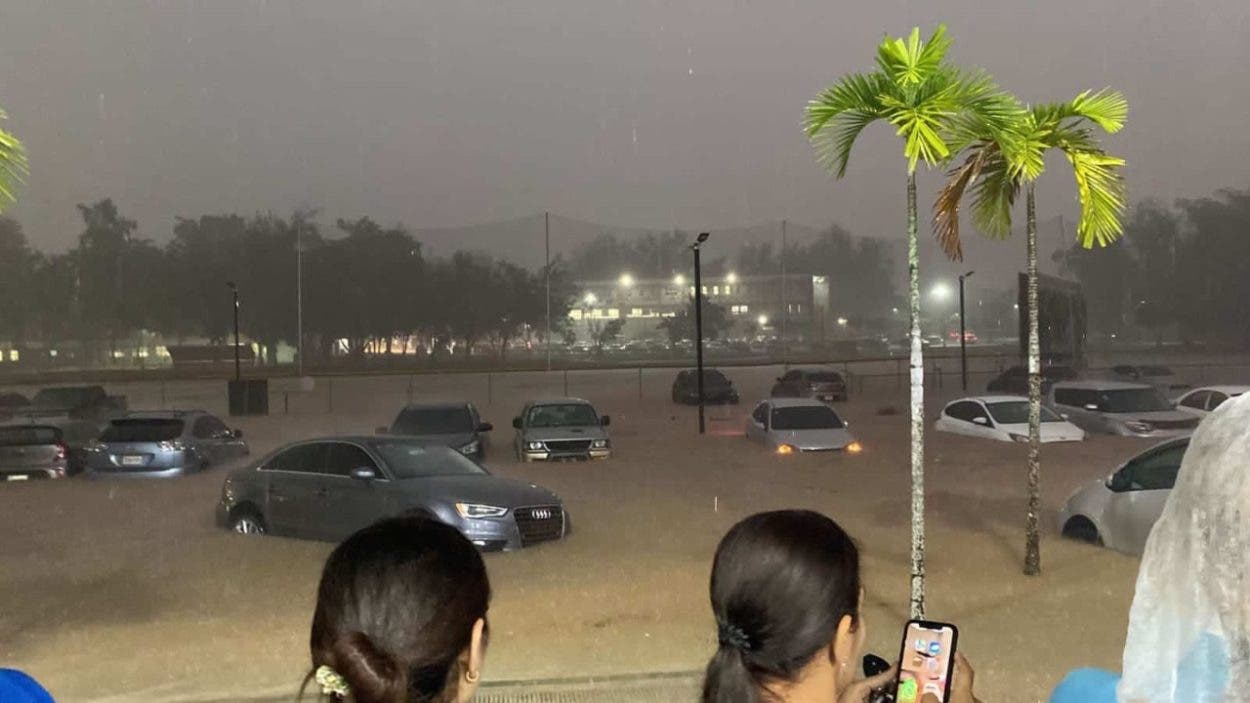
Today, November 4, marks three years since the intense rains and electrical storms that flooded Santo Domingo and the National District on November 4, 2022, leaving a tragic death toll of nine people and material damage of around one billion pesos.
What happened that day
On Friday, November 4, 2022, starting at 4:00 in the afternoon, an extraordinary downpour began that affected the capital and parts of San Cristóbal. The rain caused massive flooding that overwhelmed traffic: main avenues were flooded, hundreds of vehicles were trapped, and thousands of people had to return to their homes on foot. The precipitation lost intensity after 9:00 pm, but by then the damage was done.
Technical data and records
- Rain accumulations: 267 mm at the Parque Mirador Sur station; more than 180 mm at the central station of Santo Domingo Este (INDOMET records).
- Historical comparison: That event far exceeded other relevant episodes, for example the rains of October 2006 (≈158 mm in Santo Domingo).
- Urban drainage capacity: Specialists pointed out that the system is designed to withstand between 60 and 80 mm per hour, so it was clearly overwhelmed by the recorded rainfall.
Victims and causes of death
Authorities confirmed nine deaths:
- 5 for drowning.
- 2 due to electrocution (exposed wires).
- 2 due to landslides in vulnerable areas.
The deaths were recorded in sectors such as Las 800, La Puya, Bellas Colinas, Villa Claudia, Villa Francisca and La Zurza.
Impact on transit and infrastructure
The event caused the collapse of the transit system in the capital: avenues such as John F. Kennedy, Abraham Lincoln and Máximo Gómez were flooded. Authorities estimated that about 60% of the main roads were affected and more than 300 vehicles were stranded or damaged.
You can read: Today, November 4, there is rain, but they would not be the same as the downpours of 2022
In addition, numerous homes and businesses suffered total or partial losses due to the overflowing of ravines and insufficient drainage capacity.
Three years later: persistence of risk
Three years after the event, the rains are still active in the country due to the continuous presence of troughs and tropical waves, and recently the passage of Tropical Storm Melissa aggravated flooding and damage in several regions – especially in the South -, with effects on agriculture and damage to bridges and roads.
Lessons and pending challenges
On November 4, 2022, it exposed structural and urban prevention vulnerabilities: insufficient drainage network, occupation of channels, and the need for more efficient alert and response systems. Experts and authorities agree that investments in hydraulic infrastructure, scupper maintenance and citizen education campaigns are required to reduce exposure to hydrometeorological risks.