In Cuba, fuel shortage is no longer an economic problem, but rather a heartbreaking and daily reality that has infiltrated almost every pore of family survival. It manifests itself in the journeys that are not made, in the products that do not arrive. It is a lack that conditions every detail of daily life, far beyond the hour-and-hour blackout, and runs through the entire country, from the countryside to the city.
The impact is seen in the peasant, small or medium-sized farmer, cooperative member or in the contracted agricultural workers who get up before dawn to tend to the rice, banana or bean fields. People who have spent their lives working the land, caring for each harvest with patience. It may be the case that many of them have the production ready, but do not have a way to take it to the markets, mainly to Havana. The truck is stopped.
The agricultural market or the forklift truck driver who sells in national currency waits, but the merchandise does not arrive. The effort of months remains stranded in the countryside, and with it the income of those who depend on that sale to support their families is also lost.
The same thing happens in the city. There are private wineries that cannot be replenished. There are parcel companies and sales platforms on-line that cannot fulfill routes or deliveries. There are private transporters detained. There are containers full of food stored in ports; proteins that are at risk of spoilage. Everything stopped, everything on pause, everything depending on something as basic as whether an engine can start.
This paralysis is neither new nor unexpected. For years, the Cuban private sector has been repeatedly requesting the authorities for the possibility of importing fuel using its own means. Not to speculate or accumulate, but to be able to operate, plan and sustain activities that today are essential for the life of the country.
In recent years, the State has not been able to guarantee a stable supply and, when it has had fuel, it has prioritized its own companies. The private sector has been relegated, even though its weight in the real economy has not stopped growing.
Today the Cuban private sector is not a secondary or complementary actor. It is, in many ways, the main support for the country’s daily supply. The private sector imported 2.2 billion dollars in 2025 and Cuban authorities predict that it could reach 2.6 billion this year. Economists estimate that between 60% and 70% of these amounts correspond to food.
Private food imports have grown to equal and, in several areas, exceed those of the state sector. It is the MSMEs that today bring a large part of the proteins, grains, oils and other basic products that are then stored, distributed and reach the grocery stores in neighborhoods throughout the country.
That framework is not theoretical. It has volume and it has urgency. There are MSMEs that today have hundreds of containers detained in the port of Havana, loaded with food products destined directly for the consumption of the population. They are not there because of a lack of buyers or due to external obstacles, but because there is no fuel to take them out of the port and move them within the country. With each passing day, the impact is not just countable: it is human. It is food that does not reach the tables.
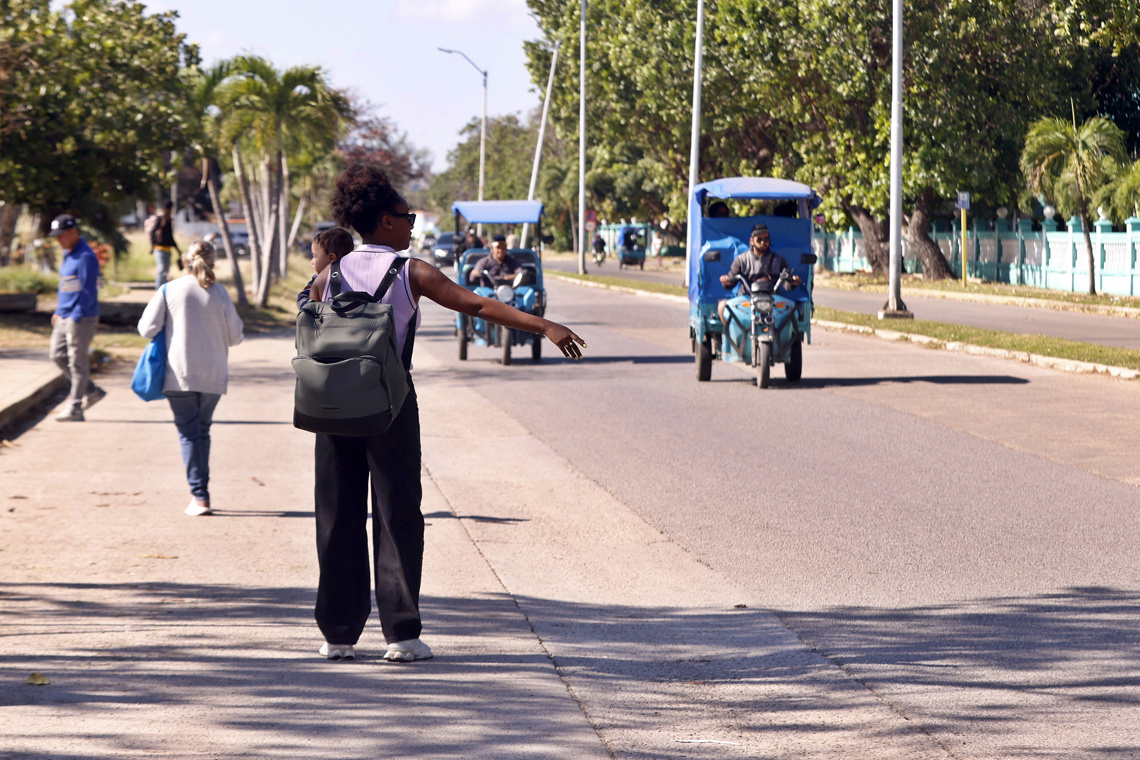
The same happens with MSMEs dedicated to public transportation. Private transport vehicles, which for years have alleviated urban and interprovincial mobility, today they are not transporting passengers. Not due to lack of demand, but due to lack of fuel.
Each suspended route has immediate consequences: mothers who cannot take their children to the doctor; older people who cannot get to a hospital or a consultation; families stuck in provinces unable to travel to meet or work.
Therefore, allowing the private sector to import fuel is a practical, urgent and deeply human decision. Giving energy autonomy to that sector means returning movement to the country’s private economy. It means that the farmer can sell his production; that the carrier returns to circulation; that the shop has merchandise to offer; for the food to arrive.
The profit is not for an abstract businessman. The main beneficiary is the Cuban people. And so is a mother, sister or child of those of us who live outside of Cuba. We all benefit from the effort and risk assumed by the owners of thousands of MSMEs that support supply chains on which our families depend, inside and outside the island.
And here the question is legitimate: if the United States Administration has expressed on multiple occasions its support for an economic opening in Cuba, is this not precisely one of its clearest expressions? Isn’t allowing the private sector to import fuel a real, concrete and measurable economic opening that recognizes the weight, role and responsibility that that sector already has in the country’s current economy?
Therefore, this measure should be celebrated, not attacked or restricted, as proposed by some local actors, the vast majority of whom no longer maintain direct family ties with the island.
Any attempt to stop or limit this private fuel import would be deeply counterproductive. It would hit the private sector, yes, but above all it would hit the Cuban people, who increasingly depend on these networks for food and transportation. And, paradoxically, it would end up benefiting a State that today does not have the capacity to provide fuel in a stable manner.
Fuel that arrives through private routes, wherever it comes from, should not be read as a political gesture or as a “trick” by the Cuban State. It is, in reality, an opening and a concrete, real and unprecedented opportunity. A practical response to an emergency that today weighs on millions of Cubans and that requires immediate solutions, not automatic suspicions.
Because in Cuba, when fuel runs out, it’s not just the engines that stop. The movement of daily life is extinguished: the table remains incomplete, the path is closed, care arrives late. And when that happens, the cost is neither political nor economic; It is human, intimate and it touches us all.