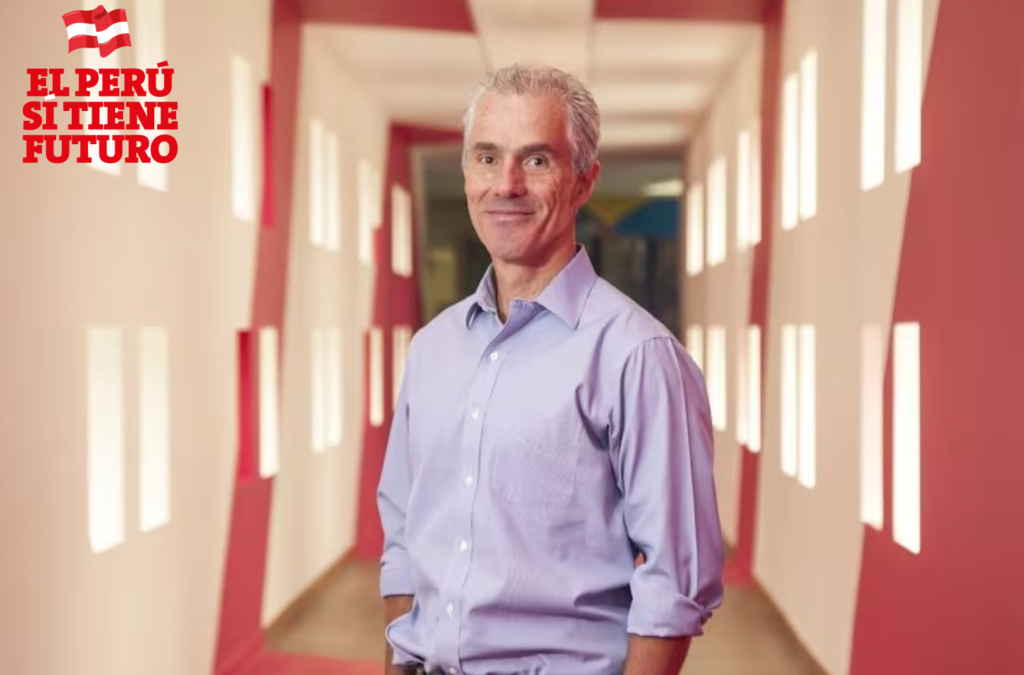
By Gianfranco Ferrari, Ceo de Credicorp, member of ESHOY
Peruvian politics is anything but perfect. In fact, with more than forty matches in the capacity to compete in the next elections and 62% of young people little or nothing interested in politics (according to Datum), it seems that the perfect cocktail for the electoral disaster of 2026 is already mixed, served half a drink. To this is added the recent background of having had six presidents and three different congresses in less than a decade, and the harsh reality that all the leaders chosen since the year 2000 face – or have faced – corruption processes.
With that picture, it may be difficult not to be pessimistic about what can come from next year. But if we have taught us the successive crises we have faced is that our democracy, our economy and, above all, Peruvians, we are much more resilient than we sometimes recognize. And although the political routine and behavior of our authorities do not always reflect it, this strength is sustained in a persistent vocation for development and in an instinctive defense – sometimes dispersed – of our freedoms. Despite the obstacles we have faced along the way.
We see it on multiple fronts. In macroeconomic terms, for example, Peru has shown remarkable stability, even when other countries in the region have demonstrated weaknesses. The Central Reserve Bank (BCR) remains an anchor of stability in the midst of uncertainty, and its technical conduction has protected the value of our currency against challenges that, until not long ago, were only seen in textbooks, such as presidential vacancies, the dissolution of Congress and a pandemic. Even in 2025 we have turned 28 years of inflation in a single digit, absolute merit of a BCR that performs with discretion, but with great effectiveness, while we prove that we have the ability to build and preserve autonomous institutionality beyond the colors and intentions of the Executive and Legislative on duty.
On the other hand, our ability to take advantage of our natural resources and the potential of our ecosystem is also a clear sample of how we can achieve unthinkable results in the tip of innovation and ingenuity, and without the situation or the forecasts against us stopping us. The case of the Peruvian blueberry is paradigmatic: a little more than a decade ago we did not export a kilo of this product, and it seemed unlikely that it could grow massively in our country due to the conditions it demands. Today, thanks to the arduous work of our agro -export companies, who knew how to wield science, technology and our land in our favor, we are the first exporter of the world of this berry.
And the latter comes with another key lesson: if we have been able to achieve excellence in new lands (until recently), there is no limit to what we can do with what we know and have in abundance. This is the case of mining and, above all, copper, an essential metal for the development of technology and clean energy. Peru is already the second world producer, behind Chile, and we have under our feet the potential to take first place. A process that demands, of course, the commitment of our authorities, but that puts in our hands the possibility of generating employment, reducing poverty and underpinning the development of the country.
In recent years, the private sector has also made advances in areas where they had not been achieved. Yape’s case shows it: more than five million Peruvians who were previously out of the financial system today can save, pay, transfer money and access credits from their phone, thanks to a technological tool that knew how to approach users instead of waiting for them to approach. But examples are left over, such as that of the massification of natural gas, which has taken cleaner and more economical energy to thousands of homes, or the rise of electronic commerce, which in less than a decade has consolidated a logistics network capable of delivering products in a matter of hours, connecting small businesses with customers throughout the country and making accessible what was previously unthinkable outside the big cities.
In the political field, we have already recognized it, we have a lot to work and improve, but it is also true that our democracy, and our defense of it, have resisted many storms in the last decade. A palmaria expression that the bases of our institutions work when they are tested. Although we have had six presidents since 2016, the procedure to replace them has never been in doubt and has been developed without shocks. Even when a president wanted to break the constitutional order, the resistance of our Armed Forces allowed the situation to be dealt with effectively. At the same time, citizens have remained active and attentive when the situation has demanded it.
Thus, it only remains to say that our resilience is not just a sample of what we can resist, or what we can achieve many times despite the circumstances. It is proof that we have the strength to do great things, to mark the course that we want to continue and to continue growing for the benefit of all Peruvians. We have the tools, resources and talent.