The details of that war, during the 14 years it lasted, from 1975 to 1989, were an open secret in Cuba.
HAVANA, Cuba. – Regarding Cuban participation in the Angolan war, there are too many gruesome details and dirty stories that have been omitted from the annals of Castro’s historiography, both in his time and now, when the regime commemorates in grand style the half century since the beginning of that conflict, the longest and most distant from the national territory in which Cuban soldiers have participated.
The details of that war, during the 14 years it lasted, from 1975 to 1989, were an open secret in Cuba.
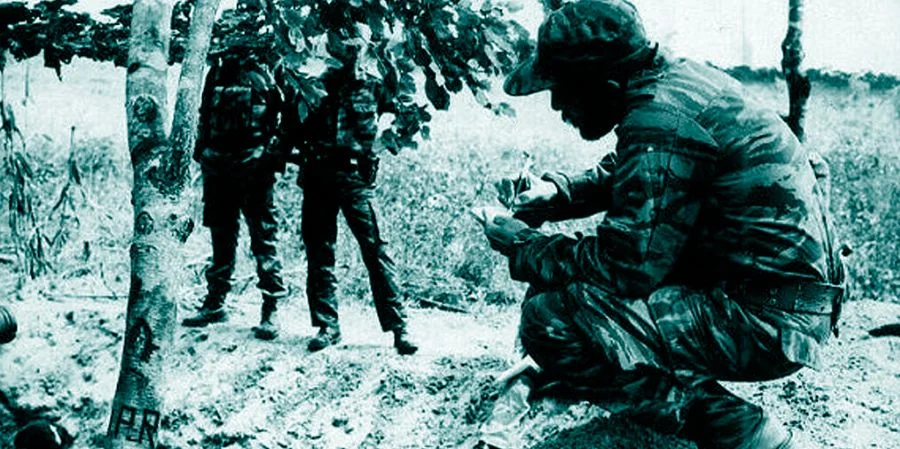
After the first 82 troops of the MININT Special Troops urgently dispatched to Angola at the beginning of November 1975, who traveled aboard a Cubana de Aviación Britania plane, the Cubans who were later sent to the African country during the early days of the conflict, were dressed in civilian clothes and below deck on Soviet or fishing fleet ships that stopped in the Guyana of the leftist Chedi Jagan before crossing the Atlantic.
In the Cuban press there were no reports of war and, much less, there was information about the casualties. We only knew about those killed in combat from their family, friends, neighbors or co-workers. And there were many. For this reason, there are doubts about the 2,655 deaths in the official version.
In conversations with some of those who participated in the war, many of them mutilated, with psychological consequences that still linger and that not a few of them try to drown in alcohol, terrible memories of their war experiences emerge. And they are not only about the sorrows they experienced or the companions of theirs who they saw die destroyed, not only by the enemy’s bullets and mines, but also, sometimes, by mistake, victims of “friendly fire.”
There are also testimonies of atrocities they witnessed. Several of them have told me the horror that they have not been able to forget about the civilians killed when the Cuban forces indiscriminately machine-gunned the huts of the kimbos (villages) where UNITA sympathizers lived. They say that their bosses didn’t seem to worry much about it: they considered it inevitable, like the eggshells that had to be cracked to make an omelet.
Contradicting the official story of the brotherhood between Cubans and Angolans, several veterans report that there were high officials of the Island who could not hide their racism, conscious or not, and contempt for the natives, whom they considered cowards, lazy and unreliable. This is confirmed by the testimony of an officer who, in the endlessly repeated television series The epic of Angola He relates the anecdote that in November 1975, during the battle of Quifandongo, to harangue the soldiers of the Popular Armed Forces for the Liberation of Angola (FAPLA) who were weakening before the enemy, they had to climb into an armored vehicle “a man from Matanzas, black like them but taller” who posed as a god of war and assured them that they would win thanks to his spells.
The Angolan regime shared with the Cubans the lack of confidence in the men of the FAPLA. Not only traitors and deserters were put to death. According to a report by Amnesty International, 170 FAPLA soldiers who were prisoners of the South Africans and were exchanged in September 1987, were transferred to Luanda and shot “for failing to do their duty.”
The Angolan and Cuban commanders and the Soviet advisors did not spare the lives of the FAPLA soldiers. Suffice it to remember that in addition to the heavy casualties of the FAPLA in its failed offensive in August 1987 to expel UNITA from its strongholds in the cities of Jamba and Mavinga, in the battle of Cuito Cuanavale, only between December 1987 and April 1988, when there were still two months left before the end of the campaign, 4,785 FAPLA soldiers died, according to figures from the Angolan Government.
In the bloodbath that followed the attempted coup d’état on May 27, 1977, led by former Interior Minister Nito Alves against President Agostinho Neto, there were, according to conservative figures, more than 4,000 deaths. Many of them were killed by Cuban forces, who played a crucial role in crushing the rebellion and some do not rule out that they may have participated in the executions of the rebels.
If this was how the treatment was with the men of the FAPLA, you can imagine what it would be like with the men of the UNITA, whom, as a result of racial prejudice and anger at not being able to defeat them despite the superiority in men and weapons, they considered cruel and superstitious savages and even accused of committing acts of cannibalism.
There are testimonies – among them from the writer Norberto Fuentes, at that time very close to the FAR general – of the participation of Cubans in interrogations, torture and extrajudicial executions of UNITA guerrillas.
On the other hand, there were many shady dealings of Cubans in Angola. And I am not only referring to the trafficking for food with the hungry Angolan residents in the candongas, but also to the trafficking of diamonds, ivory and precious woods, undertaken not only by the general Arnaldo Ochoabut also by other of his subordinates, who behaved like looters from an occupying army, only they suffered the fate that their executed leader did not have.