History helps us understand the deep meaning of North American action against the Caracas regime.
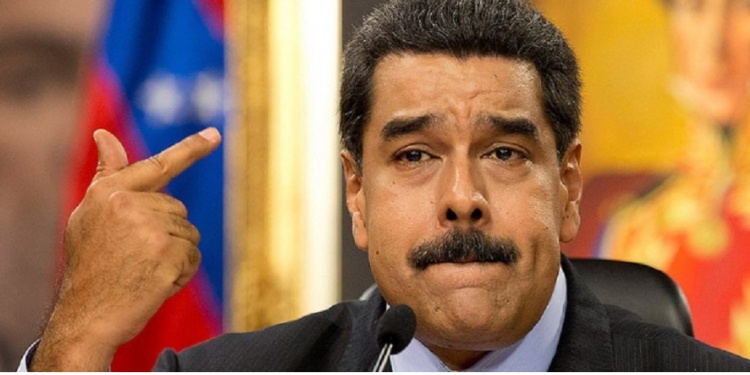
HAVANA, Cuba – The brilliant military action undertaken by the Donald Trump government that led to the capture and subsequent transfer to the United States of the Venezuelan dictator Nicolás Maduro and the “first combatant” Cilia Flores have unleashed reactions among various sectors of political thought. As a rule, libertarians have welcomed the strong measure, while among leftists the reactions have been rejection.
I would say that, among the latter, the president not elected by the people in Cuba, Miguel Díaz-Canel, has stood out. This “Mr. Homeless” even urgently called a demonstration of the “fighting people” for the so-called “Anti-imperialist Court” on Havana’s Malecón. The speech he gave (as well as the statements of other Cubans who, as could be expected, point in the same direction) have received wide coverage in the official news programs.
The speech of the “hand-picked president” was characterized by the exalted “anti-Yankee” tone. And to such a great extent that, at the beginning, he considered it necessary to shout three times the slogan “Down with imperialism!” At its end, of course, there was no shortage of slogans of ancient Castro tradition, such as “Homeland or Death!” and “Socialism or Death!”
For his part, Colombian President Gustavo Petro flatly rejected the action ordered by Trump. In long posts in He also said that “he is not concerned at all” about possible North American actions against his government.
Well, he should be! Because the American president, in response to questions posed to him by a colleague of ours at his press conference today, expressed that Petro “has to take care of his ass” (this, if we use a delicate translation, since the term used by Trump in English—“ass”—is much more blunt).
On the opposite side, it is worth highlighting the opinions of Argentine Javier Milei, who, in addition to recognizing the dictator status of the now prisoner, linked him to narcoterrorism and described him as “the greatest enemy of freedom” on the continent. No less blunt was his Ecuadorian counterpart Daniel Noboa, who warned: “All narco-Chavista criminals have their time.”
But beyond the statements of one sign or another published by political leaders of different tendencies, I believe that it is useful to objectively evaluate the specific results that, throughout history, the interventions carried out by the United States in different countries of our Hemisphere have yielded.
Like, for example, the one carried out in Granada in 1983, following the assassination of the Prime Minister, Maurice Bishop, by some of his own most exalted coreligionists. In this case, North American action put an end to the de facto regime implemented under the pretext of “making the revolution.” His rule, in turn, implied the non-holding of popular elections. This situation changed after the US action; Granada returned to the democratic system, which it happily maintains to this day.
Or what to say about Operation “Just Cause”, carried out against the Panamanian dictator Manuel Antonio Noriega? The latter did not know the results of the elections in which the opposition candidate Guillermo Endara obtained a clear victory. In January 1990, and despite his many previous boasts with his paramilitaries (who received the boastful name of “Machos del Monte”), Noriega chose to hide from the North American invasion.
However, hours later he was captured and subsequently tried and punished for drug trafficking; He died in prison 17 years later. For his part, Endara took possession of the first magistracy; A dozen days after the invasion, the US forces withdrew, and Panama, already under the presidency of Don Guillermo, quickly returned to democratic normality, in which it has remained until today.
Another older example that is also worth mentioning is the military action deployed in the Dominican Republic in 1965. In this case the forces of the great country of the North intervened in the midst of a situation of anarchy, characterized by the existence of two governments. One of them, headed by Colonel Francisco Caamaño, had clear pro-Castro sympathies, and so much so that, ultimately, that man ended up in Cuba, where he received help to organize an expedition that landed in his country in February 1973; days later he died.
For their part, the US forces, after seeking to eliminate the extreme results of the bicephaly prevailing in Quisqueya, delegated their responsibilities to a multinational force created by the Organization of American States (OAS). In short, after a year or so of stay in the country, the foreign forces withdrew from the Dominican Republic, where constitutional order has prevailed ever since.
But what need is there to burden ourselves with the study of situations faced by other neighboring countries, when we have the example of Cuba itself! It is true that the First North American Intervention began in the 19th Century. It is also true that Castro’s historiography He insists on convincing us that, with that action, our neighbors to the North “snatched from the Liberation Army the victory that was already within reach.”
This statement is highly debatable (to say the least). In reality, there was a stalemate in Cuban-Spanish hostilities. The arrival of the American soldiers meant a great relief for the Mambises. It was not by chance that the generality of these expressed their satisfaction with the intervention of our northern neighbors in the war.
After the withdrawal of the Hispanic colonialists, an Intervening Government was established that was, yes, chaired by an American, but in which Cubans of recognized prestige occupied different secretariats. That administration healed the country and made it possible for it to recover from the terrible destruction suffered during the War of Independence.
In short, the Americans withdrew and, despite the Platt Amendment, if they intervened in Cuba for the second time it was only due to the obstinacy of Tomás Estrada Palma, a good patriot and honest politician in the administration of public funds, but a bad democrat, reluctant to admit his fellow citizens’ rejection of his re-election.
I have tried, dear reader, to give a brief account of the background of the very recent US action in Venezuela and some reactions that certain political leaders have had to it. But I consider that the fundamental thing is that the capture of the dictator Maduro leaves a very clear message to the socialists with a totalitarian vocation in our Hemisphere; particularly those from Cuba. That constitutes an admirable example that other democratic governments would do well to follow in the face of the few dictatorships that still survive in Our America.