Ronin Report
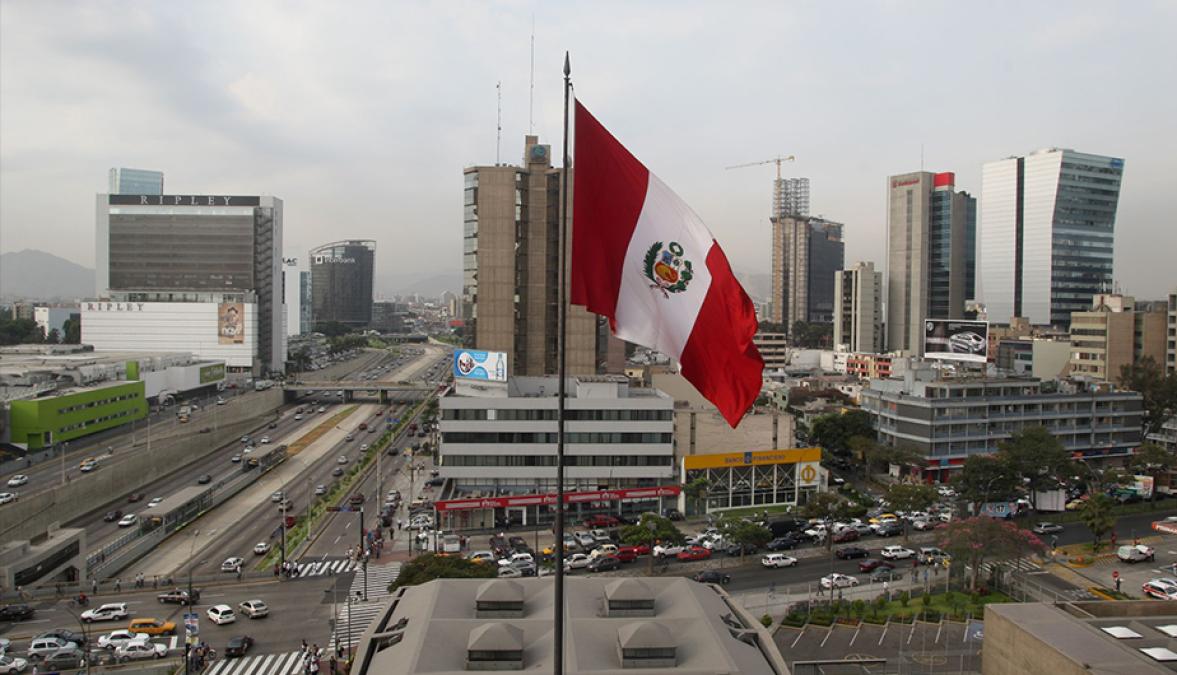
The peruvian economy has shown relatively good dynamism in recent years. GDP growth would have been above 3% for the second consecutive year in 2025, domestic demand would have grown above 5% and private investment at a rate close to 10%.
This behavior has occurred in a context in which our terms of trade, that is, the relationship between the prices of the goods that we sell abroad (copper, gold) and the prices of the goods that we buy from abroad (oil, agricultural inputs) are at maximum levels of at least 75 years, a period for which there is an official record (see graph 1).
Going forward, the big question that arises is whether we can maintain the current rate of growth, whether it would slow down or could be greater. In our base scenario, the one with the highest probability, it is projected that GDP would grow around 3% on average during 2026 and 2027 (see graph 2).
The external environment would be relatively favorable. The terms of trade reach new historical highs due to the global energy transition process, the rise of artificial intelligence and the weakness of the dollar as a safe haven asset. The US Federal Reserve continues to cautiously cut its benchmark interest rate and global economic growth remains stable, although slightly below the average of the last 25 years.
Internal environment
Regarding the internal environment, no adverse climate shocks are expected, inflation would continue to be controlled, the new government maintains the rules of the game and business confidence does not deteriorate significantly. However, electoral uncertainty would have a negative, although limited, impact on capital flows and private investment, as suggested by international evidence for this type of episode1.
In an optimistic scenario, economic growth could accelerate to rates close to 4% if the new government sends unequivocal signals of stability and commitment by announcing some key reforms in terms of deregulation and strict compliance with fiscal rules. In addition, the new Public-Private Partnerships Law (APP), which simplifies processes and limits the MEF’s intervention to fiscal matters, would have to demonstrate its effectiveness in accelerating infrastructure projects.
It cannot be ignored that there is a pessimistic scenario, the probability of which is not so low, where growth falls below 2.0%. This would materialize if an El Niño phenomenon of moderate to strong magnitude occurs, quite similar to the one that occurred in 2023; Likewise, social conflicts resurface that paralyze investment projects, fiscal accounts deteriorate even further and the new government erodes the confidence of businessmen with populist measures. This scenario is a reminder that current macroeconomic fundamentals are a cushion, but not a shield against bad policy decisions. In this way, the new government will be fundamental in determining which of the scenarios presented we would find ourselves in.
Productivity, the structural burden!
Beyond the political-electoral cycle, the Peruvian economy has a structural burden: its low productivity, said Isaac Foinquinos, chief economist at Ronin. He indicated that the lower growth of the last decade is mainly explained by the fall in total factor productivity.
He stated that increasing productivity implies attacking underlying problems: an environment for doing business that forces you to wait 180 days for a construction permit, that takes 75 days to register a company or that consumes 480 hours a year in tax procedures.
In addition, he indicated that it is urgent to redesign the inefficient execution of public investment, where World Bank studies indicate that almost 50% of the projects started since 2012 are paralyzed or abandoned, wasting resources equivalent to more than three years of investment.
1Maria Arakelyan, and Tatiana Evdokimova. “Elections Matter: Capital Flows and Political Cycles”, IMF Working Papers 2025, 243 (2025), accessed 2/1/2026.
Receive your Perú21 by email or WhatsApp. Subscribe to our enriched digital newspaper. Take advantage of the discounts here.
RECOMMENDED VIDEO