Promises of future solutions contrast with the reality of prolonged blackouts that hit the Cuban population.
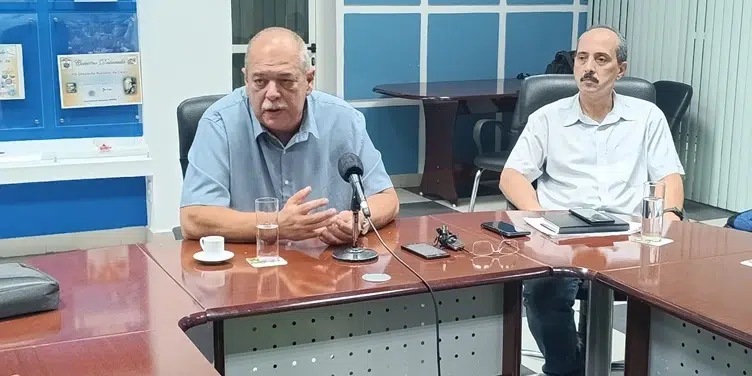
Madrid, Spain.- The Minister of Energy and Mines of Cuba, Vicente de la O Levy, spoke on Wednesday of the critical situation of the National Electrical System (SEN) in an interview broadcast by the official Caribbean channel. The statements occurred a week after General blackout on the islandwith cuts of more than 48 hours in some territories.
According to The headline explained, The blackouts have worsened in recent days due to a combination of faults: the output of Unit 1 of the Felton thermoelectric plant, a breakdown in the location of Mariel’s engines, the shot of Unit 5 of Nuevitas and the non -entry into operation of block 5 of rent after its maintenance.
The breakdown in Nuevitas forced even to suddenly turned off a large part of the Havana circuits, last Monday, to prevent Sen collapse again.
Fatanas out of service
O Levy also reported on the state of floating generation, known as Patanas: of eight units only two remain in the country, with a joint contribution of just 70 megawatts. The withdrawal of these vessels, which for years palliated the energy crisis, was due to the breach of lease payments by the Cuban regime.
The minister admitted that the electrical crisis is marked by aged technologies, postponed maintenance and lack of financing for size repairs.
Empty promises
The official said that in the next few days the SEN Unit 1 of Felton (more than 220 MW) and Block 5 of Renté, already in the setting phase. The breakdown in Mariel’s engines would have been solved.
He also stressed that in the country there are 650 MW of solar generation, with plans to reach 1,000 MW in December. He also announced the arrival of battery systems to store energy and regulate the frequency of SEN.
According to De O Levy, during October, units 4 of the Carlos Manuel de Céspedes and the 2 of Santa Cruz del Norte must be synchronized to the system. In addition, in December an integral intervention in the CTE Antonio Guiteras, the largest in the country, coinciding with the season of lower electrical demand.
Regarding the fuel and lubricant supply, he said that the situation is not the worst in terms of distributed generation, although he recognized difficulties with oils, which, according to, should improve in the next few days.
The minister’s explanations do not convince Cubans. In the publication of Caribbean channel On Facebook, several users claimed that “problems and more problems” are announced, but never clear solutions or concrete dates.
Others recalled that from the so -called “energy revolution” it has not been thought of thoroughly repairing thermoelectric plants, and now everything is limited to “remitish and corrections”, with the people paying the consequences through prolonged blackouts. It was also noted that electrical instability has hit national production, deepening the economic crisis and inflation.
In summary, the feeling among citizens is of tiredness and distrust: many say that “everyone knows where the problem is”: in the incompetence of the government; while everyday reality translates into darkness and endless blackouts.