The administration of Nicolás Maduro adds actions to what considers the “threats” of the United States to justify a regime change in Venezuela. If an external statement is dictated, two types of states of exception would be in force in the country, it indicates access to justice. In April of this year an economic emergency in the US warfare entered into force
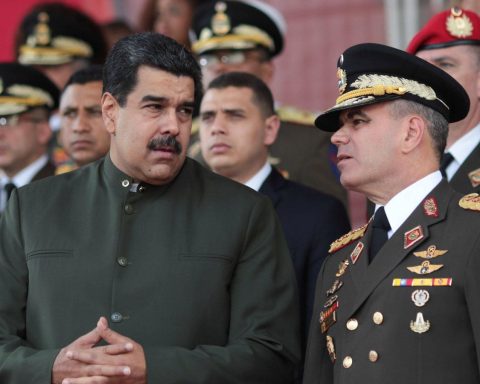
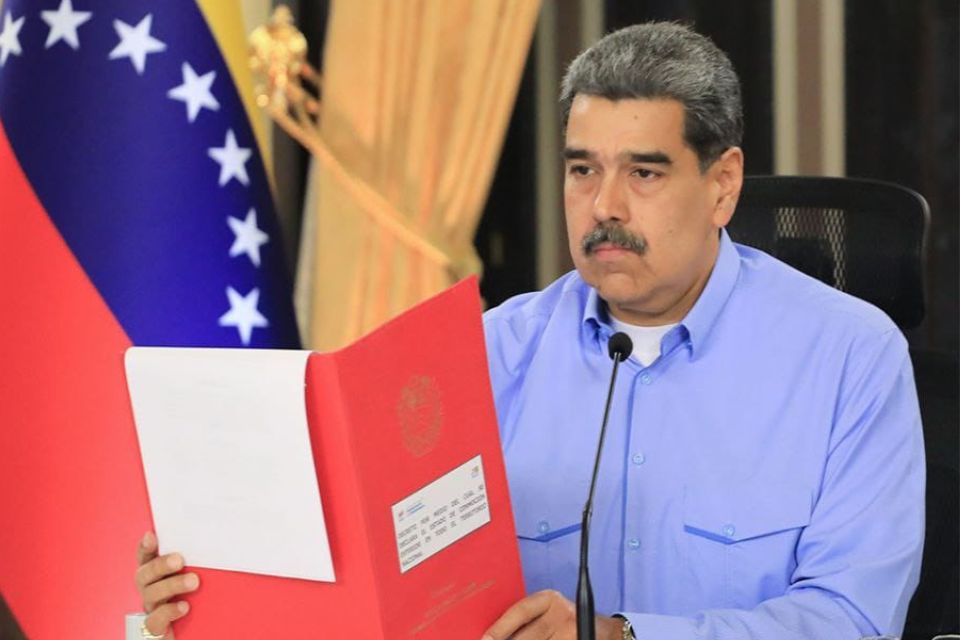
Nicolás Maduro announced on Wednesday 23 that evaluates the declaration of a “state of exterior shock” due to the threats of the United States after the deployment they have done in the South Caribbean, involving destroyers and Airplanes F-35, in anti-drug operations.
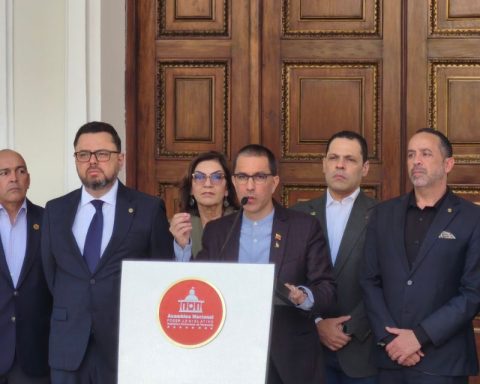
As Maduro explained together with the representatives of the public authorities, the measure is justified that “the entire nation” and each “citizen and citizen of this country has the support, protection and activation of all the forces of Venezuelan society to respond to threats or, if the case is given, to any attack that was made” against the country.
Since the deployment of the US, which has reported seizures, the destruction of four “narcolachas” and the death of at least 17 people in these attacks, the Maduro administration responded by calling for a “permanent enlistment” and the training of these people every week.
*Also read: Maduro evaluates to declare “state of external shock” against “aggressions” of the US
This training goes through weapons management, space evaluation and learning in combat techniques. Now, with an external shock decree they prepare “for any scenario to guarantee, the stability, the exercise of the sovereignty and the union of our country.”
The Venezuelan Constitution, in its article 338, indicates that this measure can be decreed in case of internal or external conflict “that seriously endangers the security of the nation, its citizens, or its institutions.”
Access to Justice explained In a note That any state of exception must be issued “by obvious, clear and tangible situations, not for mere speculation without tangible and transparent reasons that show the need to decree the exception.”
If dictated, the organization recalled, it would be the first time that a state of exception of this type is dictated since the 1999 Constitution and, in addition, two types in the country would be in force: the economic emergency, in force since April 2025, and that of external shock.
An external shock state has a maximum duration of 90 days, extendable for a similar amount of time. The powers assumed by the Executive are the same in all cases, but without limiting a series of constitutional rights:
- The right to life.
- Prohibition of incommunication and torture.
- Right to due process.
- Right to information.
- Right to recognition of legal personality.
- Family protection.
- Equality before the law, the nationalitypersonal freedom.
- Prohibition of forced disappearances of people.
- Right to constitutional protection.
- Right to participation, suffrage and access to public function.
- Right to personal integrity (physical, psychic and moral).
- Prohibition of being subjected to slavery and servitude.
Access to Justice stressed that, although the Constitution expresses that there are rights that cannot be limited, “the truth is that in practice the restriction of rights always affects others by being closely linked to each other.”
Attributions in a state of external shock
The Organic Law on states of exception attributes to the President of the Republic, in the Council of Ministers, to exercise certain actions such as taking “all the measures that it deems appropriate in those circumstances that seriously affect the security of the nation.”
Access to justice pointed out that, although it is a generic statement, these measures must adhere to the limits established by the Constitution itself.
The president can also impose extraordinary services on citizens and legal persons, limit or ration the use of services or the consumption of essential items; make erogations that are not established in the Budget Law, that is, establish new expenses without parliamentary control; the temporal suspension of those laws that clash with measures taken in the exception decree.
Likewise, the president has the power to mobilize the components of the armed force or requisition the movable or immovable property that must be used to restore normality.
At this point, access to justice explained that these confiscations must be made in writing, with the obligation to return the assets or compensate the owner if they suffer damage or are unusable.
The organization said that the Executive assumes “huge” powers in the states of exception, “in most cases, at the expense of citizens’ rights. Therefore, even based on the fact that these limitations are necessary for the sake of the common good, they must be executed in accordance with constitutional principles, namely proportionality and temporality, because after a state of exception, there must be more democracy, no less ».
*Journalism in Venezuela is exercised in a hostile environment for the press with dozens of legal instruments arranged for the punishment of the word, especially the laws “against hatred”, “against fascism” and “against blockade.” This content was written taking into consideration the threats and limits that, consequently, have been imposed on the dissemination of information from within the country.
Post views: 86