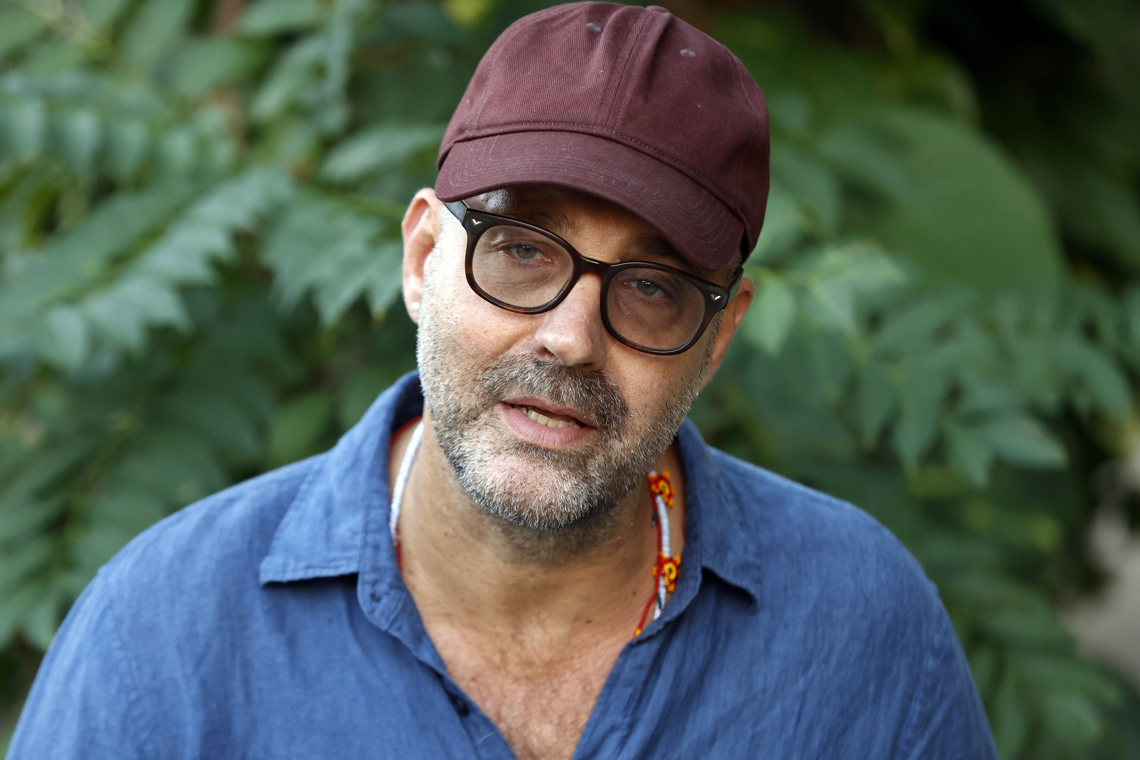
He Havana film festivalwhich concludes this Sunday, was an event of contrasts for Cuban director Fabien Pisani.
On the one hand, the organizers agreed to screen their documentary about government censorship during the reggaeton boom in the ’90s. On the other hand, they refused to show their new biographical film about the singer-songwriter Pablo Milanés.
The decision of the cultural authorities was taken on the wrong foot. Accustomed to the vagaries of censorship or, at best, having to go through contradictory filters, he hoped that perhaps it would be his story about reggaeton. In the hot one. Stories of a reggaeton warrior (winner of the Gabo 2025 Award in the Image category) who did not pass the screening.
But no, it was the documentary Living. The relentless time of Pablo Milanésan intimate portrait of one of the greatest icons of Nueva Trova. A loved and respected figure on the island, but who also generates veiled suspicion within the Cuban ruling party due to his criticism of the system, especially during his last years of life.
“I think what bothers him most is his sincerity (…). He speaks without resentment, he is someone who is angry with things that he considers betrayed the history of the revolution itself and (…) the sacrifice of this people who gave him everything and who, suddenly, in the end, was left with very little,” reflects Pisani in an interview with EFE.
Against the odds, the poster for this second film, made by the acclaimed Cuban-American artist Edel Rodríguez, was awarded the Coral award as the best in its category.
The illustrator, who lives in the United States, gave permission for Pisani to collect the award on his behalf. But the organizers preferred not to give it to him at the closing ceremony, like everyone else, according to what the director told EFE.
It was the culmination of a bumpy festival. Between blackouts and unexpected – and unannounced – schedule changes, In the hot one. Stories of a reggaeton warrior It was close to not projecting.
Censorship of reggaeton
in the hotreleased in 2024, narrates the emergence of reggaeton on the island through Candyman, a key artist of this underground musical movement.
During the documentary you can see how, after the years of the economic crisis due to the fall of the Soviet bloc, the urban genre spread clandestinely, reviled by the authorities of the Communist Party, who considered it “vulgar.” In addition, the persecution and censorship against Candyman is denounced, specifically, in eastern Santiago de Cuba.
Pisani manages to embody the moralistic contradictions of the Government, and its distancing from the humble sectors of the country, through a personal story that, he considers, represents his generation.
“Since the eighties I realized: my generation, the generation that comes just after the first generation of the children of the revolution, who reach professional age (…) and suddenly they wanted to change things. Not even questioning the structure of power (…). It was simply: ‘I don’t understand how these things work. You taught me to think and I want to change the game’. And the system was not able to assimilate that dissent and that’s where everything stagnated,” he says.
Living. The relentless time of Pablo Milanés It was not shown in the festival’s cinema circuit, but it was shown in a parallel screening at the Norwegian embassy in Havana. The diplomatic legation did the same a year ago to show the documentary about reggaeton.
Pisani, based in Mexico, does not lose hope that his film about the author of hits like ‘The Brief Space in Which You Are Not’, a musician especially loved on the island, can be screened at some point in Cuban cinemas.
independent assembly
This year’s episode at the festival is the latest in a series of tensions between the Cuban audiovisual sector and the island’s cultural authorities.
Their differences led to the creation in 2023 of the independent platform Assembly of Cuban Filmmakers (ACC), with dozens of members and the support of key figures in the sector and other artists in the country.
For Pisani, many decisions that have been made from official circles have been based on the rejection of “the slightest dissent,” and that has prevented Cubans from having an open conversation about their own history.
“What surprises me is the inability we have to assume our own history. For me that is like a symptom of a moral crisis and a decadence at an institutional level, that we are not able to (…) understand that in the worst of our history there is also the best of our history,” he emphasizes.
Author: Juan Carlos Espinosa.