Madrid/Inventing, a concept that is both used and carried out – by force – in Cuba, is increasingly less rewarded. State-owned companies that owe money to anirists (innovators and rationalizers) has reached unsustainable figures, despite having reduced so far this year. At the end of 2024, there were 1,033 entities that had not remunerated associates, a number that now stands at 876 “despite the fact that they already benefited from the monetary or social result that they [sus propuestas] generated, Lidier Águila Machado denounces to the official press.
The official is the president of the National Association of Innovators and Rationalizers (Anir), the organization that brings together people who present creations or ideas that improve the results of an economic sector and is currently holding its Third National Conference. The data it handles is devastating: the loss of trained workers, especially accountants, along with the scarcity of economic resources, has caused companies to stop paying those who generate extra benefits with their work.
This is the case of the 101 companies belonging to the Ministry of the Food Industry that are not paying the aniristas, one of the sectors, due to its importance in food security, that most needs incentives for innovation. According to a note published this Monday by WorkersIn Villa Clara there are delays in the Meat, Fish, Dairy, Beverages and Soft Drinks companies and the Provincial Food Producer and the cause is “the lack of financial liquidity and the fluctuation of the personnel in charge of the economic-accounting process.”
This is the case of the 101 companies belonging to the Ministry of the Food Industry that are not paying the Aniristas
Águila Machado maintains that another obstacle that complicates the situation is the fact that the procedures involve travel that discourages innovators. “If conditions are not created for them to go and establish their proposals, they would spend their personal resources to move from one municipality to another, or they simply would not do it.” Furthermore, there is the dilation of time. Once a proposal is registered, there is one month for it to be examined by a commission and two months, if it works at the national level, to determine if it is innovation or rationalization.
When it is in practice, there is a year for it to begin to be paid if it produces results, but the president of Anir affirms that sometimes it is delayed so as not to pay if there are losses in the business sector or because it was not planned in the budgeted sector. The situation is generating a lot of discomfort among the Anirists, who demand that the administrators be held accountable.
Jorge Luis Fajardo Casas, general secretary of the National Union of Food Industry and Fishing Workers, believes that the payment is being missed – and with it Law 38 that regulates it – because the leaders lack “training” and asks the members to be the first to be interested in how the process works. “To demand, you have to know.” Workers He has consulted with two administrative officials who point out that the files are full of errors and in many cases the documentation comes and goes.
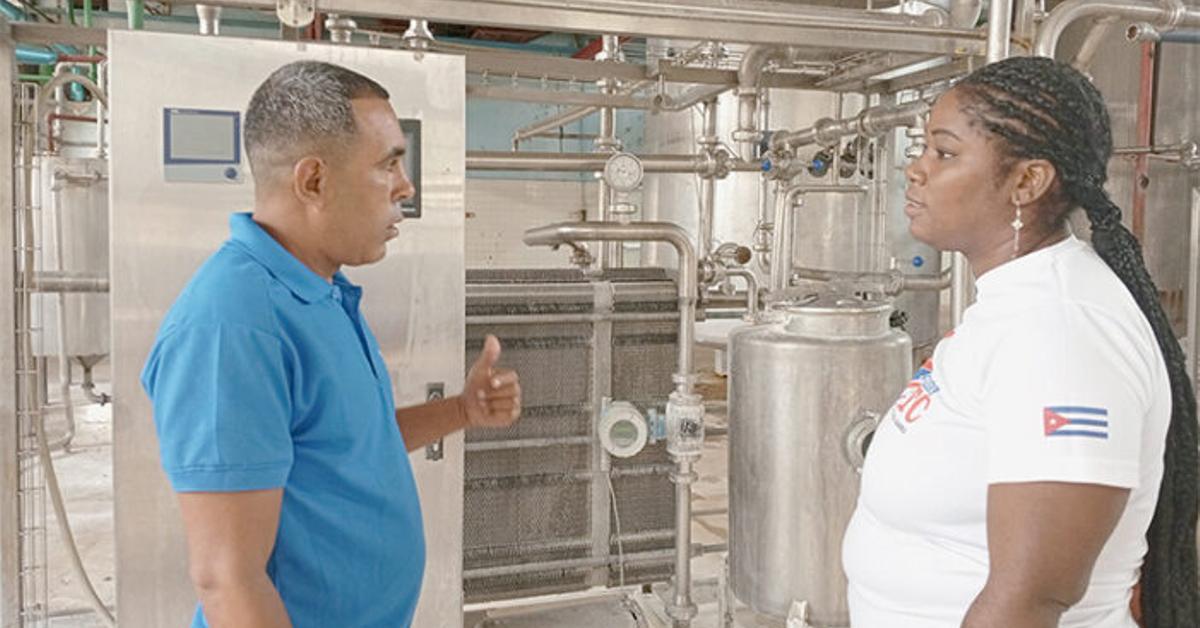
The note leaves some good examples of people who, after finding solutions that have increased productivity, are still waiting to be financially recognized. This is the case of Yolexys Viquillón and other mechanics from Matanzas Lácteo Colón, who at the beginning of 2024 managed to get the pasteurizer working and are still waiting for payment. “The check is ready. That’s what they told us,” he argues resignedly.
The situation is worse at the Pinar del Río Torrefactory, where “they do not remember the last time they made payments for Law 38. Of course, they know that more than a five-year period has passed.” In their case, they defend themselves, Anir’s own functioning has delayed things. The members of the association are the first involved in making the mechanism work: in addition to helping with registration and registration, they must appoint the evaluation commission and also partially manage what is known as the “30% account.” Of the total benefits generated by a creation, 70% stays with the company and the rest goes to a fund for associates.
Another example is in the Matanzas Dairy, where “Gerardo Soriano Díaz claims not to have received anything for ‘solving so many problems.’” This mechanic, along with two colleagues, has recovered such a large number of bombs that he does not remember them, but “they have never seen a cent.” “We contribute millions and receive kilos,” several interviewees told the official media.
This mechanic, along with two colleagues, has recovered a quantity of bombs so large that he does not remember them, but “they have never seen a cent”
Águila Machado regrets that non-remuneration goes beyond the clear economic damage. “As an organization we would be losing the opportunity to morally recognize and encourage the men and women who work wonders in the midst of resource limitations to solve problems that impact the production of goods and services, and the progress of the country,” he reproaches.
At the Third National Conference of Anir, the text states, there were several associates who complained about this lack of capacity in those responsible for evaluating innovations and how this affects the calculations, approving amounts well below what was expected. Antonio Aguilera Franco, founder of Anir and inspector, believes that it is essential to inspect. “Not to fine or sanction, but to contribute to quality and efficiency, including the use of the 30% account. No director is authorized to use those funds to pay workers. That has happened,” he denounces.
The note does cite some success stories, such as that of the La Conchita Fruit and Vegetable Canning Factory Company, in Pinar del Río, where innovations have left more than two million pesos that are registered and distributed in a satisfactory manner, or the Villa Clara Roasting Factory, which pays the Aniristas well and on time. “It makes a payrollyou go to the bank, withdraw the money and pay at the cashier. The Anir allows you to keep the fund active and guarantee payments,” says the head of the entity’s economic department.
In some cases, goods such as incentives, household appliances or electric motorcycles are also delivered to those who make an individual contribution, something that the union members consulted consider should be applied more, both in kind and in money. “We must bond more with the associates. This organization needs to be attended to with the rigor and systematicity that this implies,” he warns.