While the international community announces record funds for the Melissa emergency, the inhabitants of eastern Cuba assure that they do not receive donations and live between blackouts, shortages and state abandonment.
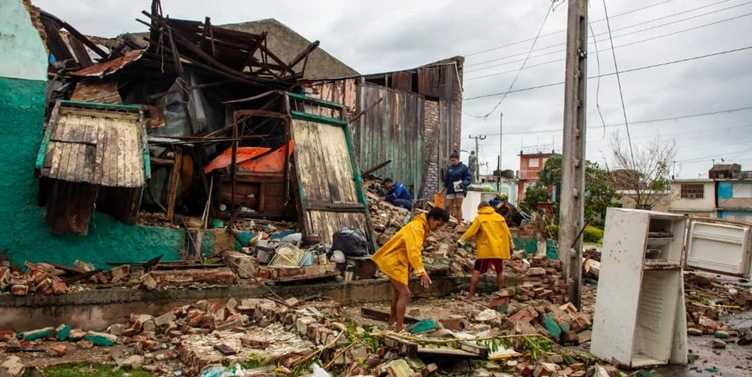
MADRID, Spain.- Almost two weeks after Hurricane Melissa passed through eastern Cuba—which left more than 90,000 homes damaged and around 100,000 hectares of crops affected, according to data from the United Nations System on the Island—hundreds of residents of Holguín, Santiago de Cuba and Granma assure that the announced international aid is not reaching the hardest hit communities.
After a publication of CubaNet on Facebook inviting readers from the east of the country to report what they had received, the response is overwhelming: almost 800 comments in a few hours, mostly denouncing minimum deliveries, sales in warehouses or total absence of donations.
The testimonies describe a panorama of precariousness that contradicts the official discourse. Neighbors from different Holguín municipalities claimed to have received only basic rations. One user wrote: “Two pounds of rice, one of oil and peas, from then on nothing more.” Another resident of Holguín indicated that they were only given “1 pound of sugar,” while a third reported that “a given package arrived as a gift but noted in the quota as that month’s rice and a pound of sugar.” In San Germán, Holguín, another person said that first they received “one pound of rice and then four,” and nothing more. In neighborhoods like Vista Alegre, also in Holguín, they claim that they have not received sales or donations, and that some areas continue without electricity due to transformers damaged by the cyclone.

The complaints are repeated in Santiago de Cuba. From Chivirico, in the Guamá municipality, a resident stated that what arrived were products sold in poor condition: “churrioso rice”, peas “from how many years ago because they are difficult to soften” and a can of sardines that he presumes came from Spanish donations.
Other comments point out the sale of sardines that are about to expire, rationed oil and small quantities of chicken given only to children and the elderly. A resident of the Santiago municipality described that after the cyclone they received “a pound of chicken for a child” and, as she said, also a pound of minced meat “because it was going to spoil due to the lack of cold.” In Palma Soriano, the situation is similar: residents report that no donations have arrived, that they remain without power or drinking water and that many are sick while waiting for assistance.

In Granma, the perception is equally critical. A neighbor wrote that, although the news announces the arrival of aid, “the reality is zero,” and that not even the basic basket has been distributed normally. In Bartolomé Masó, another resident explained that first they were sold one pound of rice per person, then three more, and small quantities of chicken only for children and those over 65 years of age. “Absolutely nothing else,” he summarized.
In addition to the shortage, numerous comments denounce the lack of electricity since the hurricane and the total absence of state equipment in the damaged territories. “To date they have not turned on the power nor has anything arrived,” wrote a neighbor from Mayarí. In Santiesteban, Holguín, another user reported that they continue “with the virus and without power since the cyclone.” For families, the dominant feeling is abandonment: “We are living on our own. Total abandonment,” said one resident.
Among those who comment there are also Cubans abroad who directly questioned the destination of the donations. “What are you waiting for to ask about the millions that have been given in aid?” wrote one user. Another person requested a collective claim to demand that “the tons of food, clothing, medicines and supplies that were donated to the people be delivered.” In the midst of these reactions, a resident commented that, after reading testimonies from different affected areas, he now understands why many countries condition their donations to avoid “diversion” and asked that the distribution be publicly monitored.
Millionaire aid without clarity or real access
Citizen complaints contrast with recent announcements from the international community. The UN presented an assistance plan valued at 74.2 million dollars to support the recovery in the east of the country; your Central Emergency Response Fund released 4 million dollars before impact of the hurricane as an anticipatory action, although until now there is no public information on the use of that money.
The United States offered $3 million to address the emergency and Norway announced a contribution of $400,000. The UN agencies also indicated that the damage to homes and crops is greater than those officially recognized by the Cuban Government, with increases of 15% and 22%, respectively. In this context, organizations and specialists point out that the Cuban Government has a historical pattern of opacity in the management of funds and donations, which feeds the citizen perception that a good part of the humanitarian aid is lost within the structures of the State without reaching the victims.
Meanwhile, the testimonies collected point to a general feeling of distrust and fatigue. For those who live in devastated areas, the international aid announced does not match the reality they face every day: minimal rations, spoiled food, sales instead of free deliveries, and entire communities still without electricity or water. In a context marked by precariousness and lack of transparency, thousands of families in eastern Cuba continue to wait for the promised assistance to actually reach their hands.