The electric union reported that 40 % of Cuba will be without light this Tuesday night.
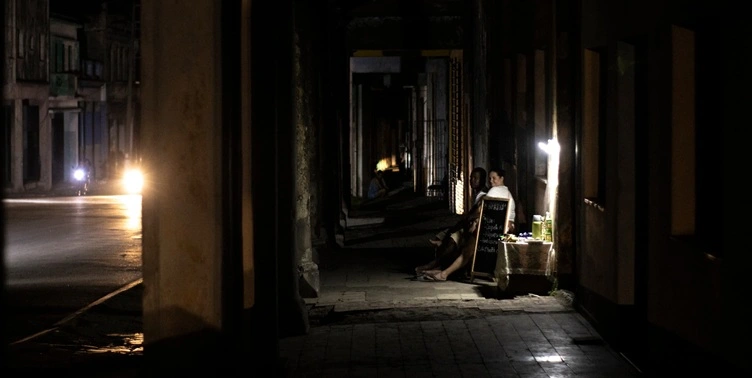
Madrid, Spain.- The Electric Union of Cuba (UNE) reported that on Tuesday the country faces a generation deficit that will cause simultaneous blackouts in around 40 % of the national territory, especially during the time of greatest consumption in the afternoon.
According to official data, the maximum available generation capacity amounts to 2,155 megawatts (MW), compared to an estimated demand of 3,450 MW, which generates a missing 1,295 MW and an expected affectation of 1,365 MW.
In comments to the publication of UNE, citizen frustration has become evident. “I don’t know where they get the demand, because with the blackouts that are seen daily they must be super good to generation,” said a user. Others pointed out the lack of credibility of official reports: “In Artemisa they say that there is almost no deficit, but yesterday we were 13 hours without current.” There were also direct criticisms of UNE for its management, allegations of breakdowns in plants such as Nuevitas and Mariel, and comments that point to the repetition of the same failure cycle: “From here to a few days two or three broken plants and the same history of always,” said another Cuban.
The electricity cuts, which in several provinces exceed 20 hours a day and in Havana they range between six and more than ten hours, have become a recurring phenomenon. In recent months, the country has experienced four nationals of national reach, whose total recovery took several days.
On June 28, more than half of Cuba was in a blackout due to a 1907 megawatts deficit (MW), the greatest affectation that has been recorded in the midst of the energy crisis (not including simultaneous collapses throughout the island).

Among the caused causes are the obsolescence of the Thermoelectric plantswhich operate with decades of exploitation and low maintenance, as well as the lack of fuel due to financial and import problems. The situation has left a large part of the distributed generation engines.
Independent specialists warn that the electrical system, centralized under state control since 1959, suffers from chronic infinance, and estimate that they would be necessary between 8,000 and 10,000 million dollars for modernization.
The energy crisis adds to the already deteriorated economic situation, which in 2024 registered a contraction of 1.1 %, accumulating an 11 % drop in the last five years, and feeds the social discontent that has resulted in protests in different parts of the country.