Hundreds of Cubans celebrated the centenary of the Queen of Salsa on the Island, in one way or another. The regime does not.
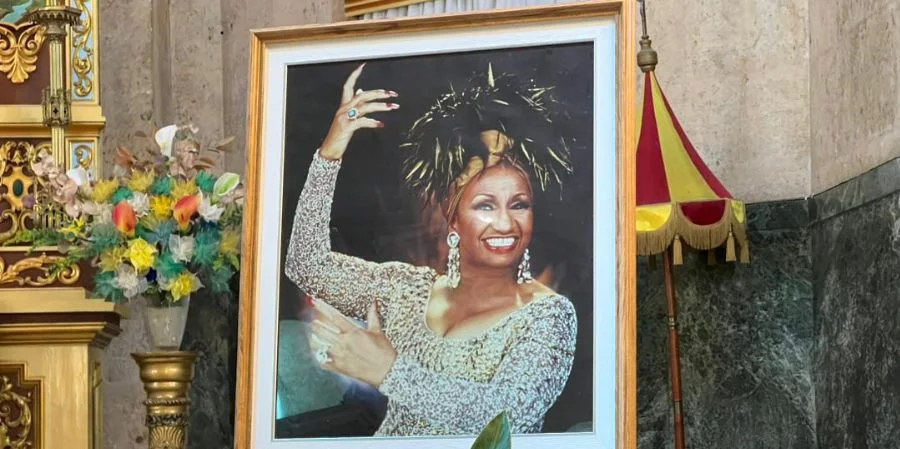
MIAMI, United States. – At 11:00 in the morning this Tuesday, the day the legendary Celia Cruz I would have turned 100 years oldthe Parish of Our Lady of Charity of Cobre (Central Havana) dedicated a mass to what is considered the greatest Cuban musical star.
That was not the first commemorative religious ceremony held in honor of the Queen of Salsa in the same church: in October 2016, the parish had already completed a mass for Celia Cruz on the Island (the first we have news of). That time, like this Tuesday, the ceremony was officiated by the parish priest Ariel Suárez and was attended by Cuban artists who confessed to be admirers of the singer.
According to a report from the AP press agencywhose correspondent in Havana was present at the mass and quotes the parish priest (Suárez), the ceremony was commissioned by “a group of artists.” As far as is known, the singer Haila María Mompié, the Latin Grammy winner Alain Pérez and the reggaeton singer Yomil Hidalgo Puentes attended. Mike Hammer was also presentchargé d’affaires of the United States in Cuba.
According to the same AP report, “several hundred people” attended. However, the newspaper 14ymedio He indicated that “many parish pews remained empty” given the “fear that still persists among Cubans” of going against the official policy of the regime, which keeps the Queen of Salsa banned from radio and television.
In his homily, Suárez recalled that Celia Cruz “was an ambassador of Cuban music, of Cuban rhythms in the world.” The priest even repeated the world-famous cry of the Queen of Salsa: “Azúcar!”
“I thank God because he brought joy to many people, because he made Cuba present in the world,” added the parish priest, before emphasizing that “faith knows no censorship” and provoking a stampede of applause from those present. According to 14ymedioAt the end of the mass the emblematic song sounded life is a carnival.
Mompié, dressed in white, declared that she carried “Celia’s legacy like a treasure” and celebrated being able to remember her in the church dedicated to the Virgin of Charity. Pérez, who collaborated with Celia Cruz on international stages, stated that “Celia was pure light” and stressed that she was “an ambassador” of Cuban culture. “His love for Cuba never went out, not even when it was prohibited,” he added.
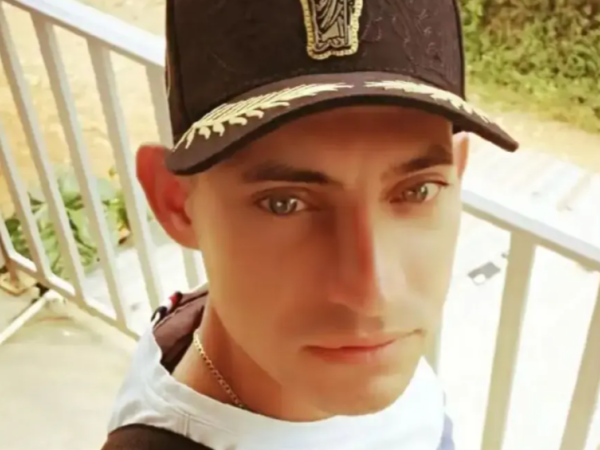
Another of the attendees, the popular reggaeton artist Yomil, exhibited a tattoo with Celia’s face on his forearm and stated that she is “the only artist” that he has “on his skin.” “She represents the best of us: talent, joy and resistance. No censorship can handle that,” he said.
For his part, Hammer declared to the press that Celia Cruz’s songs “give hope and joy” and recalled that the performer wanted “freedom for all the Cuban people.” For the official, it was “a great honor” to commemorate the life of Celia Cruz in her homeland, according to AP.
The United States charge d’affaires in Havana also criticized the total absence of representatives of the Cuban Government or the Cuban Ministry of Culture at the tribute. No official cultural institution sent delegates or issued public messages for the centenary of the artist, who was born in the Havana neighborhood of Santos Suárez in 1925.
Officially: no institution, some artists
Last week it was revealed that the only gesture of tribute for Celia’s centenary, which would take place at the Fábrica de Arte Cubano (FAC), was canceled. It was a gala organized by the theater group El Público, which was canceled by the Programming Subdirectorate of the National Center for Popular Music, an entity attached to the Ministry of Culture.
However, last Sunday (when the canceled gala was due to take place), the FAC carried out a discreet – but symbolic – action against censorship: for an hour, a chair remained on the illuminated stage, with nothing but silence. Then, a DJ began playing the most emblematic songs of Cuba’s Guarachera.
The institution itself reported on the completion of the performance: “A work of art that was not, an armchair, silence and the art of resistance… Celia lives. October 20, 2025. National Culture Day”, the institution wrote on its Instagram profile.
But, apparently, he reserved his greatest tribute for this Tuesday: the FAC unveiled a star in honor of Celia Cruz’s centenary. “This tribute has the sole purpose of paying tribute to an artist who has left an indelible mark on our music. Celia’s star joins that of greats such as Benny Moré, Juan Formell and Chucho Valdés in Nave 4 of FAC,” the institution published on its social networks. “Let’s celebrate her legacy and her contribution to Cuban art, reaffirming her place in the hearts of all Cubans. Long live the Queen of Salsa!”, the announcement closed.
Among the Cuban artists who have received a star in the so-called “FAC Constellation”, in addition to the aforementioned musicians, are the dancer Alicia Alonso, the avant-garde painters Amelia Peláez and Wifredo Lam, the writer Dulce María Loynaz and the filmmaker Humberto Solás, among others who complete a dozen names.
Following the centenary of the Cuban singer, a video of the Failde Orchestra that paid tribute to Celia during a public concert in Havana became popular. On September 1, within the framework of the cultural fair “Arte en La Rampa” (organized by state entities such as the Cuban Fund for Cultural Assets, ARTex, EGREM and the AHS), Failde performed a medley of Celia’s songs in the central Cuba Pavilion.
For about 10 minutes, emblematic songs from the Guarachera of Cuba such as Bemba colorá and The black woman has a tumbao sounded before an audience that danced with enthusiasm, while the orchestra announced: “Failde Orchestra, Celia Cruz!”
The tribute, although isolated, generated questions among Internet users and Cuban artists, who wondered on social networks why some could pay tribute to the Queen of Salsa and others could not. (This is, in particular, the poet and playwright Norge Espinoza Mendoza, author of the work that the theater group El Público would present at the Fábrica de Arte Cubano).
What didn’t happen / What will happen
In June of this year, dancer Viengsay Valdés, current director of the National Ballet of Cuba, told the state agency Latin Press that, in October, the company would be doing a work dedicated to “the famous Cuban singer Celia Cruz.” But, a few days before the end of the month, there is no evidence that the work has been presented, neither in Cuba nor in another country.
A year ago, in October 2024, the Cuban singer Haila María Mompié, criticized for declare that he “loved with all his heart” the dictator Fidel Castro but, at the same time, one of Celia Cruz’s admirers who has most publicly advocated for the recognition of the Queen of Salsa in her native country, said in an interview with the state media CubaYes that he brought us “a wonderful surprise” for 2025. “I hope to be able to meet the expectations of what we are heating up… It is the centenary of Celia Cruz, so, I am going to leave the surprise that I bring so that it falls at the right time. We are cooking something wonderful, with which I know that many people are going to feel happy.”
And there it stayed. What was Haila warming up? This Tuesday’s mass, which you advocated for, and which you attended? Well no: it seems that he was referring to the release of the first single from his next album, which, on Facebook this Mondaydefined as “tropical symphonic” and whose title will be Legacy of a Queen.
With the announcement, Haila also previewed a fragment of one of the album’s songs, My life is singingoriginally sung by Celia at the end of the last century, as a synthesis of her philosophy of life.
This Monday, the performer specified that the album will be “a tribute to the woman who forever changed the history of Latin music.” “Celia taught us that singing is living, and this song is born from that inspiration, with a heart full of rhythm, gratitude and sugar!”, he added. Finally, it closed by celebrating the “art, strength and joy of our eternal queen, Celia Cruz.”
Ivette Cepeda, another singer who has also expressed, inside and outside the Island, her admiration for Celia Cruz, also did not miss the centenary of the Queen of Salsa: “Celia Cruz, with your flavor, who left and never returned… But the people of Cuba never forgot that black woman,” she says in the video of a live presentation that he shared this Tuesday. Furthermore, the singer added along with the video: “Let your songs and your nostalgic call for Cuba come for 100 more years. Sugar!!! May you stay among us. May we never lose you again. May there be no fear for loving you… Why should we fear?”
But, perhaps, the most unexpected message for Celia Cruz’s centenary – because the island’s regime tightly controls its media – came from the magazine The Bearded Caimanfrom Editora Abril (state). On Facebook, the official publication shared an image of the Queen of Salsa and a link that refers to a playlist curated “as a tribute to the artistic quality of Celia Cruz in the year of her centenary.” The link refers to the playlistwhich also consists of a laudatory introductory editorial note. “Recognizing its impact is essential and is a way to honor the complexity and diversity of Cuban culture,” says the publication about the legacy of the Guarachera of Cuba.
And only on the day of the centenary of the best-known Cuban singer of all time, of the greatest musical artist born in Cuba. While concerts, exhibitions and official tributes for Celia Cruz’s 100th birthday were announced and held in the United States, Peru, Mexico and Spain, the Cuban regime censored and hid its head, like the ostrich.