SANTO DOMINGO.- The atmosphere in the waters of the Caribbean Sea is becoming tense and with increasingly defined warlike overtones. The presence of the United States in the region has fueled the perception of an escalation that, although officially part of the fight against drug trafficking, does not escape political motivations.
According to a visual investigation by Reuters, the modernization work carried out by the United States in an old naval base that had been abandoned since the Cold War and is located in Puerto Rico was known.
Construction work at the former Roosevelt Roads base reportedly began in mid-September when crews began repaving the taxiways leading to the runway. The report indicates that, likewise, the construction of new facilities has begun in civil airports in the Virgin Islands and other points with a proximity of even less than 800 kilometers to Venezuela, in addition to naval movements.
The epicenter
The epicenter of tension is Colombia and Venezuelawhose presidents have been directly accused by the United States of protecting drug trafficking. Colombia as a producer of the coca leaf and Venezuela as a distribution bastion.
According to former Colombian president, Álvaro Uribe, the high production of cocaine in the South American country has become an international risk for the stability of the countries and could motivate bombings by the United States.
While in Venezuela they have responded to the accusations by denying them, requesting dialogue and, at the same time, deploying citizens in paramilitary demonstrations with the claim of defending “the homeland.” Unconfirmed information from the Miami Herald states that the President of the United States, Donald Trump, had ordered attacks on military targets in Venezuela. What Trump has done is authorize the Central Intelligence Agency (CIA) to carry out covert work in Venezuelan territory.
RD on the board
The Dominican Republic has not been exempt from the climate of regional militarization. In recent months, the country has received delegations from the Southern Command and the United States National Security Council (NSC).
On August 8, Vice Admiral Alvin Holsey, commander of the Southern Command, held meetings with the Minister of Defense of the Dominican Republic, Carlos Antonio Fernández Onofre, and toured the Command, Control, Communications, Computers, Cybersecurity and Intelligence Center (C5i). During the meeting, both parties reaffirmed their interest in promoting military interoperability and regional cooperation.
Subsequently, on August 23, a high-level delegation from the Department of Defense and the NSC visited Santo Domingo to strengthen bilateral cooperation in defense and hemispheric security.
These contacts coincided with the subsequent arrival of the new US ambassador, Leah Francis Campos, appointed by Donald Trump and confirmed by the Senate last December.
Perhaps to save appearances, Russia has confirmed conversations with Maduro and there is even talk of contractual obligations, which reinforces one of the layers that have hindered democratic change in Venezuela.
Senator from Ocoa.
Deployment
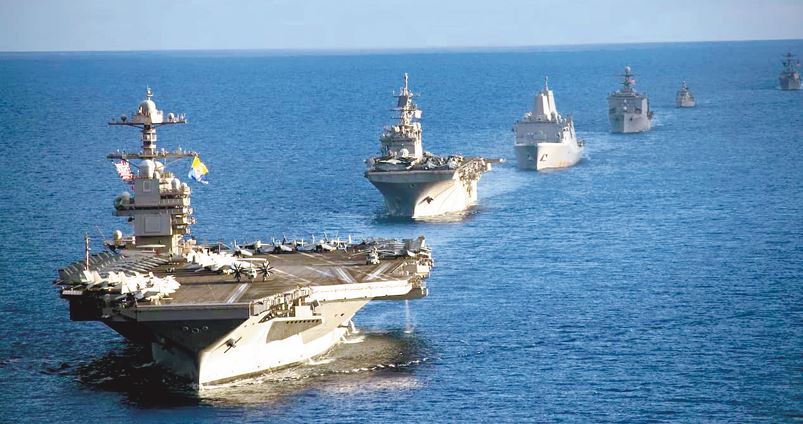
The United States has deployed its largest aircraft carrier in the Caribbean, the Geral R. Ford.
Deceased
At least 61 people have lost their lives since the so-called war against drug trafficking began in the region.