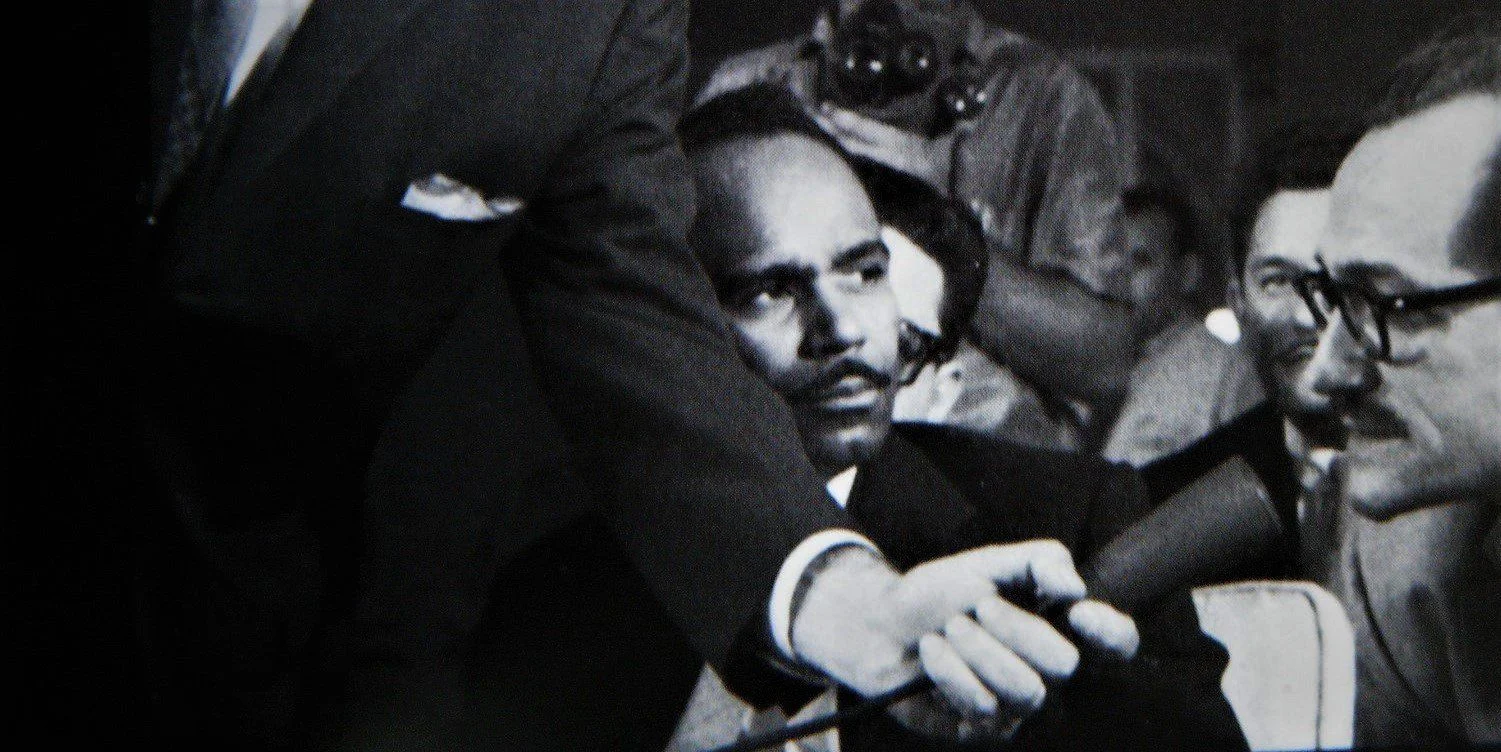
Havana, Cuba. – The historian and ethnologist Walterius Carbonell, whose death, in 2008, he turned 17 this April 14, spent 40 of the 88 years who lived condemned to ostracism.
In 1962, his trial book divided into 11 chapters How national culture aroseit cost him to accuse him of “revisionism.” His old friendship with Fidel Castro was worth nothing. He went to the forced labor farms in Camagüey, where they sent him so that, cutting cane, purge his ideological problems. And his wife, the painter Clara Morera, also punished her, expelling her from the Brothers Saíz association.
The ideological problems of Walterio Carbonell were no other than their complaints of racism and the claim of the role of black in Cuban culture. He believed that the campaign against racism initiated by Fidel Castro’s speech of March 22, 1959 was the appropriate time for a sincere debate that returned to black his place of protagonist and not of secondary actor in national history and culture.
But Carbonell was wrong. The revolutionary edicts who sought to abolish the racism of a stroke only destroyed their institutional bases. The complex framework of beliefs, values and prejudices that supported it was almost unscathed, swept under the carpet.
Carbonell, in the revolutionary fervor of the early 60s, believed that to face the racist thinking of Francisco de Arango and Parreño, José Antonio Saco and José de la Luz and Caballero, and the historical vision he considered exclusive of Jorge Mañach, Fernando Ortiz and Ramiro Guerra, was enough to use the tools of Marxism. But it incurred an unforgivable sin in totalitarian regimes: that of naivety.
The speech of the Castro Revolution about black was less conservative than that of the Republic, but also, using the Martian discourse on the race, diluted the issue for the unity of the nation.
Carbonell soon discover that his thesis was afraid of “the whites of hymns and flags” that he said Nicolás Guillén. Only they no longer wore dril or guayabera, as in the Republic, but olive green uniforms and, in addition to citing Martí, they also quoted Lenin and Marx.
Carbonell’s thesis on black scared the Castro commissioners. His dread that in Cuba a version of the American Black Power arose, which they said to support, he did not differ much from which his ancestors of slaves felt for the swords and the fires of the plantations of neighboring Haiti.
Despite the official anti -racist speech, in addition to Carbonell, they were also marginalized, also for suspecting the regime that aspired to something similar to Black Power, writers Manuel Granados and Pedro Pérez Sarduy, the poets Georgina Herrera, Nancy Morejón and Ana Justina Cabrera, and the theaterists Gerardo Fulleda León, Eugenio Hernández and Rogelio Martínez Martínez.
In the 60s and 70s, while rescued to folklore and as a tourist bait some black cultural practices, magazines Moncada and The communist militantof the Interior Ministry and the Communist Party, respectively, lashed out with hate and contempt, against Santeros, Paleros and Abakuás.
To Walterio Carbonell the inquisitors took decades to rehabilitate it. And they never totally. His last years made them relegated to a position of little importance in the National Library.
Finally, reluctantly and too late, the regime had to accept that Walterio Carbonell was right to ensure that in Cuba racism survived, which was always a factor of our history and that, although they intended to eradicate it by decree, today it follows, under multiple costumes and raised, set as a weed of consciences and perceptions.