Illegal miners in the Manapiare municipality of the Amazonas State attacked the indigenous communities that make life there. Conflicts brought calls from the peoples to the Venezuelan government to act urgently and fulfill their self -demarcation debt of the ancestral territories that prohibit the income of miners
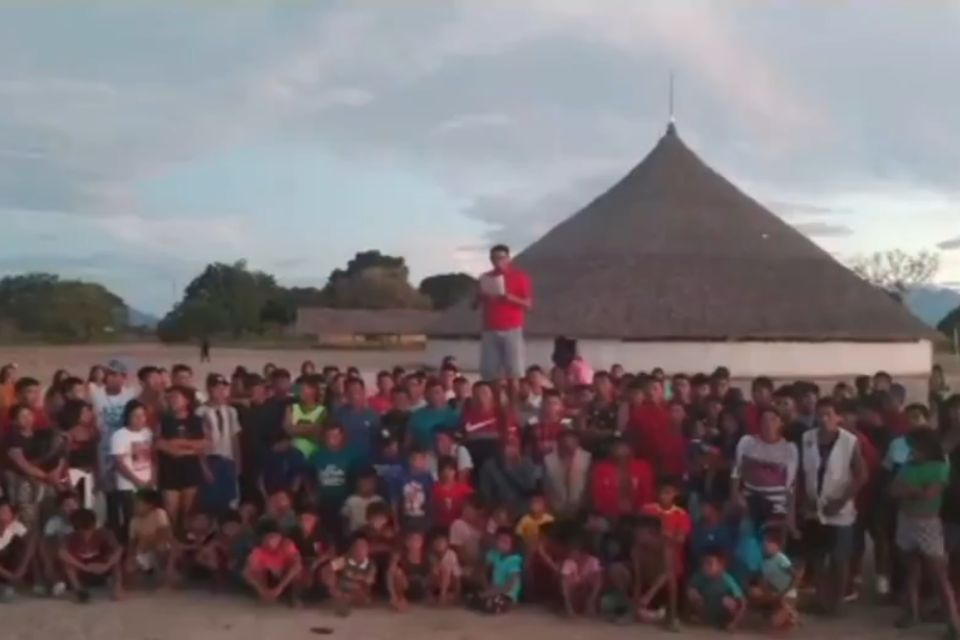
The Venezuelan State met with the indigenous people of the Ye’Kwana and Sanema communities in Santa Rosa de Tencua, Manaza municipality of the Amazonas state, last Sunday, February 9 to address the serious conflicts that illegal mining has brought to its ancestral territories.
For the community it meant an achievement, but it is an attention to the indigenous people for more than a decade.
This happened after last January 22, illegal miners burned a communal churuate-sacred site for ethnicities-housing in the community of Puerto Union and transport vessels of the Ye’Kwana in the Alto Ventuari of the Venezuelan Amazon, “Leaving many homeless families and worsening the humanitarian crisis,” according to the Regional Organization of Indigenous Peoples of Amazonas (Orpia).
“There is an assessment of losses, which are being quantified by the Dialogue Commission between the State Government, the indigenous institutions and organizations that are attending the communities,” said the professor and director of the Working Group of Indigenous Affairs (GTAI) of the University of Los Andes, Vladimir Aguilar.
Revenge against indigenous people
The brutal actions of the miners were an response to the actions of the peoples on January 20 and 21, framed in an operation called “Paru Plan”, when around 90 indigenous people, in coordination with local organizations (Ye’Kwana Organization of the Alto Ventuari, Unión Makiritare Alto Ventuari and the territorial guardians Ye’kwana) expelled illegal miners parked in the high Paru River.
“In a peaceful action, five gold extraction machines disabled, avoiding direct confrontations,” said the Wayamoutheri indigenous rights promotion program in an Instagram publication.
The community had the objective of defending their home and “cleanday conserve the natural resources of the region.
Repeated calls to the Government
On January 22, Ye’kwanas de Tencu They live as a result of atriferous extractivism.
They mentioned that during the fire there were injured, including a pregnant woman who was physically assaulted. “We are looking for a solution before a major tragedy occurs, such as human losses (…)” and reiterated their rejection of illegal mining in their land.
On the 28th of the same month, there was a pronouncement With other representatives where it was stressed that they repeatedly denounced the situation before the Prosecutor’s Office during 2024, without receiving an answer, and that while they were under siege, military forces became a blind eye.
Read the complete report in Runrunes
*Journalism in Venezuela is exercised in a hostile environment for the press with dozens of legal instruments arranged for the punishment of the word, especially the laws “against hatred”, “against fascism” and “against blockade.” This content is being published taking into account the threats and limits that, consequently, have been imposed on the dissemination of information from within the country.