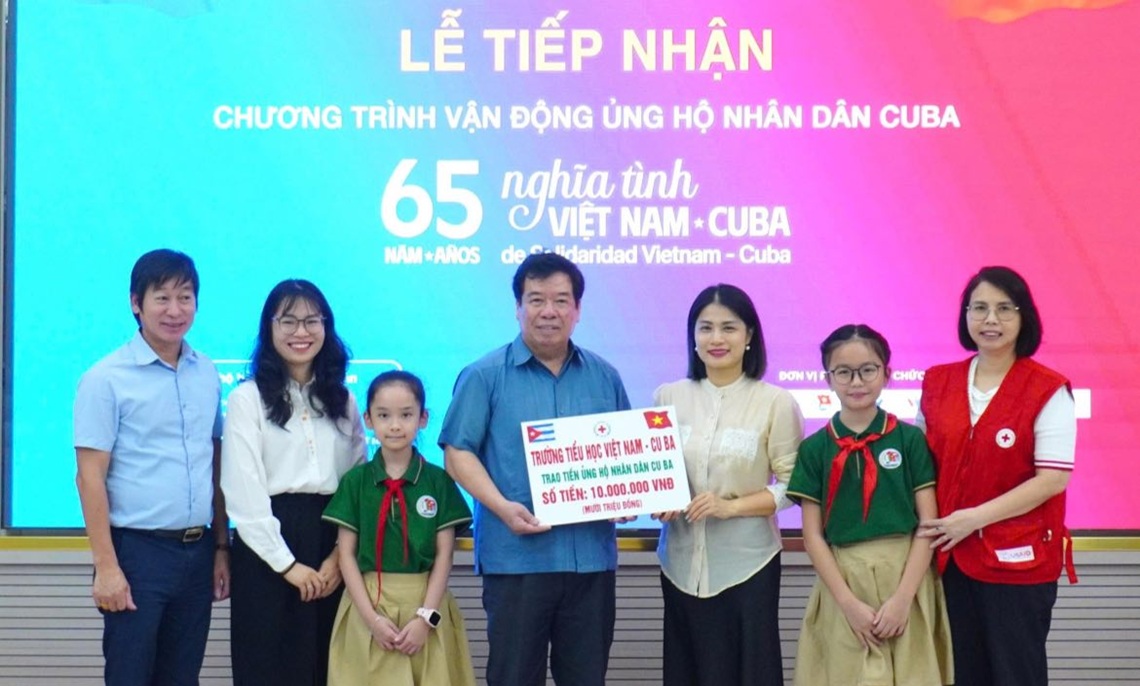
The initiative, which began on August 13 in Hanoi and closed this Thursday, totaled 2.9 million individual and collective donations, for an amount of 555.8 billion dong, notes Latin Press.
The proceeds will be delivered to Cuba, which is experiencing a serious shortage of basic products, medicines and a prolonged energy crisis.
At the beginning, the goal set was to raise 65 billion dong (more than two million 470 thousand dollars), but it was doubled.
At the end of September, the organizers highlighted among the contributions that of the Vietnam-Cuba Friendship Hospital in Dong Hoi, donated by Fidel Castro in 1973 and inaugurated in 1981 to care for soldiers and populations affected by the war.
During the almost two months that the campaign lasted, the amount collected through bank transfers that were completed through a QR code, although donation reception points were also set up in workplaces, schools and some communities.
Vietnam is the main supplier of rice to Cuba, where this cereal is a vital food and an average of more than 60 kilograms are consumed per person per year.
Together with China, it has donated shipments of rice to the island in recent years to support the country, which spends 2 billion dollars annually on the import of food included in the so-called basic basket (the state allocation of subsidized products per person).
At the end of last July, the Vietnamese Government reaffirmed its historic support for Cuba during a meeting between senior officials from both countries held in Hanoi.
While expressing his solidarity with the Cuban authorities and people, Deputy Prime Minister and Foreign Minister Bui Thanh Son also asked Havana at that meeting remove “obstacles” and promote investments and business of Vietnamese companies.
Specifically, Thanh Son “asked Cuba to continue coordinating to eliminate difficulties and obstacles, creating favorable conditions for Vietnamese companies to invest and do business in Cuba.”
These statements, collected by the press of the Asian countryoccurred during a meeting between Thanh Son and the First Deputy Minister of Foreign Affairs of Cuba, Gerardo Peñalver Portal, who is visiting Vietnam.
The request is striking coming from one of Havana’s main allies, both politically and economically, with a recognized presence in sectors such as agriculture – in particular in rice cultivation— and industrial production, and within this, in the Mariel Special Development Zone.