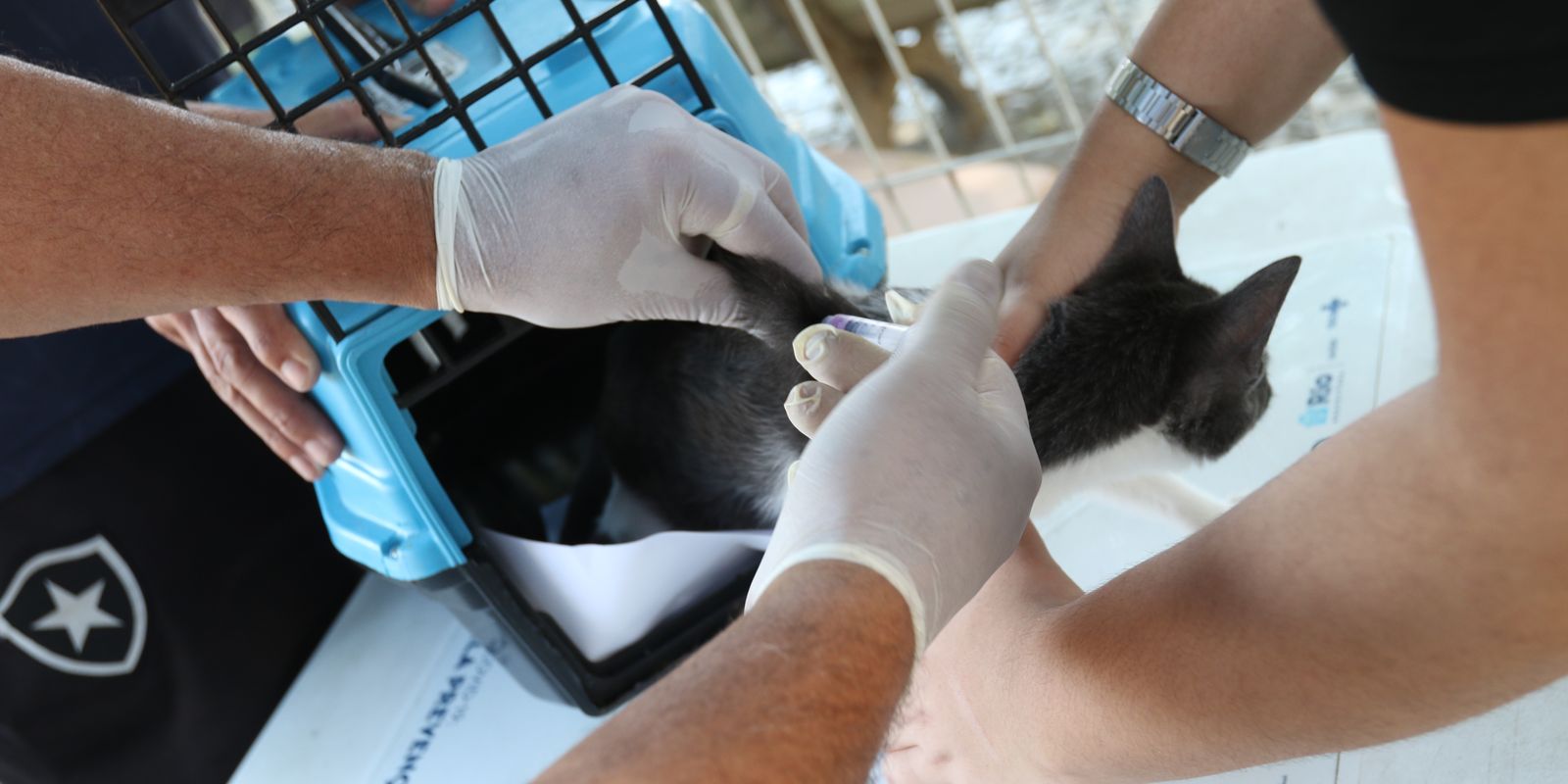
The Regional Council of Veterinary Medicine of the State of São Paulo warns of the increase in cases of animal sporotrichosis in the city. The disease caused by fungi of the genus Sporothrix is considered worrying and “already represents a significant impact on animal and human health”. 
Fungi mainly affect cats, as they are well adapted to the species’ body temperature, considered key to the transmission chain. Sporotrichosis is a risk for free-roaming animals, being considered “one of the main urban health challenges related to zoonoses in Brazil”, informs the council, which published a technical standard for São Paulo professionals.
“Cats contract the disease through traumatic inoculation, either through contact with soil – when digging – with thorns, wood chips or contaminated organic matter, or through direct contact with other sick animals, mainly during fights, scratches and bites, or, even, through contact with secretions from skin lesions, considered the main route of contamination”, informs the council’s medical-veterinary technical coordinator, Carla Maria Figueiredo de Carvalho.
The disease is observed in all regions of the country, with a higher incidence in the South and Southeast states. There is transmission between domestic and wild animals and with transmission of around a thousand cases per year to humans, and it has been continuously advancing since 2011 in São Paulo, spreading across municipalities in the Metropolitan Region and on the coast..
Between 2022 and 2023, the number of confirmed cases of animal sporotrichosis in the state increased from 2,417 to 3,309.
“Despite this growth, reporting the disease in animals is still not mandatory in most of São Paulo, which makes it difficult to truly measure the problem and plan effective control strategies”, explains the council’s note.
With the increase in cases, the human variant of the disease has had compulsory notification since the first half of 2025, but its zoonotic variants have not.. Bill No. 707/2025, which is being processed in the state’s Legislative Assembly, proposes making mandatory the notification of all suspected and confirmed cases of sporotrichosis in humans and animals to the state epidemiological surveillance services. Today there is guidance for cases in animals to be reported.
The Regional Council of Veterinary Medicine of the State of São Paulo warns that the symptoms of sporotrichosis in humans can appear between a few days and up to three months after infection..
“Generally, the disease initially manifests itself as a small, painless nodule that, over time, can increase in size and evolve into an open wound. The clinical forms of human sporotrichosis depend on the patient’s immune status and the depth of the lesions, and can present in a cutaneous form, affecting the skin, subcutaneous tissue and the lymphatic system, or extracutaneously, with spread to organs such as lungs, bones and joints”, explains Carla Maria.
Medical attention should be sought as soon as the first symptoms appear. When not treated properly, sporotrichosis can develop into extensive wounds and the formation of nodules, and can spread beyond the skin in people with immunosuppression, affecting the lungs, bones and joints.
The council also warns of the importance of treating sick animals and preventing their abandonment, breaking the chain of infections. Cats with suspicious signs should be evaluated by a veterinarian and, whenever possible, undergo laboratory tests to confirm the diagnosis.