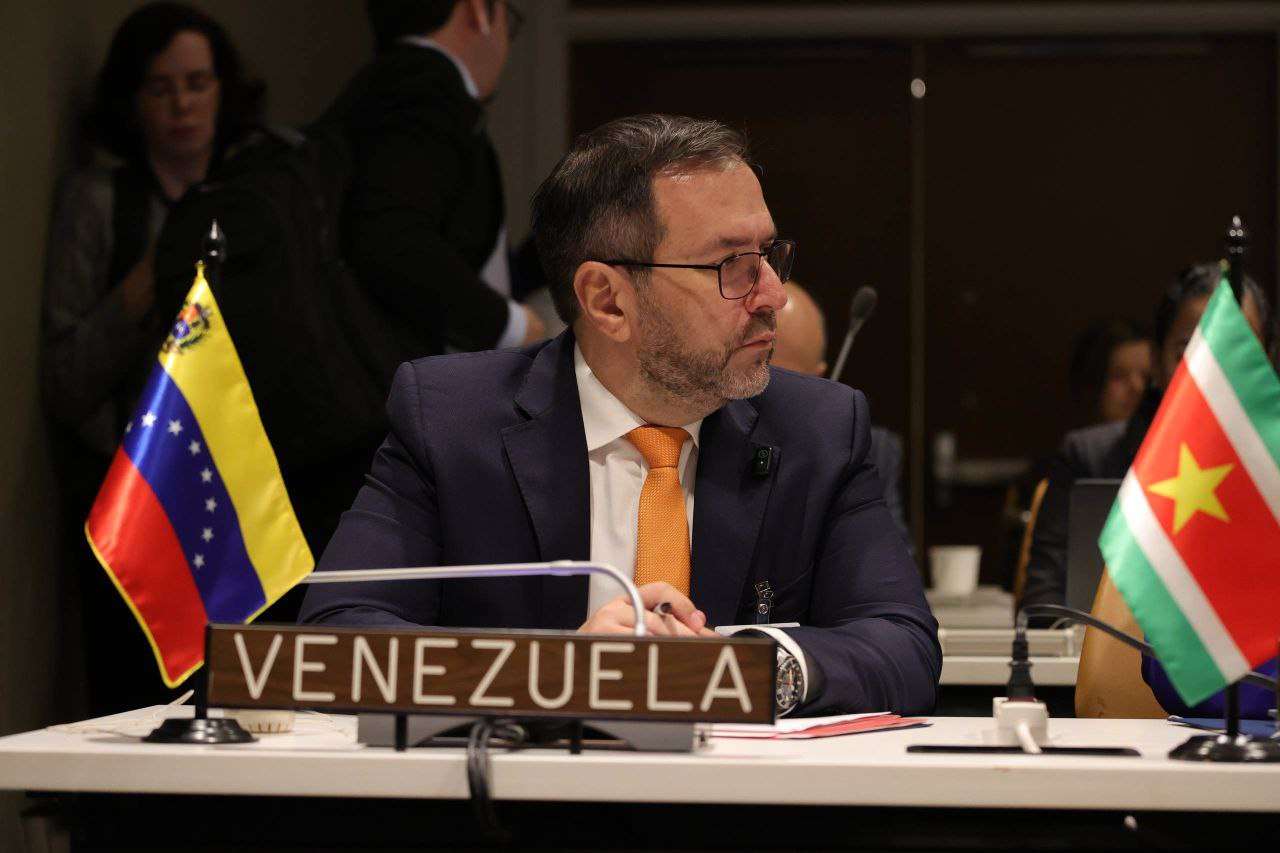
80 years after the entry into force of the United Nations (UN) Charter, Foreign Minister Yván Gil made an urgent call, on behalf of President Nicolás Maduro, to “refound” the organization so that it is in tune with “the new multipolar world, where the Global South is now an important protagonist and with its own voice.”
On his Telegram channel, the chancellor noted that “October 24 is celebrated as United Nations Day to honor the organization’s efforts to maintain international peace and security, promote sustainable development, cooperation between nations and defend the human rights established in the UN Charter, which came into force in 1945.”
However, Gil specifies that “the work of the United Nations and its fundamental principles are today compromised in the face of unilateral pressure from powers that attack multilateralism and seek to reimpose colonial schemes.”
United Nations Charter
The Charter of the United Nations is the founding international treaty of the United Nations (UN) and constitutes its legal and organizational basis.
It was signed on June 26, 1945 at the San Francisco Conference by representatives of 50 States and entered into force on October 24, after being ratified by the 5 permanent members of the Security Council.
Among the basic principles, the following stand out: maintaining peace and security, promoting friendly relations between nations with equal rights and self-determination of peoples as their goal, carrying out international cooperation to solve economic, social, cultural and humanitarian problems.
The use of force is only permitted in the event that the nation must exercise its defense, this being a basic principle.