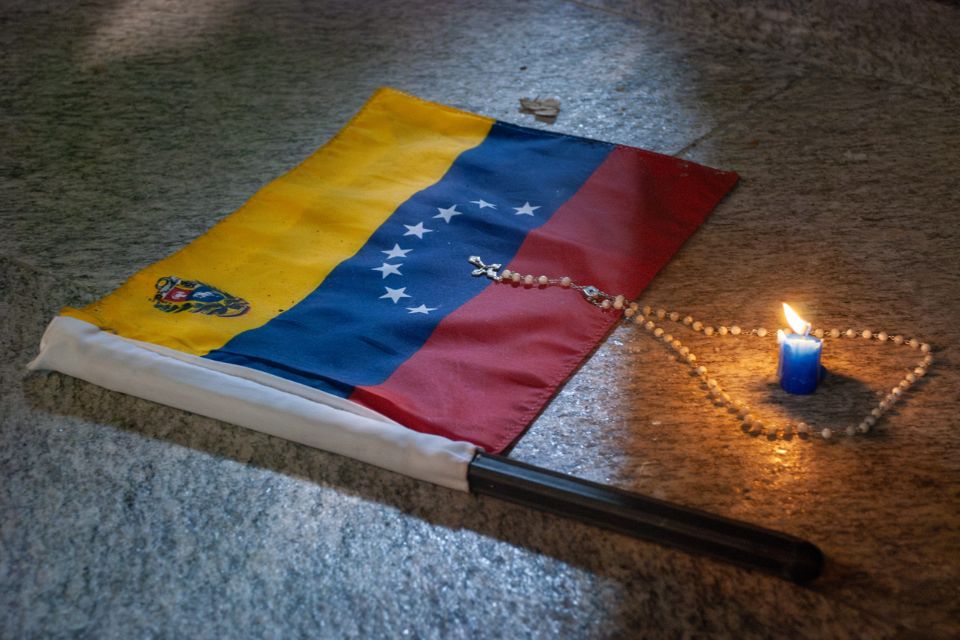
The organization Aid to the Church in Need (ACN) affirms that in Venezuela religious freedom “is compromised by government control, the political instrumentalization of faith and vague laws that facilitate censorship and repression.”
Religious freedom in Latin America “has significantly worsened”, with an increase in restrictions, pressures and attacks against religious communities in several countries in the region, including Venezuela, and with a “particularly serious” situation in Nicaragua, according to a report by the organization Aid to the Church in Need (ACN) presented this Tuesday the 21st in Rome.
The document, which covers the period from January 2023 to December 2024, indicates that 64.7% of the world’s population (about 5.4 billion people) live in countries where religious freedom is violated.
In 62 of the 196 countries evaluated there are systematic violations, and in 75% the situation has worsened since 2023.
The ACN warns that in Venezuela religious rights “are compromised by government control, the political instrumentalization of faith and vague laws that facilitate censorship and repression.”
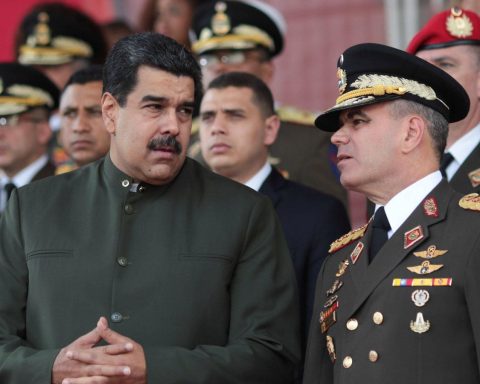
They accuse Nicolás Maduro of increasing the political instrumentalization of the faith, by linking the figure of Jesus Christ in his narrative, approaching evangelical churches through economic benefits and beginning a new presidential term, strongly questioned, with an “esoteric oath, invoking Santeria deities as part of a non-traditional ritual.”
Among the religious violations recorded in the report, the thefts of religious objects in the San Ignacio de Loyoya parish are mentioned, the closures of radio stations with religious content or programs, ordered by Conatel “as part of a sustained government policy of control over the media”; the threats of the National Liberation Army (ELN) in Venezuelan towns near the border to religious leaders, whom they force to ask for permits to celebrate masses or pastoral activities.
“According to some reports, priests have even been warned that if they broke the rules, they would ‘disappear, although not exactly into heaven,'” the ACN document says.
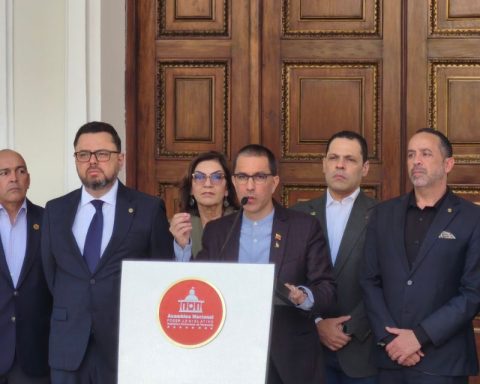
Also mentioned are the threats to political prisoners in the Tocorón prison to participate in evangelical religious services against their will, the attacks against authorities of the Episcopal Conference and the persecution or harassment against priests and other religious people after the 2024 presidential elections. “A pastor stated that the government grants benefits to churches that support it, but punishes those that reject those privileges.”
Likewise, there is an increase in anti-Semitic rhetoric, following statements on programs broadcast by state television where they accused “Jews of controlling world power.” The Simon Wheisental Center has warned of the “danger” posed by the so-called Anti-Fascism Law, following the proposal to categorize Zionism as a “similar expression.”
The organization Aid to the Church in Need points out that 38 countries present situations of religious discrimination, affecting some 1.3 billion people and including several Latin American nations such as Mexico, Cuba, Haiti and Venezuela.
The report also includes Bolivia, Chile, Colombia and Honduras in the “under observation” category, due to worrying signs of weakening legal guarantees and a rise in religious intolerance.
The ACN warns about the political instrumentalization of religion and the threat of organized crime, which in areas of high violence loots churches, kidnaps leaders and conditions liturgical celebrations.
Specifically, they denounce that in Mexico “the number of murdered priests continues to grow” and in Ecuador and Guatemala “some religious cults linked to criminal gangs show how the religious dimension can be instrumentalized to legitimize and reinforce violence.”
With information from EFE agency
*Journalism in Venezuela is carried out in a hostile environment for the press with dozens of legal instruments in place to punish the word, especially the laws “against hate”, “against fascism” and “against the blockade.” This content was written taking into consideration the threats and limits that, consequently, have been imposed on the dissemination of information from within the country.
Post Views: 61