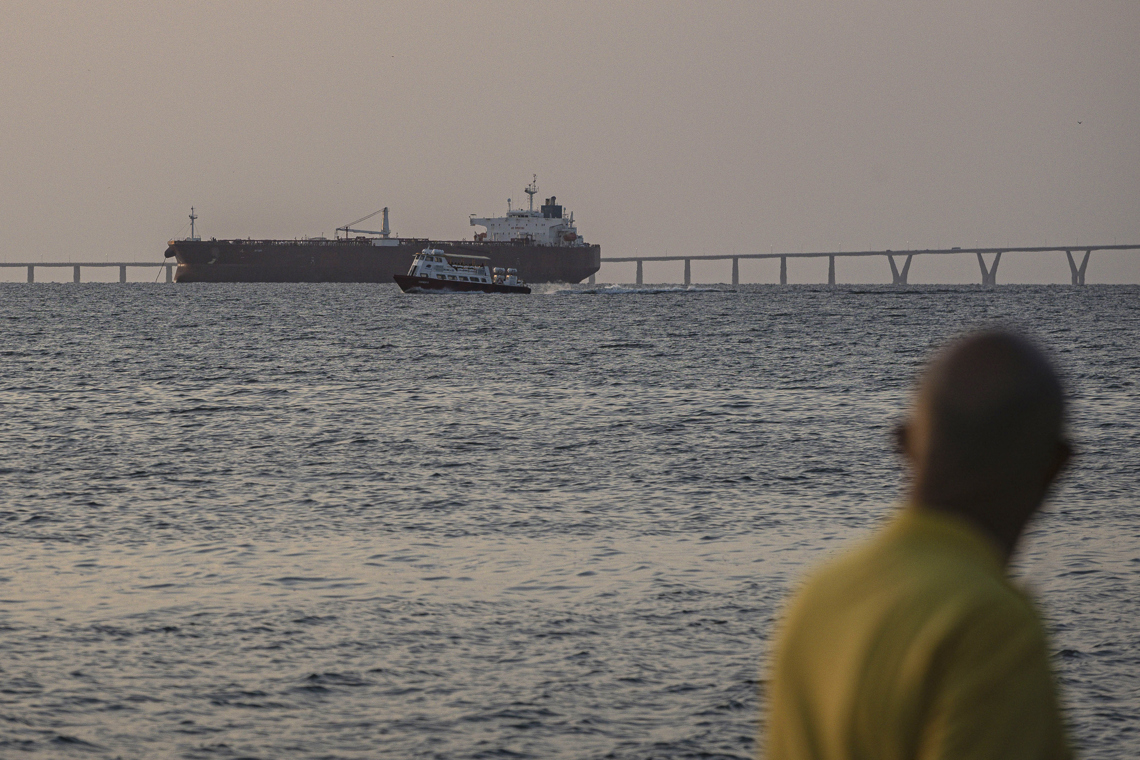
The state-owned Petróleos de Venezuela (PDVSA) maintains crude oil loading at Venezuelan ports “normally,” according to a company statement.
“The oil tankers linked to PDVSA operations continue to navigate with full insurance, technical support and operational guarantees, in the legitimate exercise of the rights to free navigation and free trade,” the official note states.
Likewise, it ratifies its commitment “to the defense of the energy sovereignty” of Venezuela, as well as “the fulfillment of its legitimate commercial commitments and the protection of its maritime operations, always acting in accordance with the Constitution, international maritime laws and the principles of the Charter of the United Nations Organization.”
PDVSA’s position is a challenge to Donald Trump’s order for a “total blockade” against sanctioned vessels entering or leaving Venezuelan waters, a measure that threatens to semi-paralyze the income of the nation with the largest oil reserves in the world.
The cargo operation, suspended days ago due to a cyber attack, was resumed at a time when dozens of ships remain anchored in Venezuelan waters, some in “dark mode” – that is, with their geolocation systems turned off -, awaiting instructions due to the risk of being seized by US forces, according to international press reports.
Trump orders naval blockade against Venezuela and raises risk of open war
Trump toughens his speech against Caracas
Meanwhile, President Trump continues to toughen his speech against Caracas and expand the objectives initially indicated against the South American country.
The US president declared from Andrews Air Base that Venezuela “took away the energy rights of US companies” and assured that he wants to “recover” them.
“We want it back. They took away our oil rights, even though there is a lot of oil there. They drove out our companies, and we want it back,” Trump said, announcing the deployment of warships to the Caribbean and the Pacific. The presidential order, however, did not specify how the blockade will be implemented or which agencies will execute it.
In 2007, then-president Hugo Chávez forced transnational companies to become minority partners of PDVSA or leave the country, in a measure to regain majority control of the country’s oil resources. Exxon and Conoco refused and their assets were expropriated.
On December 10, US forces seized the Skipper ship, the first Venezuelan shipment confiscated by the United States in this new phase of sanctions and threats, initially focused by Washington as a fight against drug trafficking.
Analysts point out that the measure seeks to further suffocate the Venezuelan economy, 90% dependent on crude oil exports.
US seizes Venezuelan oil ship in unprecedented escalation against Maduro
Caracas speaks loudly
For his part, President Nicolás Maduro affirmed this Wednesday that the country will continue to market its oil despite Washington’s threats to block crude oil ships entering and leaving this Caribbean nation.
“Venezuela will continue to trade all its products and will continue to trade back and forth of our oil and all our natural wealth that by Constitution belongs to its only legitimate owner who is the sovereign people of Venezuela,” said the president during a conservatory with members of the Bolivarian Society.
Meanwhile, Venezuelan Defense Minister Vladimir Padrino López “flatly rejected Trump’s delirious statements” and described the blocking order as an “act of piracy.”
In a statement read on state television, Padrino assured that the Armed Forces will not fall “into provocations” and that the country will defend its sovereignty.
“We tell the North American government and its president that we are not intimidated by their crude and arrogant threats,” said the minister, accompanied by the military high command. According to Padrino, Washington’s accusations of oil theft and links to drug trafficking are “fanciful and incoherent” and are part of a plan to “force a regime change and rudely seize our oil.”
For his part, Foreign Minister Yván Gil thanked the President of Mexico, Claudia Sheinbaum, for urging the United Nations to take an active role in the face of escalating tensions. in a
In a message spread on social networks, Gil stressed that the vessels linked to PDVSA “continue sailing with full insurance, technical support and operational guarantees,” in line with the state company’s statement.
An economic “lifeline” at risk
Analysts warn that the threat of a naval blockade could cut off a “key lifeline” for the Venezuelan economy. According to the consulting firm Capital Economics, a lower shipment of oil “would immediately cut off the inflow of foreign currency” and aggravate the import crisis in a country that depends on intermediate goods and finished products.
For his part, David Smilde, a professor at the American Tulane University, pointed out that a full implementation of Trump’s order would cause “a huge economic contraction.”
“This is a country that traditionally imports a lot, from toilet paper to food containers. If you don’t have foreign currency coming in, that just stops the entire economy,” he explained.
Smilde added that Trump’s threat reinforces the discourse of Chavismo. “They have been saying from the beginning that the United States wants their oil. Now, finally, they have the evidence,” he said.
Jim Burkhard, global director of oil markets at S&P Global, clarified that the measure against the sanctioned vessels “does not represent a paradigm shift in the oil market,” although it does increase uncertainty in energy flows to Asia, especially China, the main destination for Venezuelan crude oil with an average of 800 thousand barrels of crude oil per day.
China, the forward-thinking power
According to portal reports Maritime Worldthe volume of Venezuelan crude stored in offshore tankers reached just over 20 million barrels, the highest level in more than three years, according to data from tracking firm Kpler reported by Bloomberg.
This accumulation could help mitigate possible interruptions in supply to China given Washington’s punitive measures.
According to the information available, a significant part of these shipments is located in Asian waters, which facilitates their access by Chinese refineries. The current volume represents an increase from the approximately 18 million barrels recorded at the beginning of the month.
Although China has not reported official imports of Venezuelan crude oil since March, maritime and third-party monitoring data indicate that flows to Asia have been maintained throughout the year.
The main buyers in China are independent refiners, known as teapotswhich acquire Venezuelan Merey crude oil, a heavy oil with high density and viscosity. It is mainly used for the production of bitumen that is marketed with relevant discounts since it requires expensive processes such as improvement (upgrading) to convert it into lighter and more useful derivatives.
Ships waiting and international reactions
Data from TankerTrackers.com indicates that some 15 million barrels of crude oil remain loaded on at least 15 vessels in Venezuelan waters. Some clients would have demanded discounts and changes in contracts to compensate for the transportation risk, reports say.
At the same time, the country’s main storage centers are approaching maximum capacity, which could force PDVSA to reduce production within days.
However, Chevron, a partner of PDVSA with a special license from the Treasury Department, maintains operations and was loading two ships bound for the United States, according to maritime sources. The American company has become an exception amid the sanctions, while other carriers choose to divert their routes to avoid the Caribbean, patrolled by American ships.
In this scenario, Mexican President Claudia Sheinbaum asked the UN to “assume its role to avoid any bloodshed” and offered Mexico as a mediator in the event of a possible conflict.
For its part, the United Nations, through its spokesperson Farhan Haq, urged moderation and recalled that the Charter requires member states to refrain from the use of force.
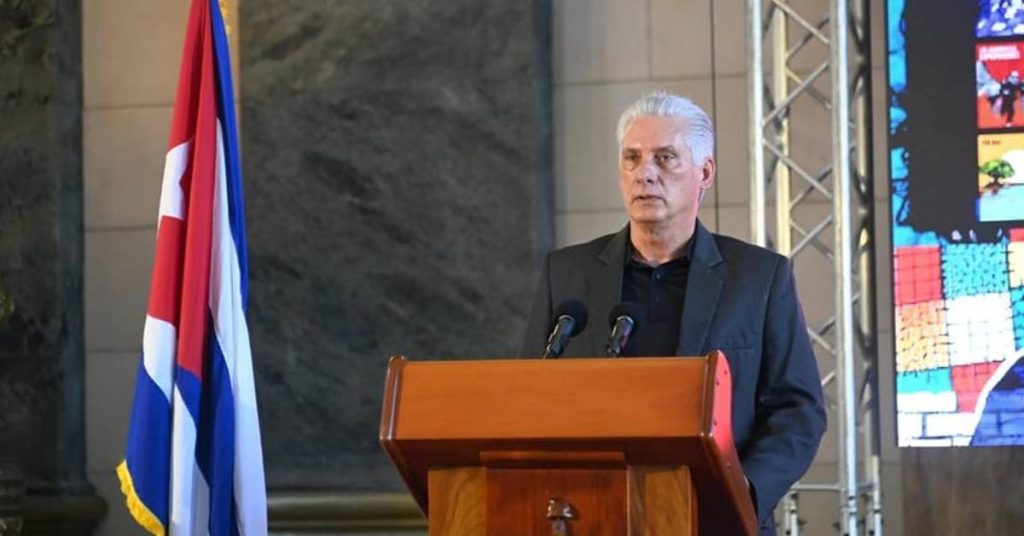
Iran and China, like Cuba, also expressed their rejection of Washington’s measures. Chinese Minister Wang Yi described the blockade as “harassment” and reaffirmed Beijing’s support for Caracas.
The majority of Venezuelan crude goes to the Asian giant and although the volume is not as large as that of Saudi Arabia or Russia, it serves as a key complement in the energy security policy of the second largest global economy.