Valparaíso was already familiar to me long before I set foot in that coastal city in Chile. I knew it in black and white, contrasted, grainy, almost always vertical. He had walked it without having stepped on it. And all thanks to the fierce and luminous sensitivity of the Chilean photographer Sergio Larraín Echeñique (1931-2012), the first Latin American member of Magnum and one of those characters who, without intending to, end up twisting the history of photography.
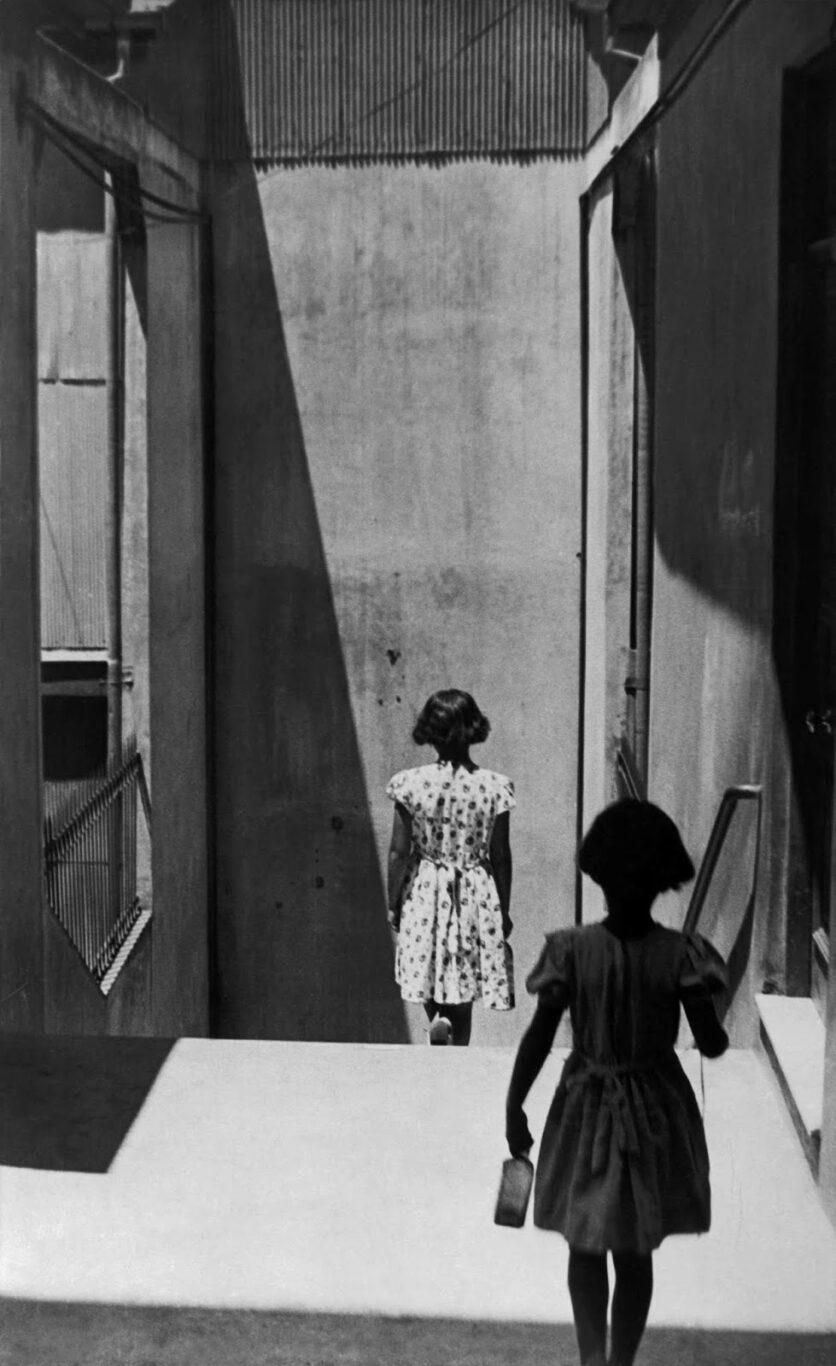
your book Valparaisopublished in the early nineties, came into my hands and became an emotional map. It is a series of photos to get lost in: stairs that go up to nowhere, sharp shadows, dogs that look like ghosts, prostitutes, children who run as if they were fleeing the light. Everything in that book breathes an intimate, almost secret atmosphere, where poetry coexists with sordidness, where the city allows itself to be portrayed without artifice. Through him, I discovered a Valparaíso that was unlike any other port.
All the photographers in the world could pass through Valparaíso and none would surpass the portrait that Sergio Larraín made of that place. I would dare say that the same thing happens with any of the places he photographed: everything in his work is the absolute responsibility of who he was and how he looked at the world. His life is one of those stories that shakes. After achieving international recognition in London, Paris and Santiago, he decided to retire to Tulahuén, where he led an austere existence, dedicated to meditation and writing. He was radical: he rejected fame, avoided glory and disbelieved in the prestige that he himself had achieved. “Money and prestige destroy a man, and above all the artist,” he repeated. Turning silence into part of his work was, perhaps, his bravest gesture.
Larraín also believed that “a good image is created through a state of grace.” That state, he said, appears when one frees oneself from conventions and becomes as naked as a child discovering the world for the first time.
With that philosophy he entered the marginal places of Valparaíso: in the humid bars where exhausted sailors left their week’s pay, in the brothels where sadness coexisted with the artifice of joy, in the nooks where high-born gentlemen mixed at night with those they would never invite to their salons.

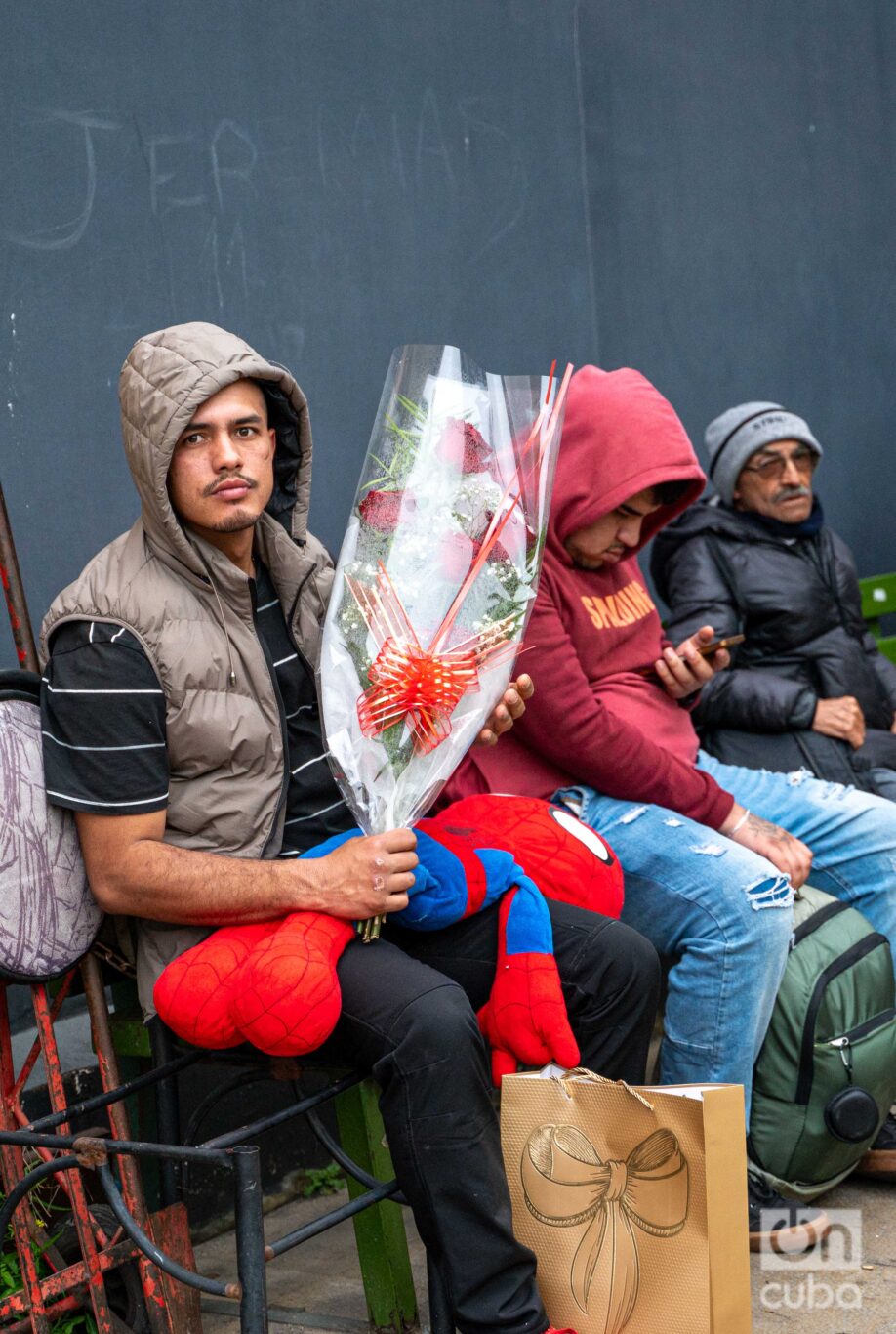
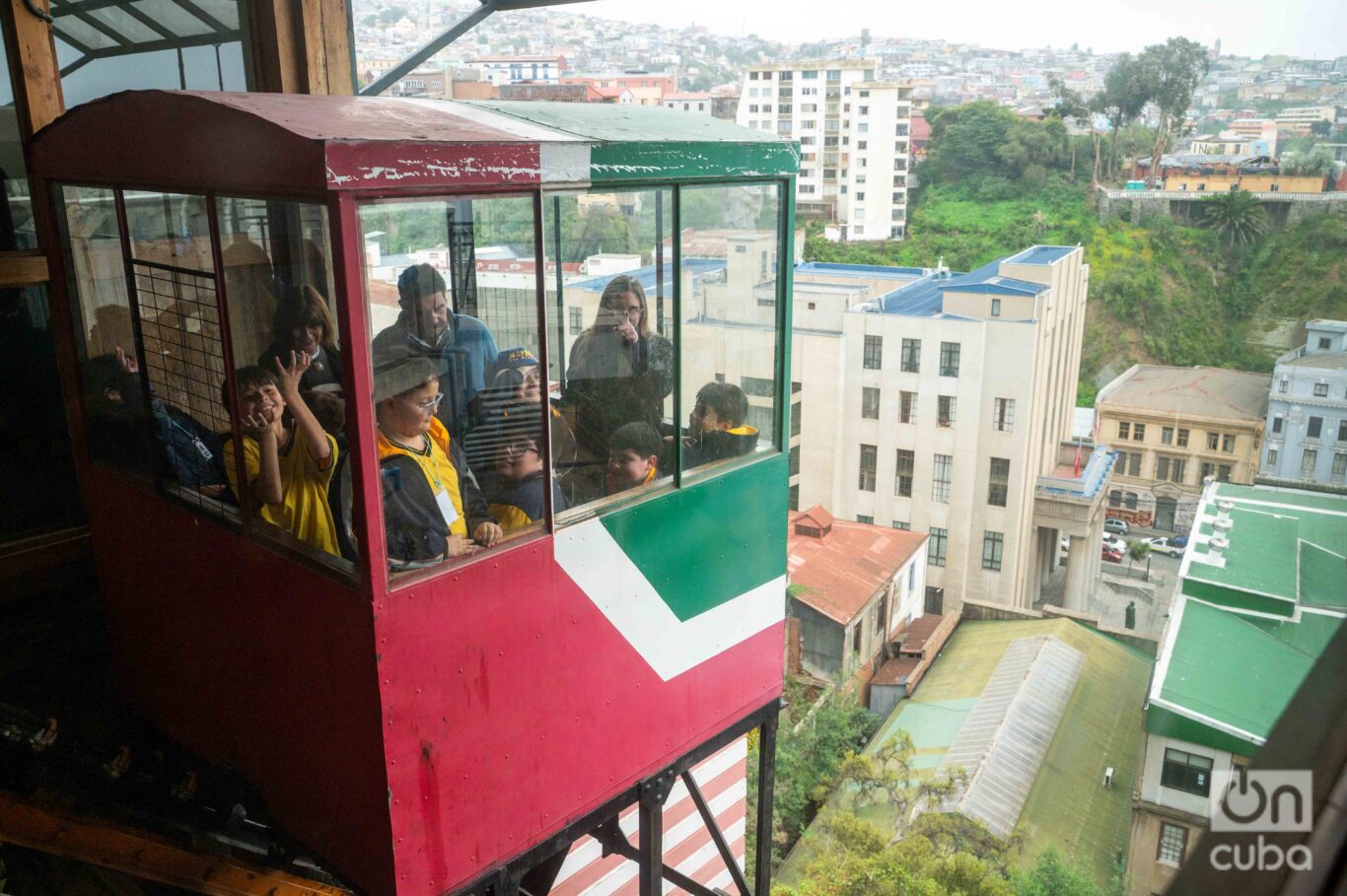
Between 1954 and 1963, Larraín returned again and again to Valparaíso, fascinated by its chaos, its geometry, its humanity. In 1963 he visited it with Pablo Neruda, who invited him to walk the hills with the promise that there he would find an eternal city, always under construction, always burning itself and being reborn.
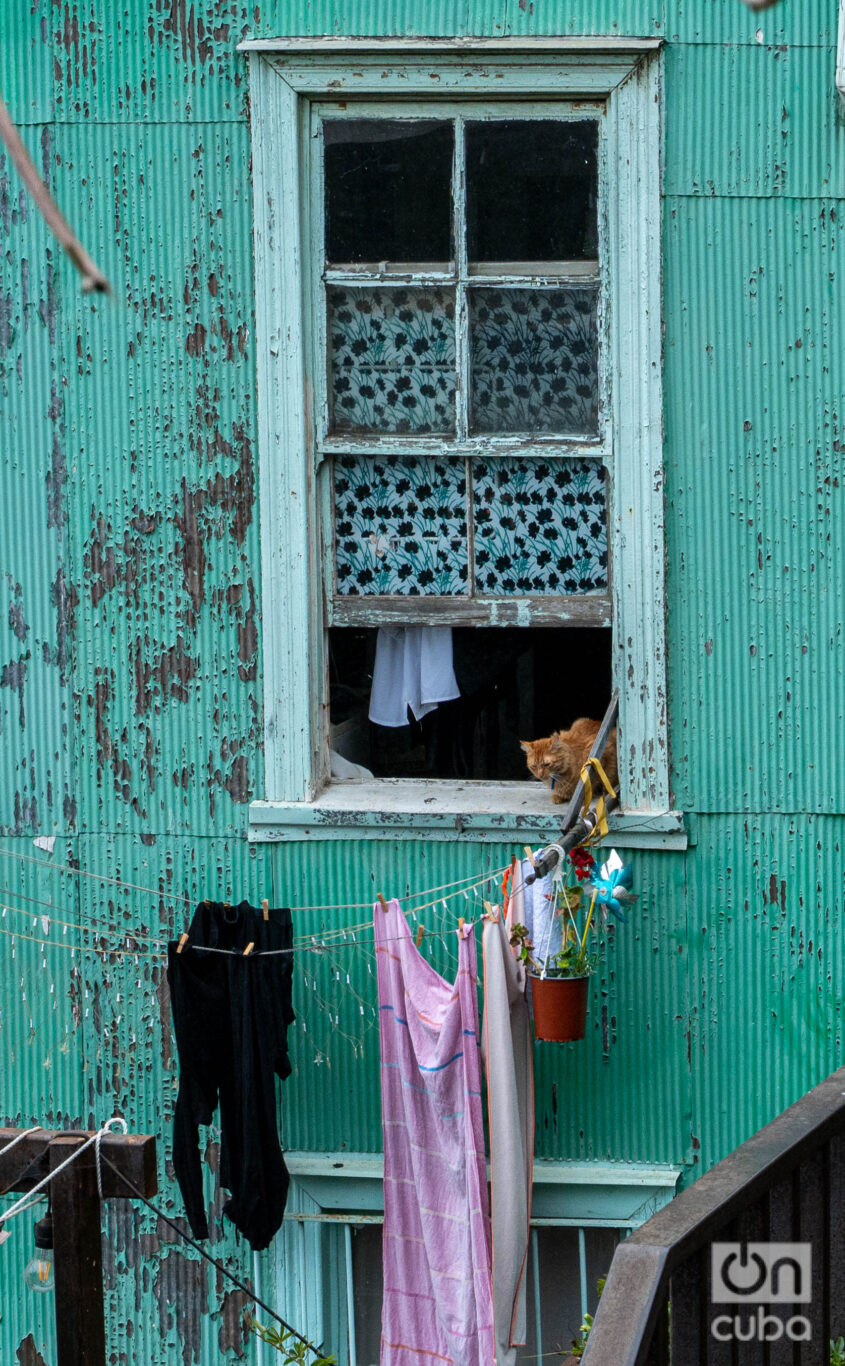
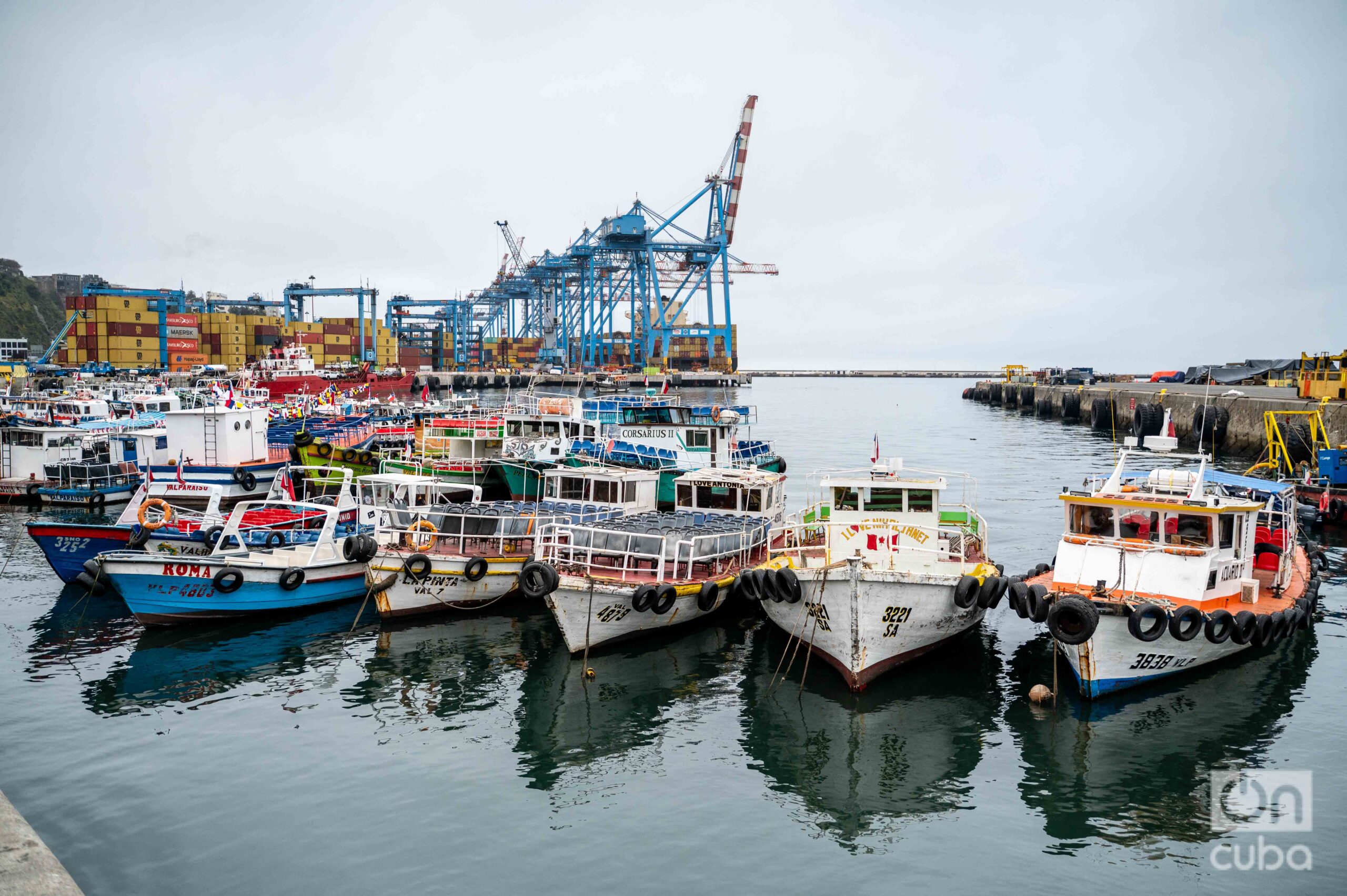
Decades later I arrived in Valparaíso, on a day when the sun was barely visible. A low, gray sky covered the city like a wet blanket, and a cold, biting wind rose from the port and tangled in the steep streets.
That opaque, almost winter-like climate reinforced the feeling of entering a territory that I had already seen before, a territory made more of shadows than lights. It was the perfect setting to pursue Sergio Larraín’s trail: a Valparaíso that did not shine, but that breathed deeply, slowly, deeply, like in his photos.
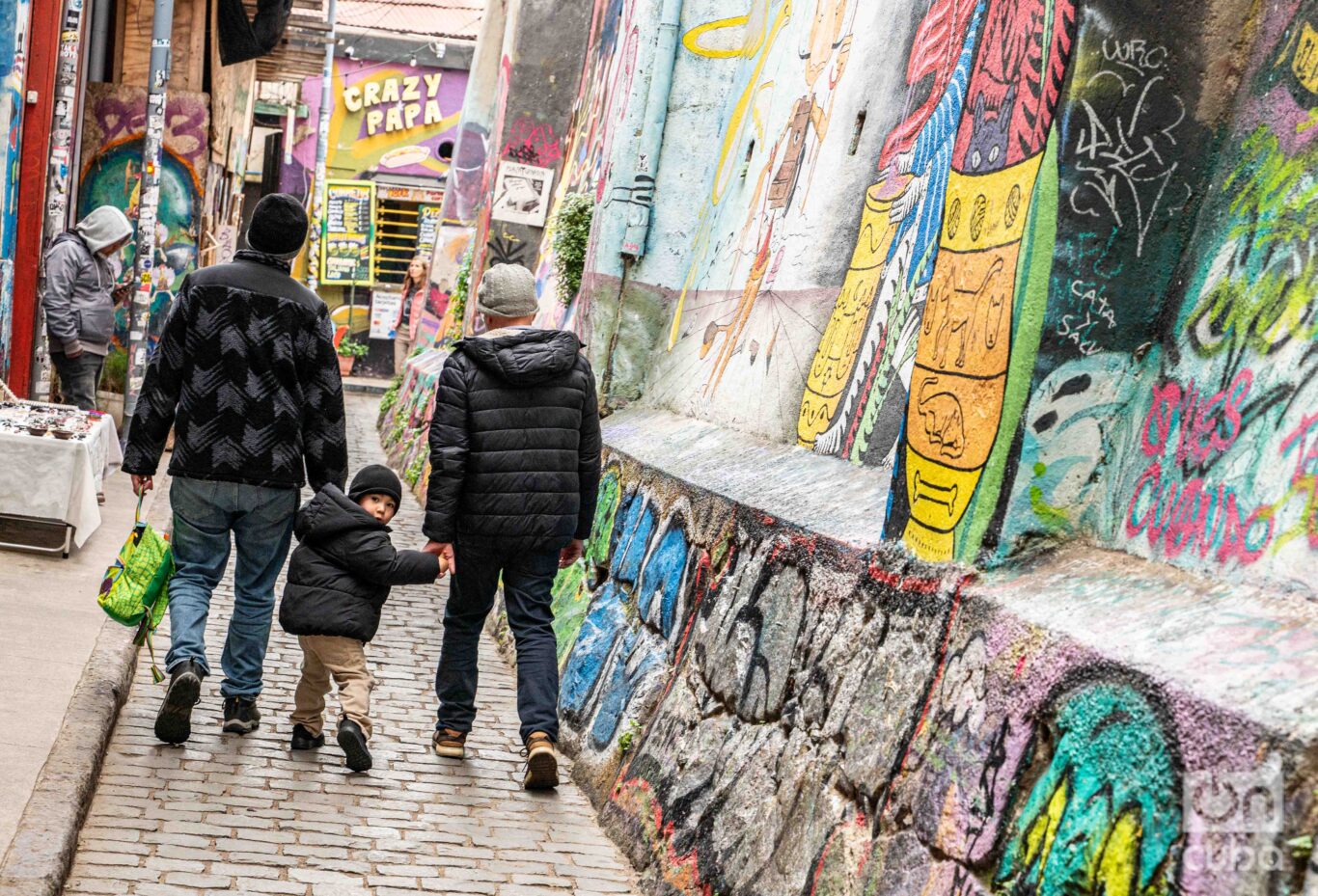
I fell in love with Sergio—with his character, with his imperfection, with his battle against himself—and I went to look for him in his images. I wanted to repeat his gesture: look at the city from the bottom up, from the margins to the center, from a state of possible grace.
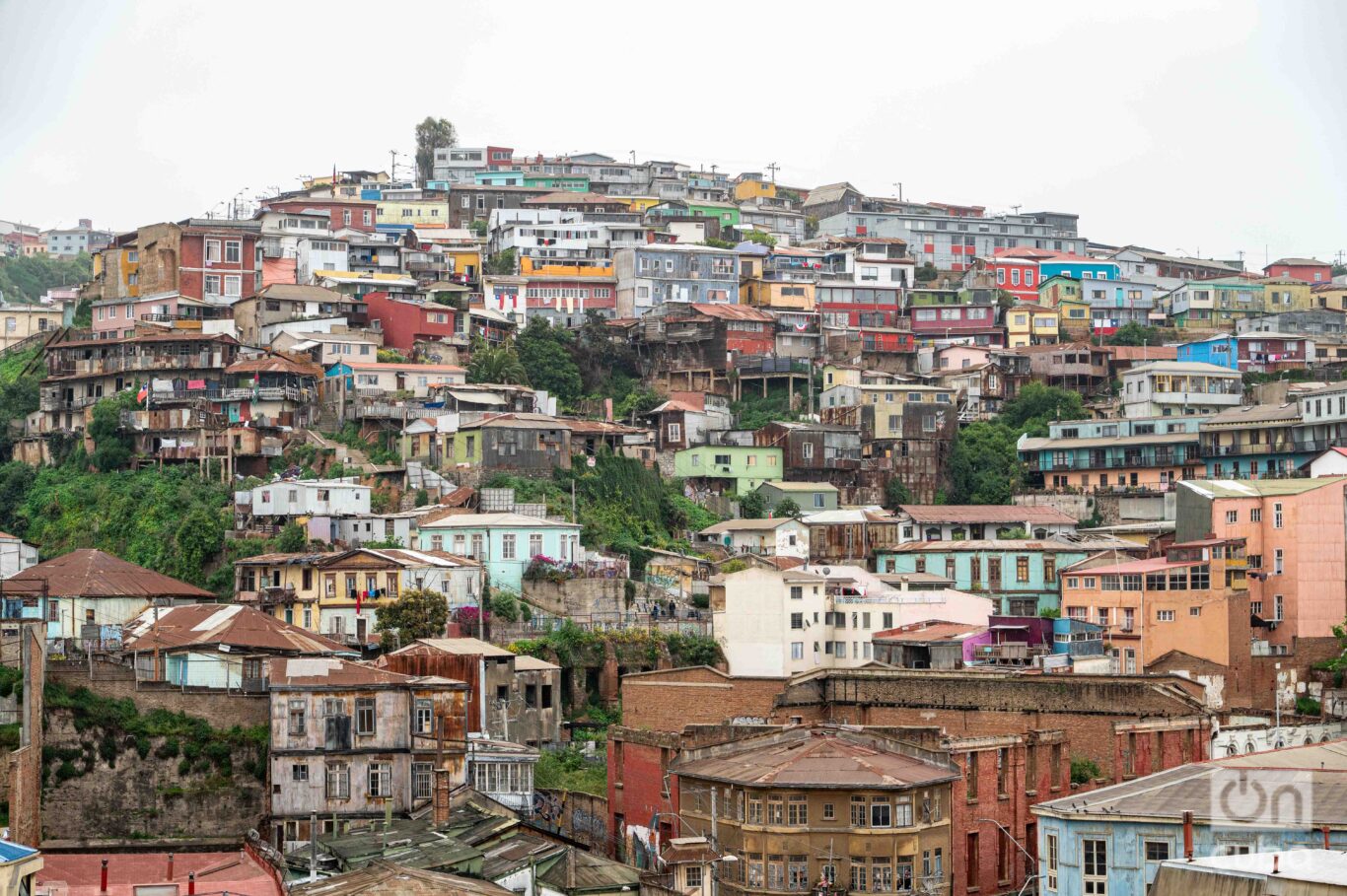
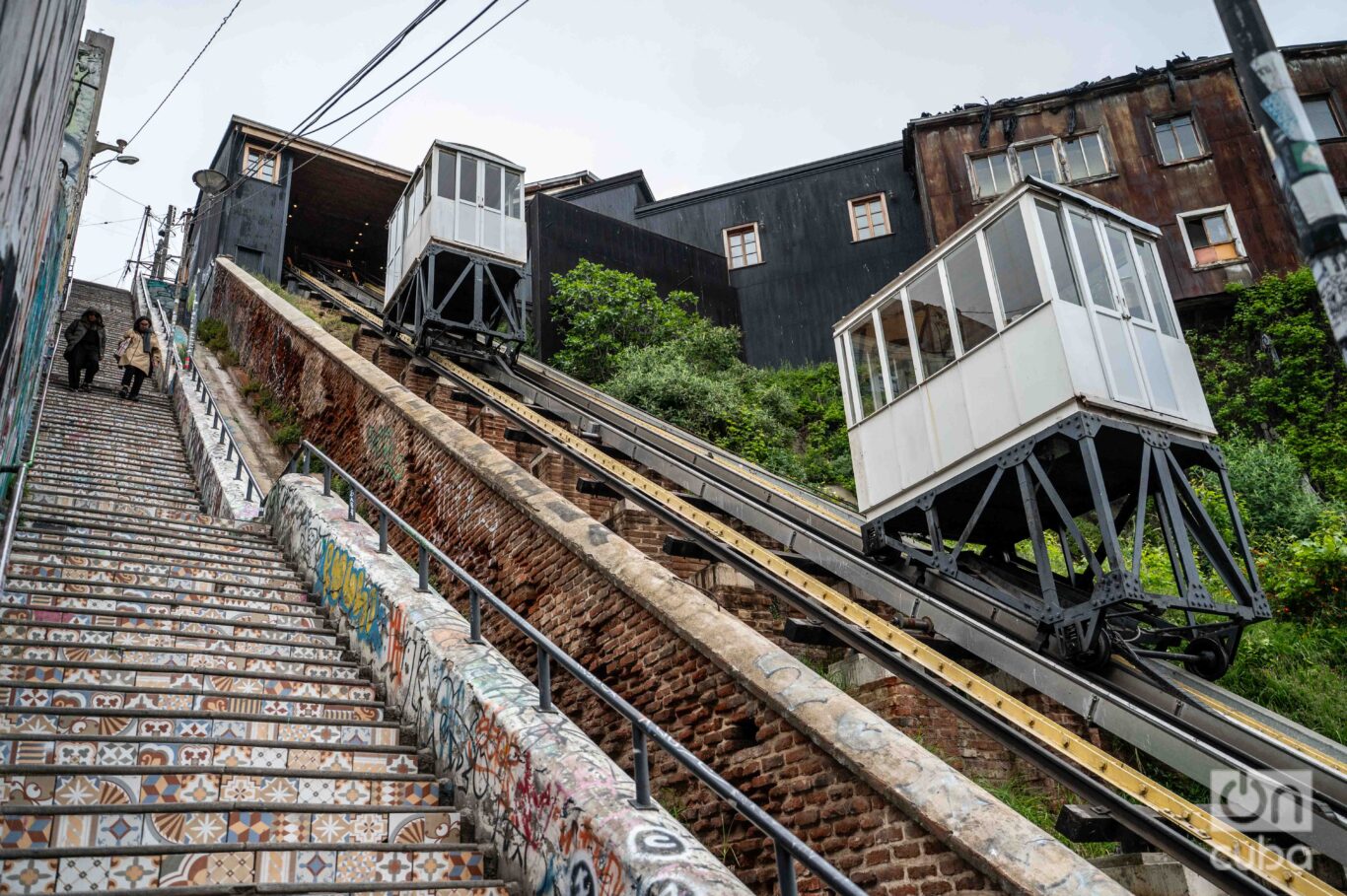
Valparaíso is a city built in layers, as if the architecture were a permanent dialogue between the sea and the hills. Its houses, with bright colors and corrugated tins, climb impossible slopes, connected by endless stairs, narrow passages and century-old elevators that resist time. Nothing is completely aligned: each façade is an irregular gesture, an attempt to adapt to the broken terrain and the living history of the port. Valparaíso mixes the precarious with the poetic; It combines port sheds, republican mansions, balconies that overlook the Pacific and murals that turn the streets into an open-air museum. It is an architecture made of disorder, survival and beauty.
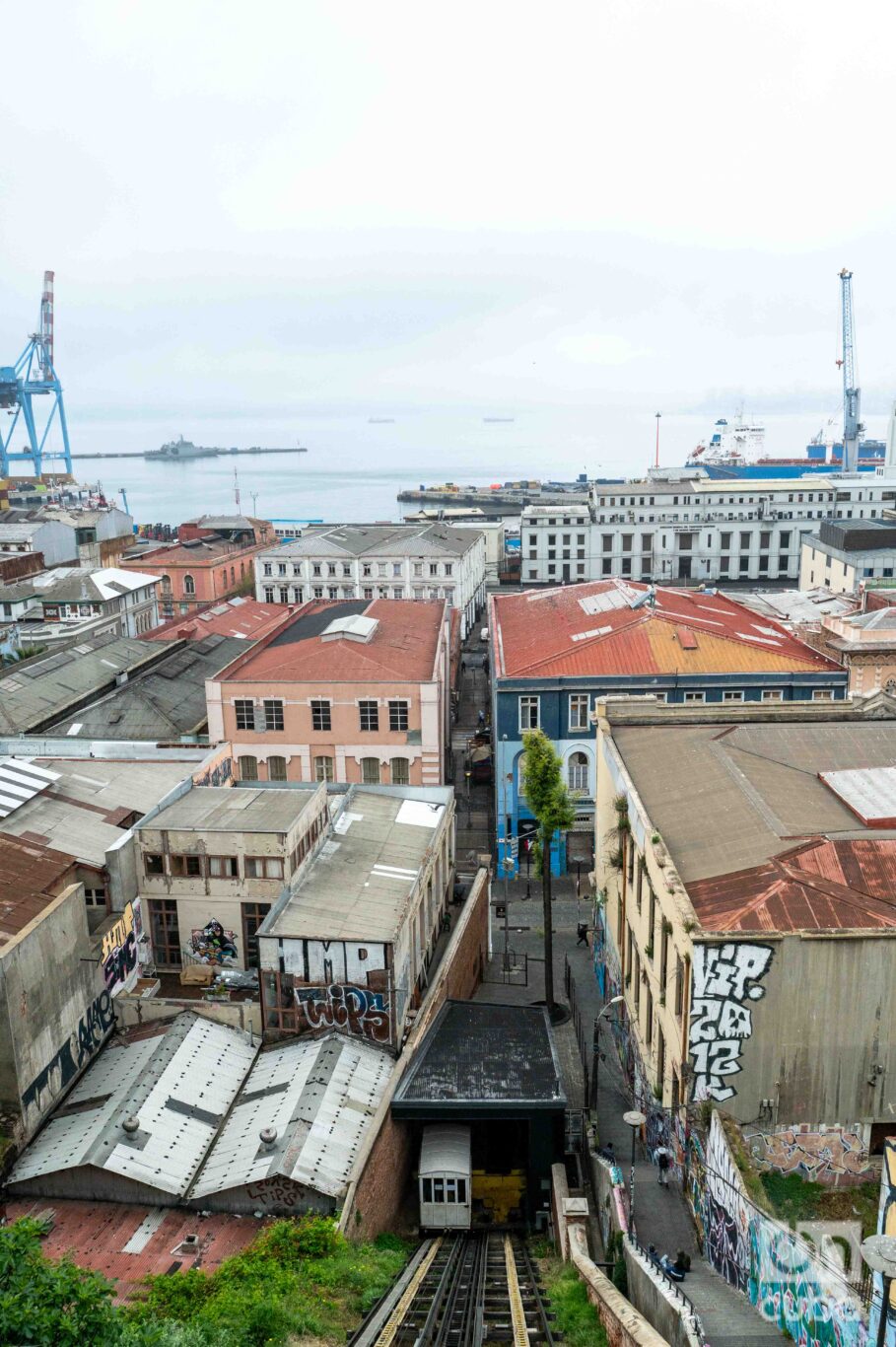
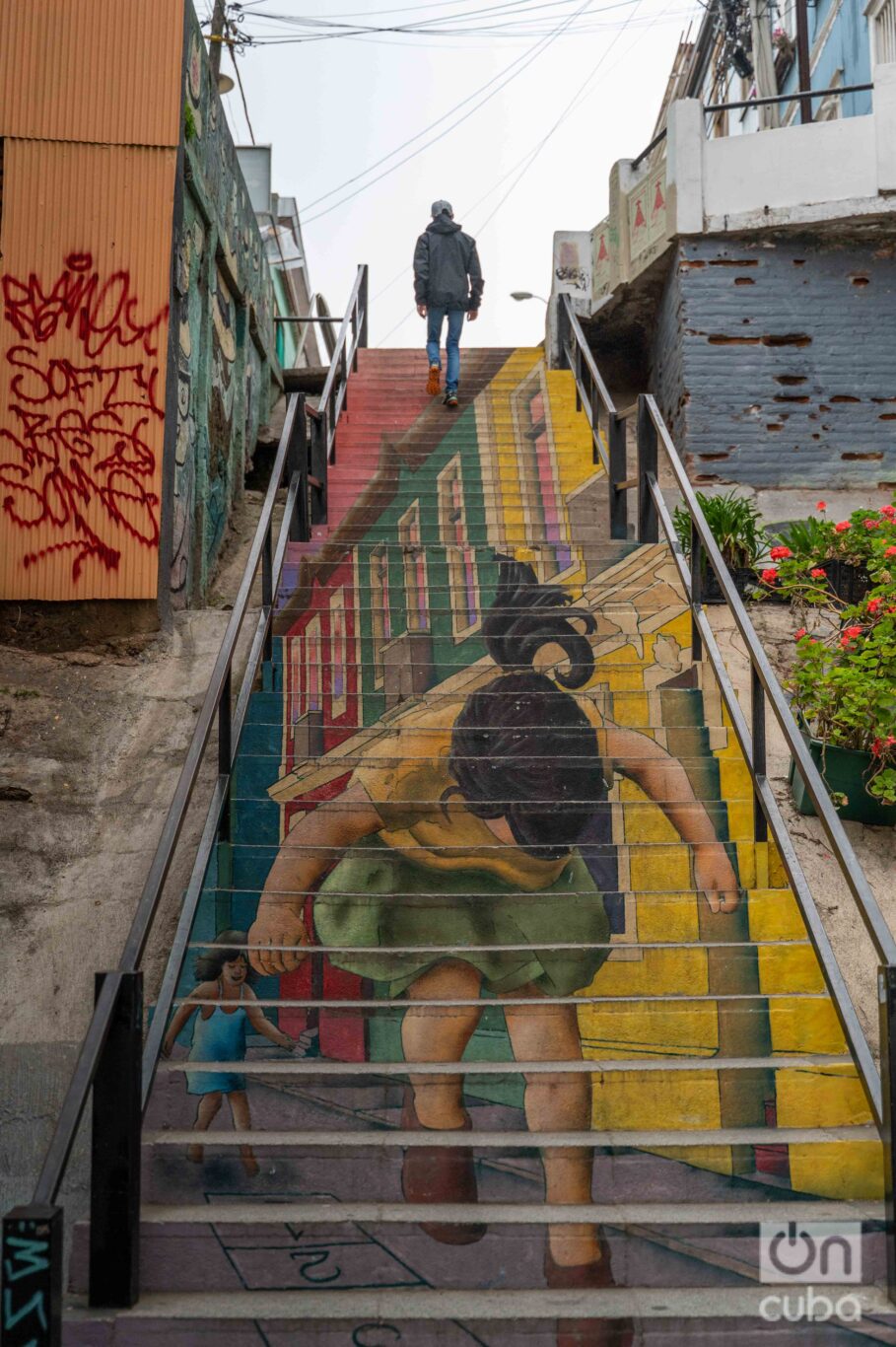
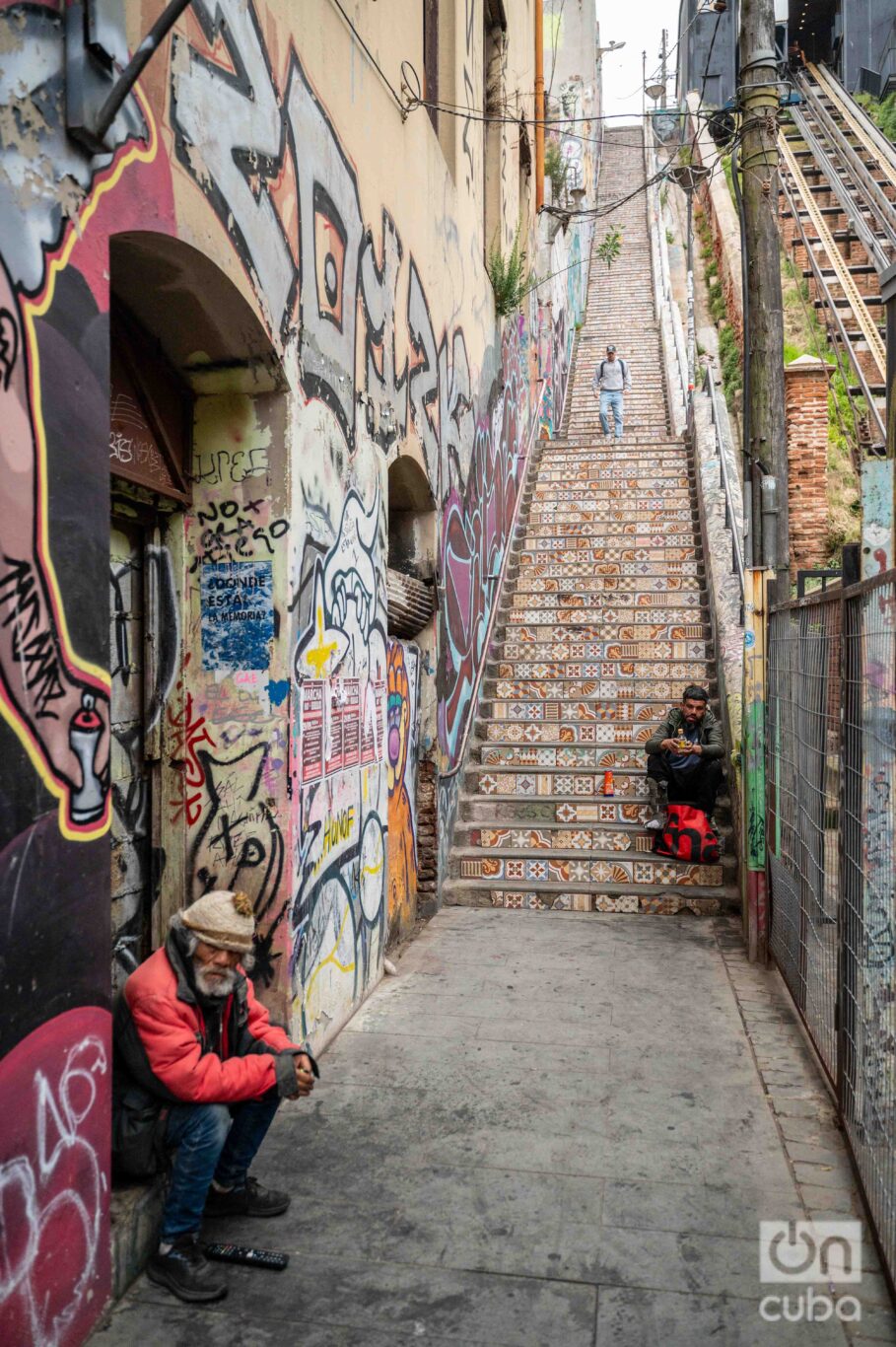
My first destination was Pasaje Bavestrello, where in 1952 Larraín took the most iconic photo in the book. I climbed the stairs with labored breathing, not from the effort, but from memory. There were the wall, the railing, the curve and the echo of those two identical girls, suspended in a reflection impossible to repeat. But it didn’t matter: such an image is not a frozen moment, but a state of the world.

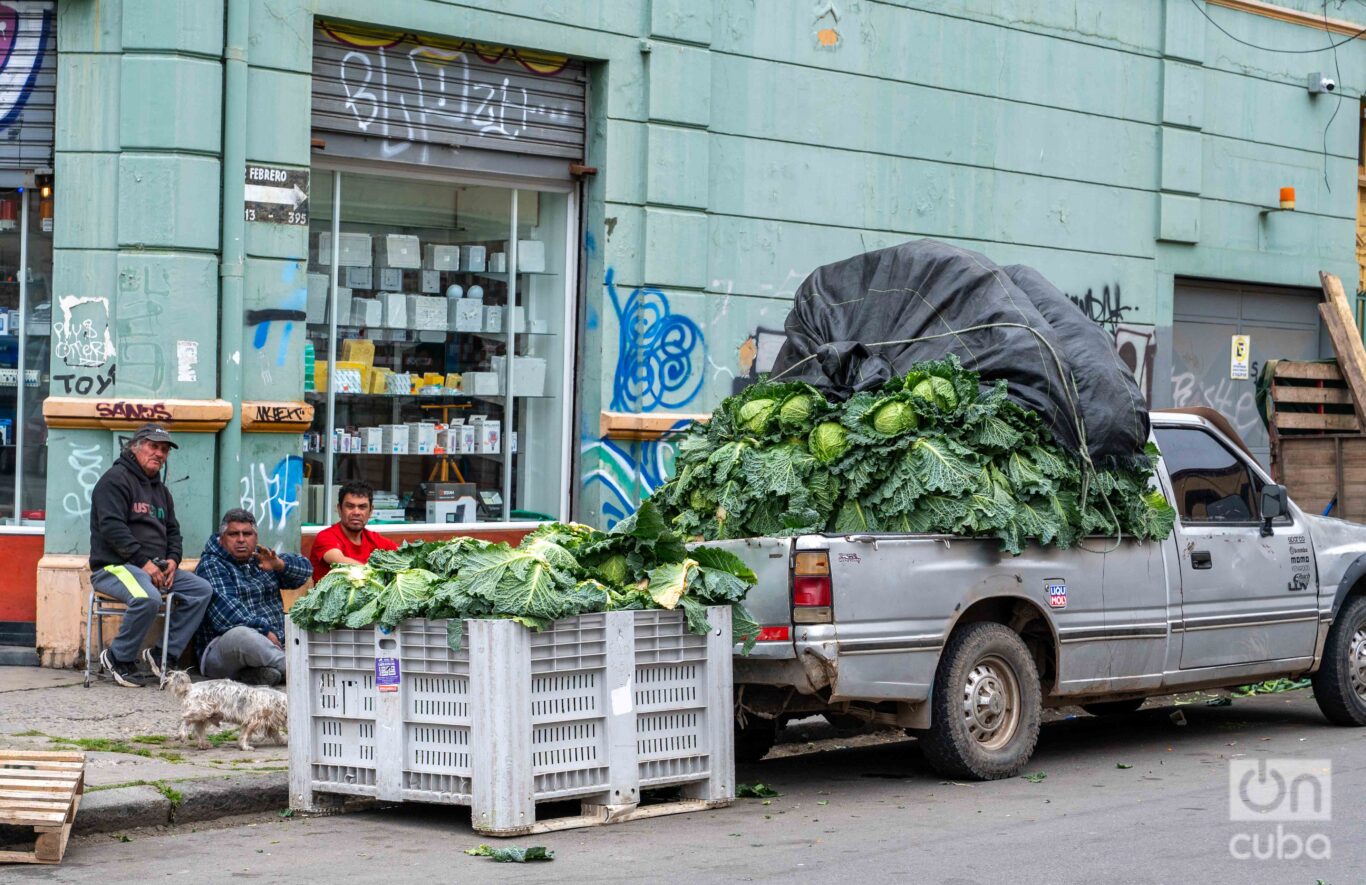
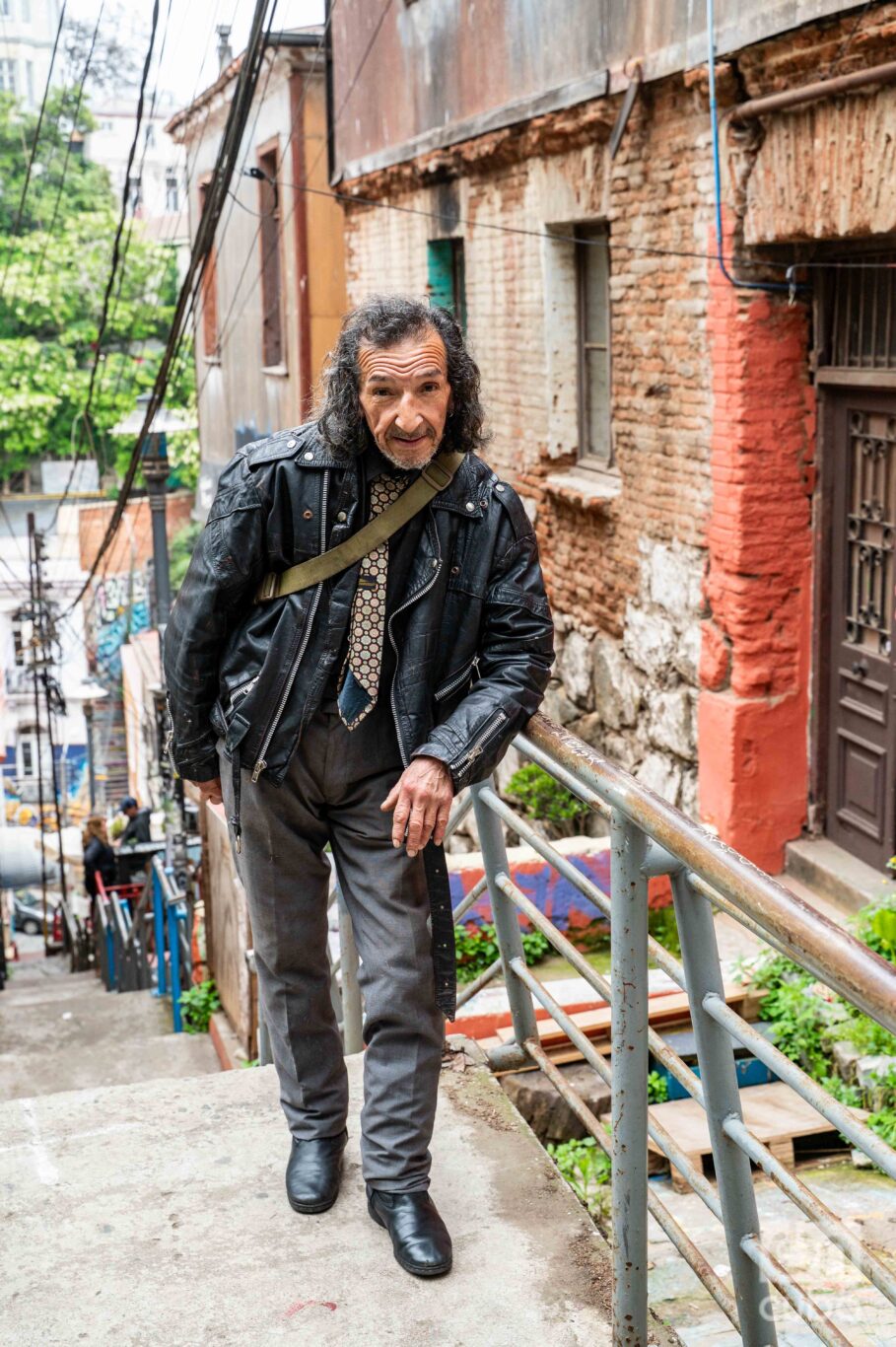
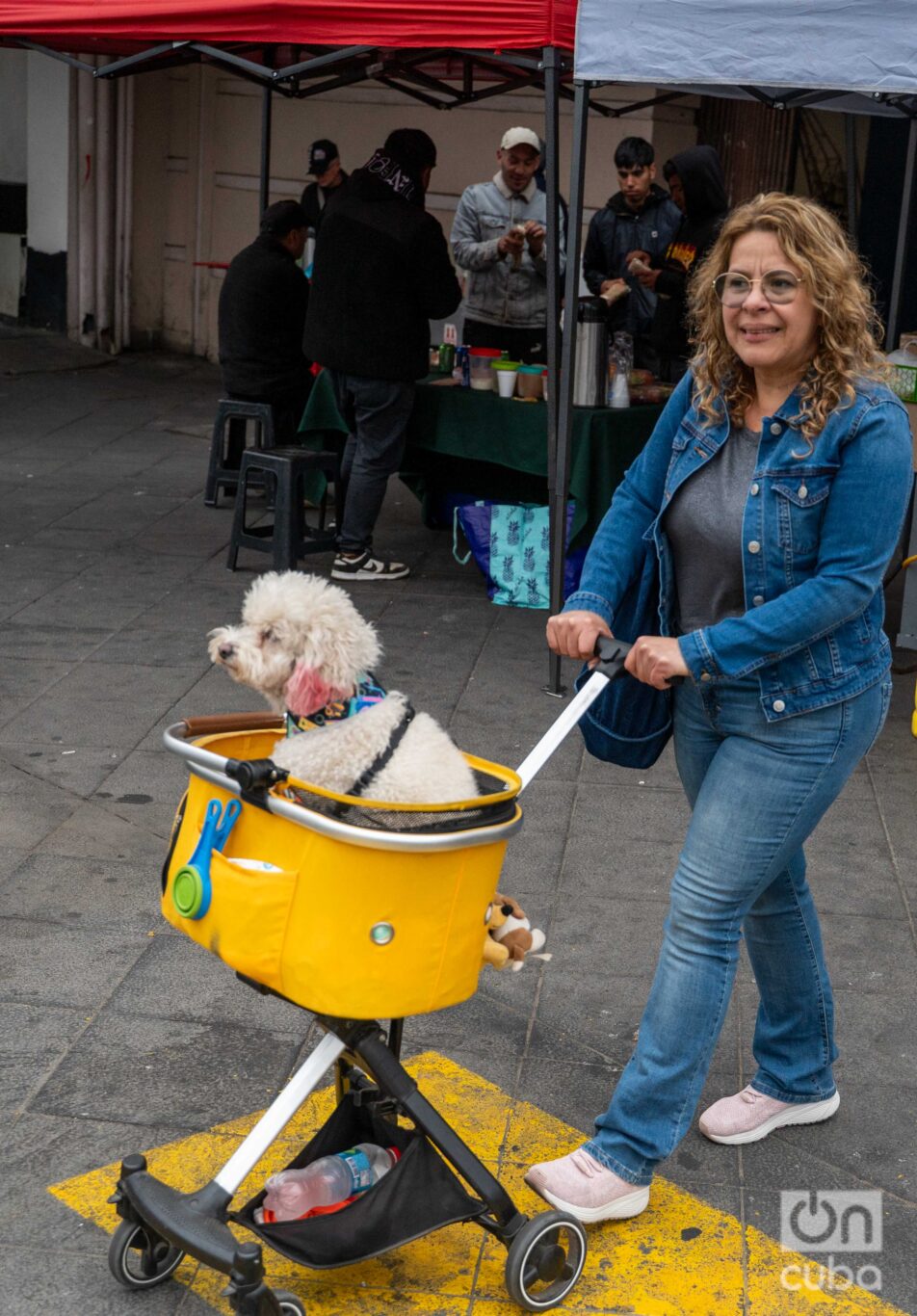
From there I let myself get lost. I went down and up winding streets, dodged tourists, came across street vendors and dogs that seemed to be guardians of some secret. I discovered characters from today who looked like those from yesterday, as if Valparaíso had not changed so much, or as if, despite the tourist storm, it still had a heart that beats at a different pace.
The history of Valparaíso partly explains that vibration. The exact date of its foundation is not known, although it is estimated around 1559, when the La Matriz church was built. During the colonial era it was the port of entry to Santiago, with trade centered almost exclusively in Callao, in Peru. Its true boom came in the 19th century: the ships that crossed Cape Horn made it an obligatory stop, and the city became a cosmopolitan hotbed.
English, French, Germans arrived. Colorful houses, buildings of European architecture, social clubs, Anglican temples, literary cafes and luxury brothels were built. Valparaíso was, for decades, a kind of miniature Paris planted on a cliff. Immigrants brought commerce, books, fashions, music, and also that melancholy that appears in places that don’t belong to anyone. The hills were populated without order, elevators were born—those machines that go up as if they were memories—and the city became a labyrinth that still baffles those who visit it for the first time.
A UNESCO World Heritage Site, Valparaíso is a distillation of lives that rise and fall, a city that is assembled and disassembled, a shipwreck suspended on a hillside.

I had gone after Larraín’s Valparaíso, but I found one of my own. I saw color where there had once been black and white; I saw the granules transformed into mist; I saw time stopped, not as a stigma.
In Sergio’s images, despite the sordid subjects, a poetic mood always appeared. On the streets today that mood persists, although disguised as graffiti, hostels, backpacker bars and cafes with recycled wooden tables. But if you look closely—if you look as he taught you to look—you still find what is essential: the mix, the disorder, the underground pulse, the beauty that does not need to be pretty.
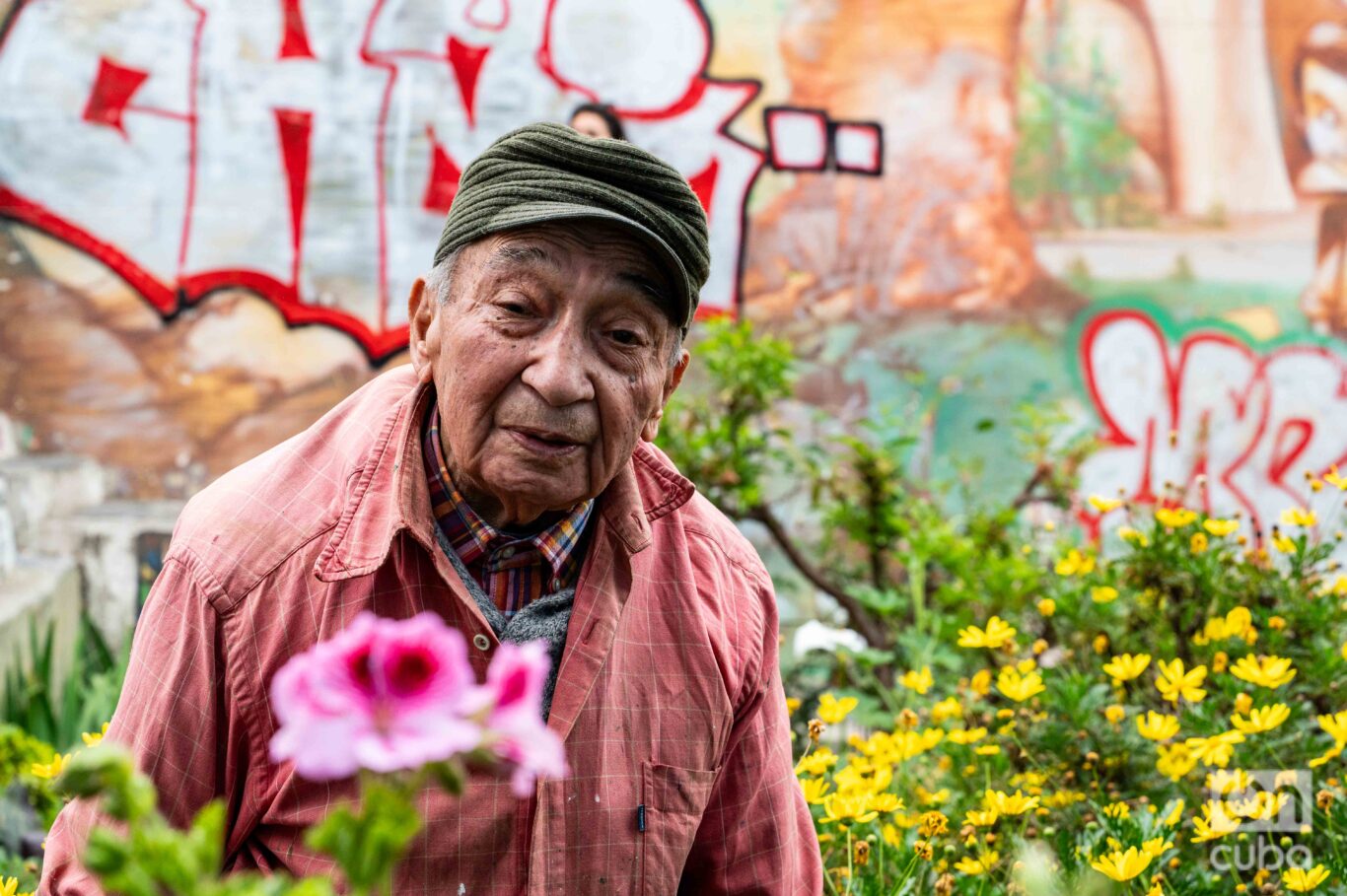
Sergio Larraín looked at Valparaíso from a state of grace. I, just a fleeting visitor, tried to approach that state with humility. Each hill is a chapter, each staircase a metaphor, each shadow a small collapse. That’s what I found: a winding Valparaíso that looked back at me.
And I also found, in its own way, Larraín: not in the postcards, but in the silence of a city that is still alive, breathing on the edges, and that still keeps a mystery that no mass tourism can destroy.