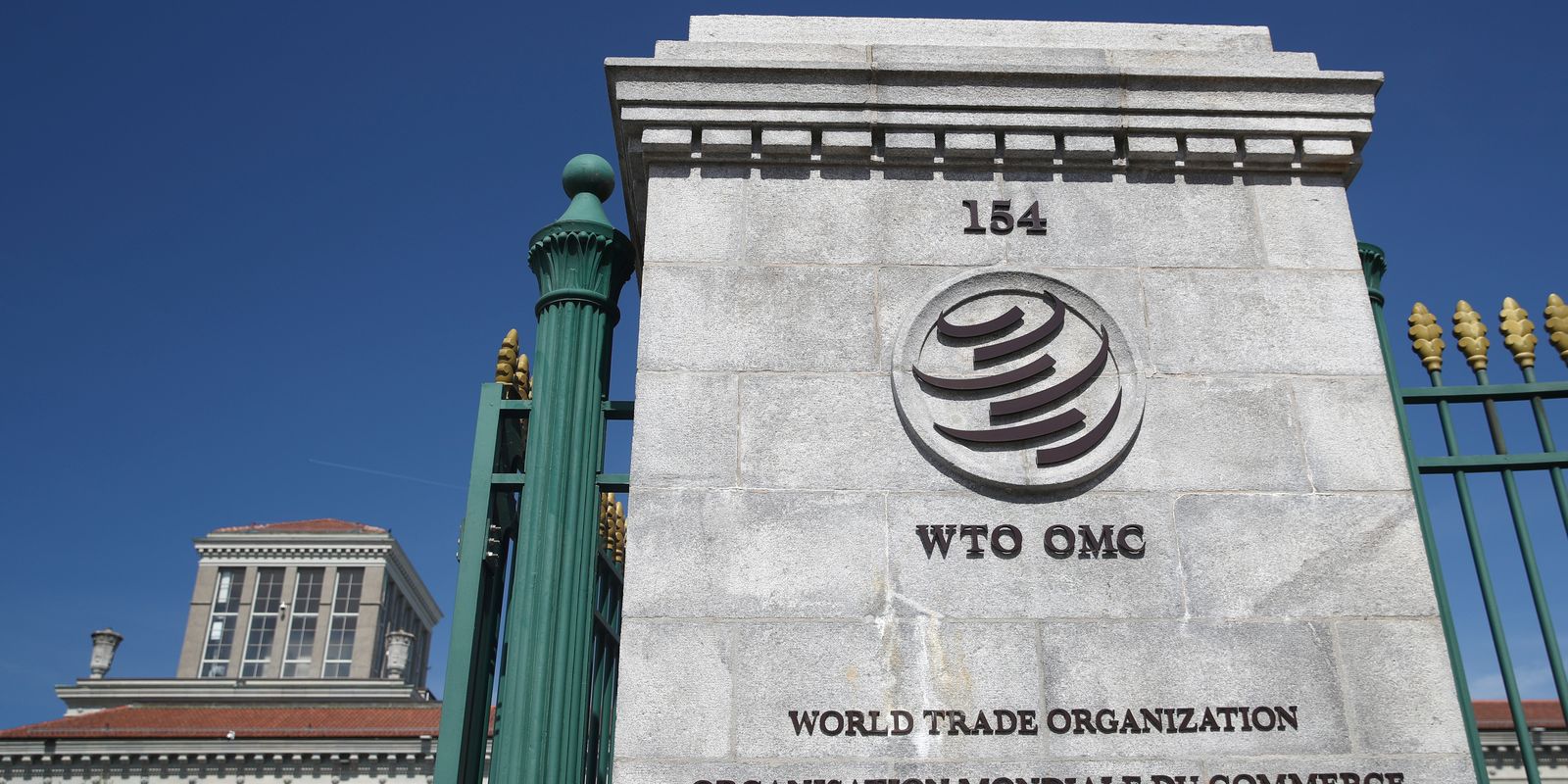
The United States accepted Brazil’s request for consultation at the World Trade Organization (WTO) regarding the fares imposed by President Donald Trump.
The country, however, argued that part of the Brazilian allegations involves “national security” topics, which cannot be reviewed within the entity.
In the answer, Available on the WTO pageThe US government stated that 50% surcharge on Brazilian products, as well as ongoing commercial investigations, are part of necessary measures to protect strategic interests from the United States.
“[As tarifas são necessárias] To deal with the national emergency resulting from the conditions reflected in the large and persistent annual US goods deficits with commercial partners, threatening the national security and the economy of the United States, “the United States government said.” “
“National security issues are policy and not subject to resolution on the WTO,” the document continued.
The tariffs, the document adds, were Imposed because Brazil’s recent policies and practices are “undermining the rule of law and threatening national security, foreign policy and the economy of the United States”.
Symbolic dispute
At the beginning of the month, the Brazil fired the WTO against tariffs 50% imposed by Donald Trump’s government. The consultation represents the formal beginning of a commercial dispute, in which the WTO seeks to arbitrate a dialogue between the parties in the attempt to agree.
If there is no understanding within 60 days, the Brazil may request the opening of a trial panel.
As the WTO has faced a process of emptying the controversy solution mechanism, the commercial dispute, in practice, has more political and symbolic effect.
THE Itamaraty said he intends to include new elements and accusations throughout the process, if the dispute advances to a panel.
Allegations of Brazil
In the request for consultations, the Brazil accuses the United States to violate rules of the General Agreement on Tariffs and Commerce (GATT, Precursor Body of the WTO) and the understanding of Controversies Solution (DSU).
Among the main points raised by the Brazilian government are:
- Violation of the principle of treating all WTO members equally, when exempting some business partners and punishing Brazil
- Farms above the limit: 50% rate exceeds the levels agreed by the United States themselves in the WTO;
- Discriminatory Treatment: Surve’s brings less favorable conditions to Brazil than those provided for in the official US commercial concessions list.
- Failure to comply with the rules of dispute solution: according to Brazil, unilateral punishments of the United States violate procedures provided for in multilateral agreements.