donald trump confirmed this Wednesday that the United States seized an oil tanker off the coast of Venezuela, marking a new phase in the growing confrontation against that country. The operation is the first seizure of a Venezuelan oil tanker since the US military deployment in the Caribbean began.
“As you probably know, we just seized an oil tanker off the coast of Venezuela,” Trump declared during a meeting with businessmen at the White House. “It is a huge tanker, very large, in fact, the largest ever seized,” he said.
A ship without a face
So far, neither the US government nor Venezuelan authorities have revealed the name of the confiscated tanker, its destination or its cargo. The agency Bloomberg was the first to report the news, citing sources familiar with the operation, while Reuters confirmed that the operation was led by the US Coast Guard with support from the Navy.
The diary Political said that “a person familiar with the matter, who preferred anonymity to speak about the delicate seizure, stated that the ship was headed to Cuba, where the state-owned company Cubametales planned to sell it to Asian energy intermediaries.”
Trump justified the seizure by stating that it was carried out for “very good reason,” and announced that his administration would publish more information soon. When asked about the fate of the oil on board, the president responded unambiguously: “We’ll keep it, I guess.”.
The ship would have been classified as “sanctioned” by the United States, according to reports, indicating that it violated the restrictions imposed on the Venezuelan oil sector. The operation was carried out near the Venezuelan coast, although the exact coordinates of the interception have not been disclosed.
Years of oil sanctions
The seizure occurs in the context of a complex network of sanctions that the United States has imposed on Venezuela since 2014. The turning point occurred on January 28, 2019, when the Trump administration in its first term sanctioned Petróleos de Venezuela (PDVSA), blocking its assets in US territory and drastically restricting the access of Venezuelan oil to the North American market.
These measures were implemented under a series of executive orders that authorize the US president to sanction individuals and entities linked to the Venezuelan government. The legal justification goes back to the Law for the Defense of Human Rights and Civil Society of Venezuela of 2014approved during the presidency of Barack Obama.
Over the years, Washington has calibrated these restrictions through specific licenses. The Office of Foreign Assets Control (OFAC) has issued and withdrawn permits that allowed certain companies, such as Chevron, to operate in Venezuelan territory. However, In April 2024, the Biden administration reinstated sanctions to the oil sector after considering that the Maduro government failed to fulfill electoral commitments established in the Barbados agreement.
Trump: “Other things are happening”
In his announcement Wednesday, Trump hinted that the tanker seizure is just the beginning. “And other things are happening, you’ll see that later,” he pointed out enigmatically. The president has also repeatedly promised that attacks will begin “soon” within Venezuelan territory, although without offering specific details about location or scope.
The Trump administration accuses Maduro of leading the alleged Cartel of the Suns, a drug trafficking network that would involve senior Venezuelan military and government officials. Washington offers a reward of up to $50 million for information leading to the capture of the Venezuelan president.
Military deployment and attacks in the Caribbean
The seizure of the oil tanker is part of a unprecedented military pressure campaign that the United States has deployed in waters near Venezuela since September 2024. The Trump administration has sent thousands of military personnel, an aircraft carrier strike group and fighter jets to the region.
Since September, US forces have destroyed at least 23 vessels that Washington says were transporting drugs. These attacks have resulted in the deaths of 87 peopleaccording to official figures. The operations have generated criticism from organizations such as Human Rights Watch, which describe them as extrajudicial executions.
He US Congress has introduced resolutions to limit the use of military force against Venezuela without legislative authorization. Democrats have questioned the legal basis for these attacks, arguing that the government cannot kill suspected criminals without trial.
Venezuelan reactions: Maduro calls for the United States to “break its teeth”
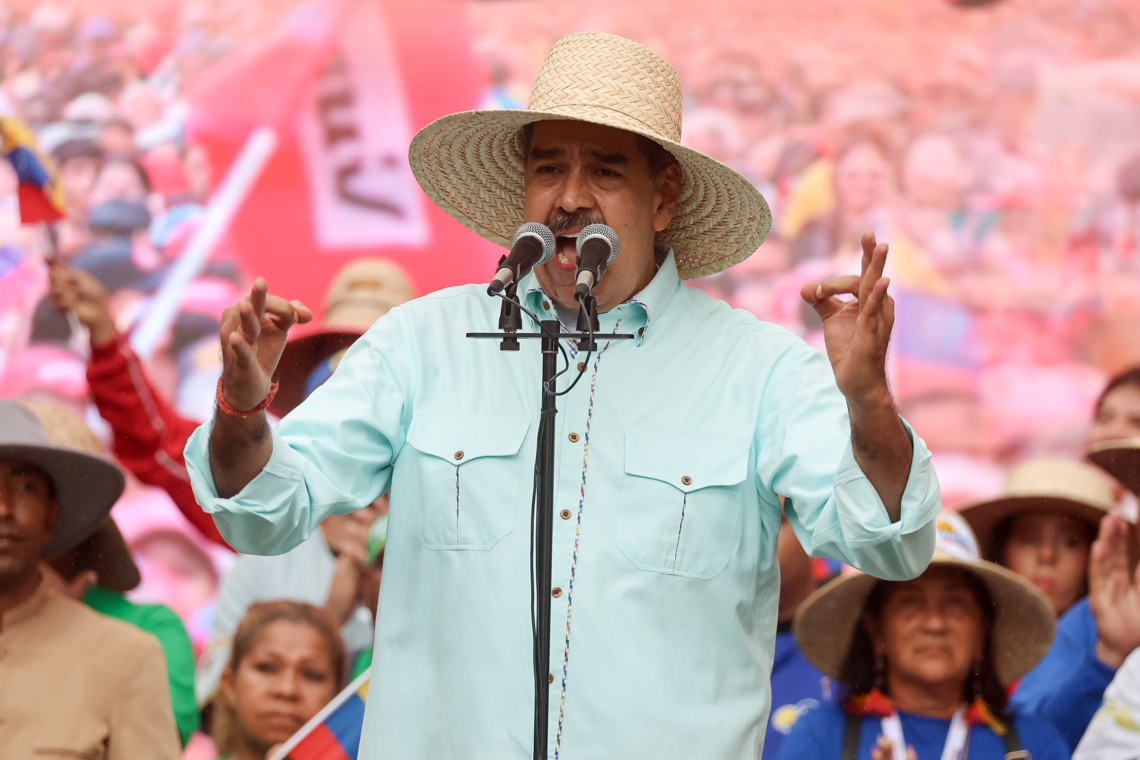
The Venezuelan government has denounced the operation as an act of piracy and a violation of international law. President Nicolás Maduro He called on Venezuelans to be prepared to “break the teeth” of the United Statesaccording to local media reports.
In previous statements, Maduro has alleged that the US military reinforcement against Venezuela aims to overthrow it and gain control of the country’s vast oil reserves, the largest in the world according to estimates. The Venezuelan president has also called on his citizens to unite against US threats and enlist in citizen militias.
The government has deployed troops, planes, ships and drones on the border with Colombia, in coastal areas and on strategic islands in preparation for a possible US military intervention.
Neither PDVSA, the Venezuelan state oil company, nor the ministries of Petroleum and Information have issued official comments on the seizure of the vessel. The regime has also criticized US actions as an attempt to appropriate Venezuelan natural resources.
Impact on the oil market
News of the seizure had an immediate effect on global energy markets. Oil prices rose Following the announcement: Brent crude oil reached $62.35 per barrel, up 41 cents, while US West Texas Intermediate closed up 21 cents, at $58.46 per barrel.
Analysts agree that this action could significantly hinder Venezuelan oil exports. Other international shippers are now likely to be more reluctant to load Venezuelan crude for fear of facing similar seizures.
Venezuela exported more than 900 thousand barrels per day of oil last month, the third highest monthly average of 2024. Most of this crude goes to China, usually through brokers and at deep discounts due to the risk of sanctions.
The American oil company Chevron, which operates in Venezuela under a special license from the Treasury Department, has not been directly affected by this operation. The company continues to extract and export Venezuelan oil, representing a crucial financial lifeline for the Maduro regime.
What’s next?
The seizure of the tanker marks a new phase in the confrontation between the United States and Venezuela, with potentially serious consequences for the already deteriorating Venezuelan economy and regional stability.
CNN has reported that the Trump administration is working on plans for the day after Maduro is removed from power, according to two senior administration officials and another source familiar with the discussions.
For its part, the US Congress keeps the debate open on the limits of presidential power to undertake military actions without legislative authorization. Several resolutions seek to force the president to withdraw armed forces from hostilities against Venezuela unless there is a declaration of war or explicit authorization of the use of military force.
The international community observes the escalation of tensions with concern. The UN High Commissioner for Human Rights, Volker Türk, has call for an investigation on US attacks on vessels in the Caribbean, urging the United States to stop such actions and take steps to prevent extrajudicial executions.
Meanwhile, oil prices, the fate of shippers willing to work with Venezuela, and PDVSA’s ability to maintain its exports will largely depend on the Trump administration’s next moves and the response of Caracas and the international community to this unprecedented pressure.