By Michele Testoniprofessor of International Relations at the IE University.
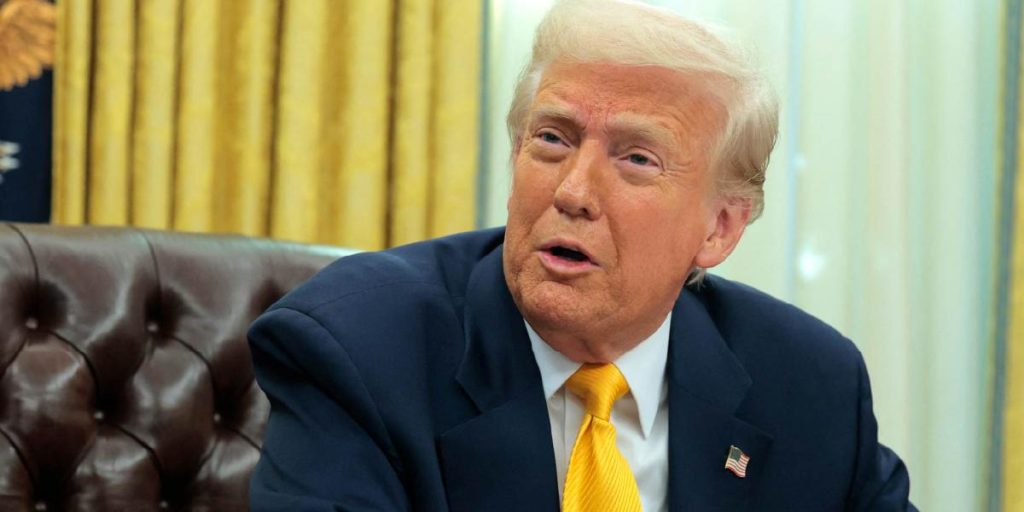
There persists a “fundamental disagreement”. This was the only concrete outcome of the White House meeting between American, Danish and Greenlandic representatives on January 14, as each side maintained its original position on Greenlandic sovereignty. The Trump Administration argued that the United States should assume direct control of the island, while Danish and Greenlandic leaders firmly rejected the idea.
Perhaps this was to be expected. The recently published US National Security Strategy made one thing very clear: American foreign policy is now defined by an assertive approach toward the entire Western Hemisphere. Washington claims the right to intervene in the internal affairs of other countries, even militarily if necessary, in order to guarantee US strategic and corporate interests.
This new “Donroe doctrine” It is a renewed version of the gunboat diplomacy that shaped US foreign policy towards Latin America (and the Asia-Pacific region) at the beginning of the 20th century.
Trump wants Greenland
Trump has repeatedly said that the United States needs to assume direct control of Greenland for “national security” reasons. The White House social media now regularly posts messages about US control of the island, but Trump has long flaunted his military might: “We will get it, one way or another”he stated in a speech before Congress in February 2025. His appointment of the current governor of Louisiana, Jeff Landryas special envoy for Greenland in December 2025 confirmed this line of action.
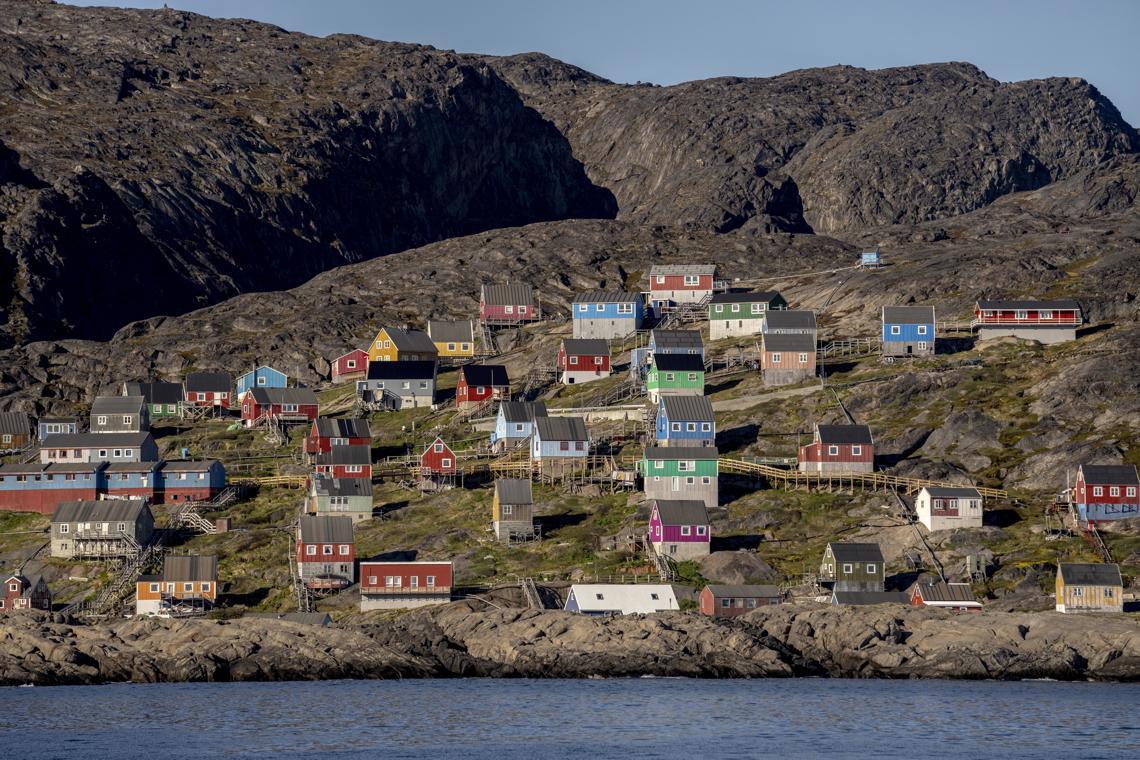
For Trump, Greenland is strategically vital. Although sparsely populated, the island is potentially rich in raw materialsincluding critical rare earth minerals. This makes it a target for American tech giants.
It also fits perfectly into his idea of an imperial United States, along with the strange proposal of making Canada the 51st US state and the controversial name change from the Gulf of Mexico to the “Gulf of America.”
As part of his national security rhetoric, Trump has stated that Chinese and Russian ships are “everywhere” in Greenland. However, high nordic officials with access to NATO intelligence have publicly and explicitly stated that there are no records of this in recent years.
Geographically, Greenland is North America’s gateway to the Arctic. Climate change has made the region increasingly easier to navigate, and it is expected to become an arena of fierce competition between the world’s largest powers.
Danish and European response
European policymakers have begun to take Trump’s words seriously, and rightly so: in this second term he is showing that he is willing – and, at times, able – to align his words (even the most radical and extreme ones) with political action. Despite being part of Denmark, which is a NATO ally and member of the European Union, Greenland seems an easy target.
He Home Rule Government of Greenland He has repeatedly stated, both before and after the January 14 meeting, that he does not want to be annexed by the United States.
After a long period of mediation and a discreet approach, the danish prime minister has also taken a firm stance, now backed by other European partners and the united kingdom.
For its part, the European Commission has been hesitant, expressing solidarity with Denmark and Greenland but being disappointingly ambiguous when it comes to concrete security commitments. On the contrary, the Danish Government has chosen expand its military presence in the region. It has launched Operation Arctic Resistance in close collaboration with allies such as France, Germany, Norway and Sweden. Finland and the netherlands They are still evaluating the Danish proposal.
From a military perspective, this is largely a symbolic measure, but politically it has enormous relevance, as it marks a new historical low in transatlantic relations. European troops are now landing in Greenland to defend it from a real threat that does not come from Russia or China, but from the United States, its security partner for decades.
Three possible outcomes
Given the current circumstances, there appear to be three possible ways to overcome this impasse.
The first is for Trump to back down, give up his plan to “get Greenland” and respect the status quo. This is highly unlikely: the president’s verbal escalation has already reached the point of no return, and he now finds himself in the position of having to sell the Greenland issue to his electorate as a historic victory.
The second option is, therefore, military occupation. This is governed by the logic of game theory. “chicken game”. The U.S. military is larger, far more prepared to fight, and supported by an Administration that has already demonstrated that it can use force deliberately and unilaterally, with or without congressional approval, as prescribed by the U.S. Constitution. When push comes to shove, Trump may think the Europeans will get scared and retreat.
This is the worst case scenario, which could lead to end of NATO. It could also trigger a domino effect of deteriorating relations, which could threaten EU unity.
It’s true that Trump may be tempted to continue his erratic “might makes right” approach (which some analysts have quaintly dubbed the “Fuck Around and Find Out” (“play and find out”). However, he could also be held back by growing concerns within his own party, such as those recently expressed by powerful Republican senator Mitch McConnell.
The third possibility is to negotiate a compromise that benefits both parties. The United States and Denmark could revise their 1951 bilateral agreement and thus provide Washington with a greater military presence on the island (such as permission to build a base for American nuclear submarines) along with a special concession for mining rights. At the same time, Denmark and other NATO allies would commit to increasing their military presence in Greenland and throughout the Arctic.
NATO Secretary General Mark Rutte is said to be actively working to achieve this result. It would be a win-win and very welcome solution.
Michele Testoni He is a professor of International Relations at the IE University.
This article was originally published in The Conversation. Read the original.