Cuba announced this Saturday the cancellation of its Habano Festival, one of the most prestigious and glittering events in the global tobacco industry, at a time when the island faces a serious energy crisis aggravated by the United States oil blockade.
The decision, communicated by email to the participants, leaves on hold an event that each year attracts thousands of visitors and raises millions of euros in its traditional humidor auction, in which the elite of consumers of the best tobacco in the world participate.
This Saturday, the official page of the event had not yet referred to the cancellation of the meeting.
More than 18 million dollars, new record at the Habano Festival auction
An interrupted festival and a blow to health finances
The organizing committee reported that the edition scheduled for February 24 to 27 was postponed, without specifying a new date. The cancellation hits a sector that in 2025 had managed to raise 16.4 million euros in its annual auction, funds that are officially allocated to the public health system.
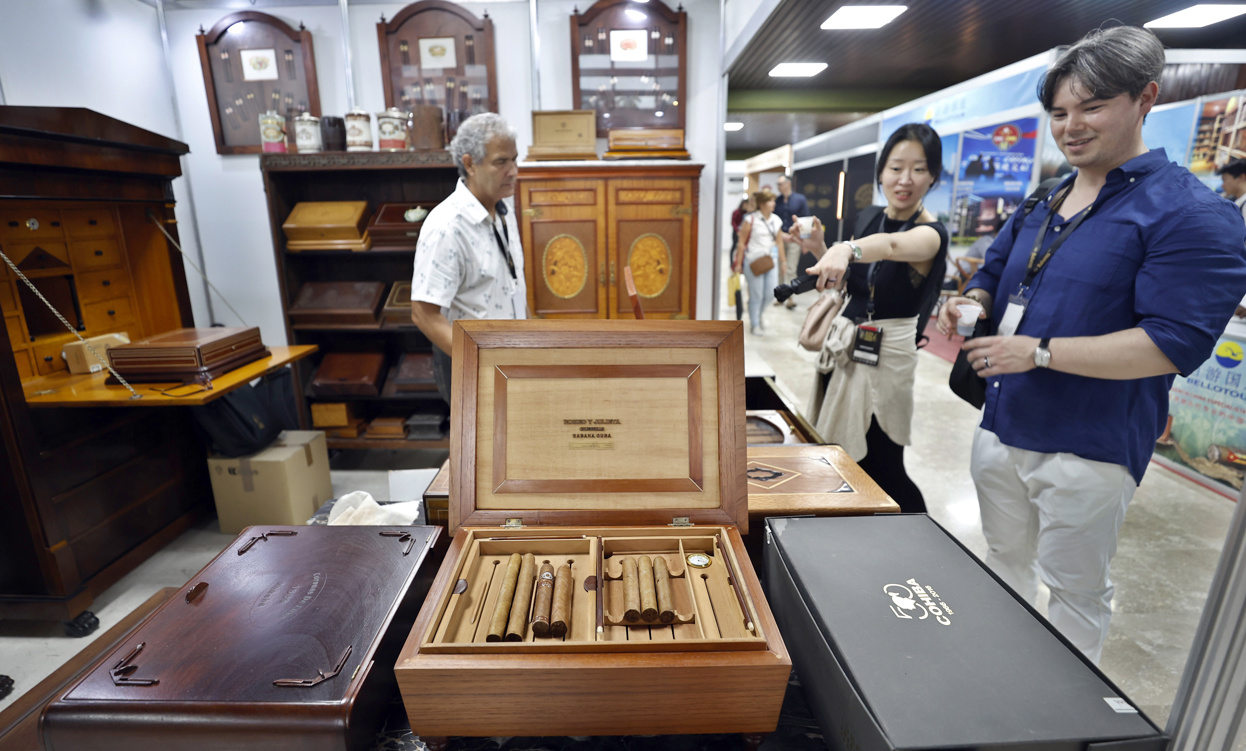
At the closing of the previous edition, seven humidors from iconic brands such as Cohiba, Montecristo, Romeo y Julieta, Partagás, Hoyo de Monterrey and H. Upmann were auctioned for more than 17 million dollars, a record figure for the event.
The largest amount corresponded to the humidor commemorating the fifteenth anniversary of Cohiba’s Behike Line, sold for 4.6 million euros.
President Miguel Díaz-Canel attended the final gala of 2025, where the Habanos Awards were presented and competitions such as the Torcedores Contest and the Habanos World Challenge were held.
The evening culminated with a concert by the legendary American band Earth, Wind & Fire, who rose to fame in the mid-1970s, when their distinctive blend of funk, soul, jazz and pop burst onto the charts.
Controversy in the Capitol
The edition of the festival in 2025 caused a strong controversy generated by a lavish dinner at the National Capitol, in a setting where much of the country was suffering prolonged blackouts.
Some 600 VIP guests participated in an evening described by organizers as intended for a “select group.”
The images of a red carpet on the steps of the National Capitol, inaugurated in 1929 to accommodate the nation’s Congress, and all the illuminated splendor of the Hall of the Lost Steps, provoked outrage on social networks.
“The place is the headquarters of our Parliament and now it is used in images that resemble a kind of brothel from the 50s,” criticized the doctor in Communication Sciences Ana Teresa Badía.
Other journalists and citizens described the event as “the Cuban Versailles,” denouncing the contrast between the opulence of the gala and the daily precariousness of the population in a sacred site, where the Tomb of the Unknown Mambí (soldier) of the 19th century wars of independence lies.
Although some defended the collection of foreign currency for public health, the debate reflected social unrest amid the energy crisis and widespread poverty.
The suspension of the Habano Festival is added to the list of activities affected by the lack of fuel, including the Havana International Book Fairthe largest cultural event on the island since the early 2000s, although its origin dates back to 1982.
Tobacco as an economic engine and symbol of identity
Beyond the controversy, the tobacco sector continues to be one of the pillars of the Cuban economy and the island’s national identity. Habanos are considered among the best cigars in the world and constitute one of the island’s main export sources.
In 2025, the Habanos SA company reported sales of more than 500 million dollars, with a presence in more than 150 countries. The Habano Festival, in addition to its cultural impact, functions as a showcase to consolidate commercial relationships and attract investments.
Humidor auctions, which have reached record figures, are presented as a symbol of the international prestige of cigars. The funds raised are officially allocated to the health system, reinforcing the link between the tobacco industry and social well-being.
Fidel Castro himself (1926-2016), cigar smoker Until the 1980s, Cohiba being his favorite, he was a fervent promoter of festivals and under his signature, many luxury humidors made by Cuban cabinetmakers were sold.
The fame of the Cuban cigar began to consolidate internationally from the end of the 16th century and beginning of the 17th century, when the tobacco grown in Cuba began to be recognized in European courts brought by the Spanish conquistadors.
Over time, especially in the 19th century, cigars became a symbol of luxury and global prestige, thanks to the quality of Cuban cigars and the art of cigar rollers.
Currently there are 27 official brands of Cuban Habanos, all managed by the Habanos SA corporation and protected under the Habanos Protected Designation of Origin (DOP), which guarantees their authenticity and quality.
Among the most recognized worldwide are Cohiba, Montecristo, Romeo y Julieta, Partagás, Hoyo de Monterrey and H. Upmann, along with others such as Punch, Sancho Panza and Por Larrañaga.
These brands represent different styles, flavors and traditions within the cigar universe, and are considered a symbol of luxury and international prestige.
In the 19th century, Cuba had hundreds of brands and factories dedicated to the production of tobacco, but over time the portfolio consolidated to the current 27.