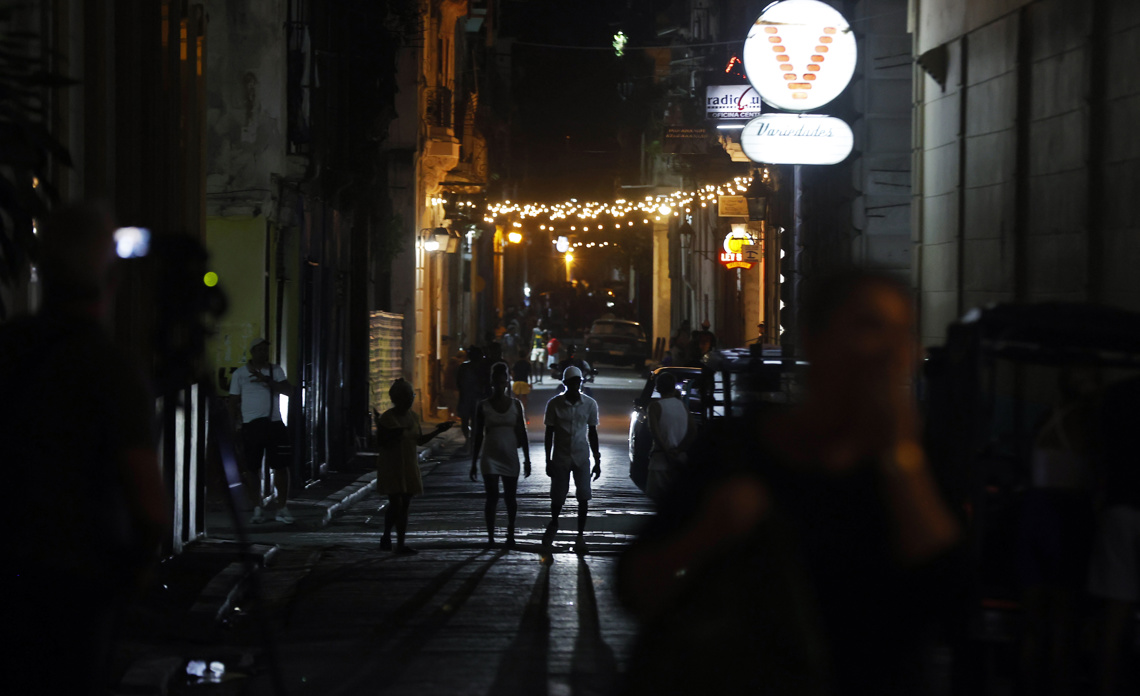
This Saturday, Cuba will face a day of prolonged blackouts on a national scale, with effects that during peak hours could leave more than 52% of the country without electricity service simultaneously, according to estimates from the state Electrical Union (UNE).
According to official data cited by the EFE agency, for the period of highest consumption – between the afternoon and night – the electrical system will have a generation capacity of 1,605 megawatts (MW), compared to a maximum demand estimated at 3,280 MW. This gap translates into a deficit of 1,675 MW, while the expected impact—the energy that will be disconnected to avoid disorderly blackouts—will reach 1,705 MW.
The situation is part of an acute energy crisis that has been going on since the summer of 2024, mainly attributed to two structural factors: the State’s lack of foreign currency to import the necessary fuel and the constant breakdowns of thermoelectric plants, many of them having been in operation for decades.
According to the UNE, six of the 16 operational thermoelectric units are currently out of service due to technical failures or maintenance. This type of generation represents, on average, around 40% of the country’s energy mix.
Added to this is the unavailability of 96 distributed generation plants, paralyzed due to lack of fuel -diesel and fuel oil-, as well as another 15 plants stopped due to a shortage of lubricants.
Independent analysts have pointed out that the crisis in the Cuban electrical system responds to chronic underfinancing of the sector, which has remained under state control since 1959. Various estimates calculate that between 8 billion and 10 billion dollars would be necessary to rehabilitate and modernize the country’s energy infrastructure.
The Cuban Government, for its part, attributes the situation to the impact of US sanctions on the energy industry and denounces what it describes as a policy of “energy asphyxiation” by Washington.
EFE/OnCuba