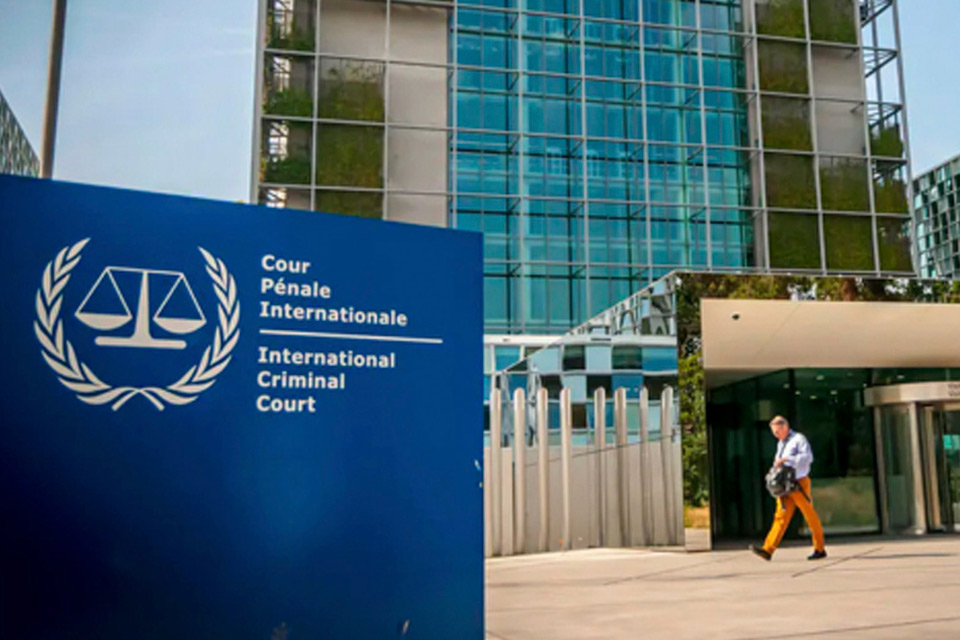
For more than two decades, the court has confronted impunity and shown that, even in the darkest of times, accountability is still possible
Coercion and sanctions against the International Criminal Court (ICC) are “attacks against the very principles of international law,” Annalena Baerbock, president of the UN General Assembly, warned on Tuesday, November 11.
Annalena Baerbock’s statement came as the assembly debated the annual report of the International Criminal Court in light of the sanctions imposed this year by the United States on judges and prosecutors.
The sanctions stem from a February executive order in response to the U.N.-backed court’s issuance of arrest warrants against Israeli Prime Minister Benjamin Netanyahu and then-Defense Minister Yoav Gallant as alleged perpetrators of war crimes in Gaza.
Sanctions may include blocking financial access to property or assets in the United States, as well as a travel ban.
Baerbock recalled that the court was founded on the principle that “justice is a universal duty”, but that its task remains unfulfilled.
“For more than two decades, the court has stood up to impunity and shown that, even in the darkest of times, accountability is still possible,” he said. “However, today, as we witness atrocities that continue to shock the conscience of humanity, it is evident that the tribunal’s mission is far from being fulfilled.”
Deliberate attacks against the Court
Baerbock highlighted the importance of international cooperation for investigations, arrests and the execution of court orders, as well as the need for independence as a guarantee to ensure that crimes are prosecuted under the Rome Statute, the international treaty that founded the Court.
However, he stressed that the Court has not been free from interference.
“Court officials have been sanctioned for upholding the rule of law and demanding accountability, and their systems have been subject to cyberattacks aimed at undermining the Court’s credibility,” Baerbock said.
“These are not isolated incidents, but deliberate attacks against the Court with the aim of weakening the rule of law and eroding trust in international institutions.”
End “bullying”
A resolution presented to the General Assembly stresses that Court officials must be able to carry out their mandate “without intimidation” and “condemns any threat, attack or interference against the Court, its staff or those who cooperate with it.”
The court’s president, Judge Tomoko Akane, told delegates that the court’s rulings remind the international community that justice “transcends borders and interests,” but that when “judges are pressured, threatened or undermined, the credibility of international law itself is weakened.”
“Attacks, threats and coercive measures against the Court and its officials have persisted and continue to represent a serious threat to the Court’s administration of justice and the global fight against impunity,” he added.
Decisions, repairs
Akane described the achievements and challenges facing the Court and called on Member States to defend the international legal system.
He mentioned some key cases before the Court, including those of people accused of serious crimes in Sudan, Afghanistan and Israel, but recalled that arrest warrants can only be executed with the cooperation of States.
In the year to August, more than 18,000 victims have participated in cases before the court.
“The Court gives victims a voice, a space to tell their stories and the hope that the truth will be recognized and accountability established,” Akane said before stressing that reparations are an integral part of the proceedings.
He referred to the Trust Fund for Victims, created by members of the Court, as a tool that has produced tangible results, for example in Uganda, where almost 50,000 victims received financial reparations for war crimes committed against them.
*Read also: Months of repression: Chavismo perfects arrests to neutralize the organization
Venezuela Case
At the International Criminal Court, the investigation is underway into human rights violations and crimes against humanity allegedly committed by officials of the Maduro administration, known as Venezuela I.
In May, the Casla Institute denounced before the Organization of American States (OAS) that state terrorism is being exercised by the Maduro administration and asked the International Criminal Court to take urgent action, such as arrest warrants against those responsible for crimes against humanity registered in the country.
“The International Criminal Court must act urgently, given so many elements presented and accelerate the investigation and issue arrest warrants against those most responsible, even if they occupy positions of power,” said the lawyer.
At that time, the then Secretary General of the OAS, Luis Almagro, declared to NTN24 that the ICC “already has sufficient elements to induce acts of prosecution for the chain of command of the Venezuelan regime” as well as the corresponding arrest warrant “based on these crimes against humanity.”
In September, four Venezuelans went on a hunger strike in The Hague to demand answers in the ongoing investigation into the Venezuela case. The protest was lifted seven days later, after a meeting with officials of the International Criminal Court in which they were informed about the follow-up to the case of political prisoners in the country.
At the meeting they were informed that the ICC Prosecutor’s Office continues to work on the investigation of alleged human rights violations by Nicolás Maduro and his collaborators.
«It was confirmed to us that the Prosecutor’s Office and the ICC continue to advance their investigations. Our legitimate claim was recognized and we will be incorporated into existing channels to guarantee that the voices of all victims are heard,” said Laura Angélica García, one of the strikers.
With information from the United Nations
*Journalism in Venezuela is carried out in a hostile environment for the press with dozens of legal instruments in place to punish the word, especially the laws “against hate”, “against fascism” and “against the blockade.” This content was written taking into consideration the threats and limits that, consequently, have been imposed on the dissemination of information from within the country.
Post Views: 217