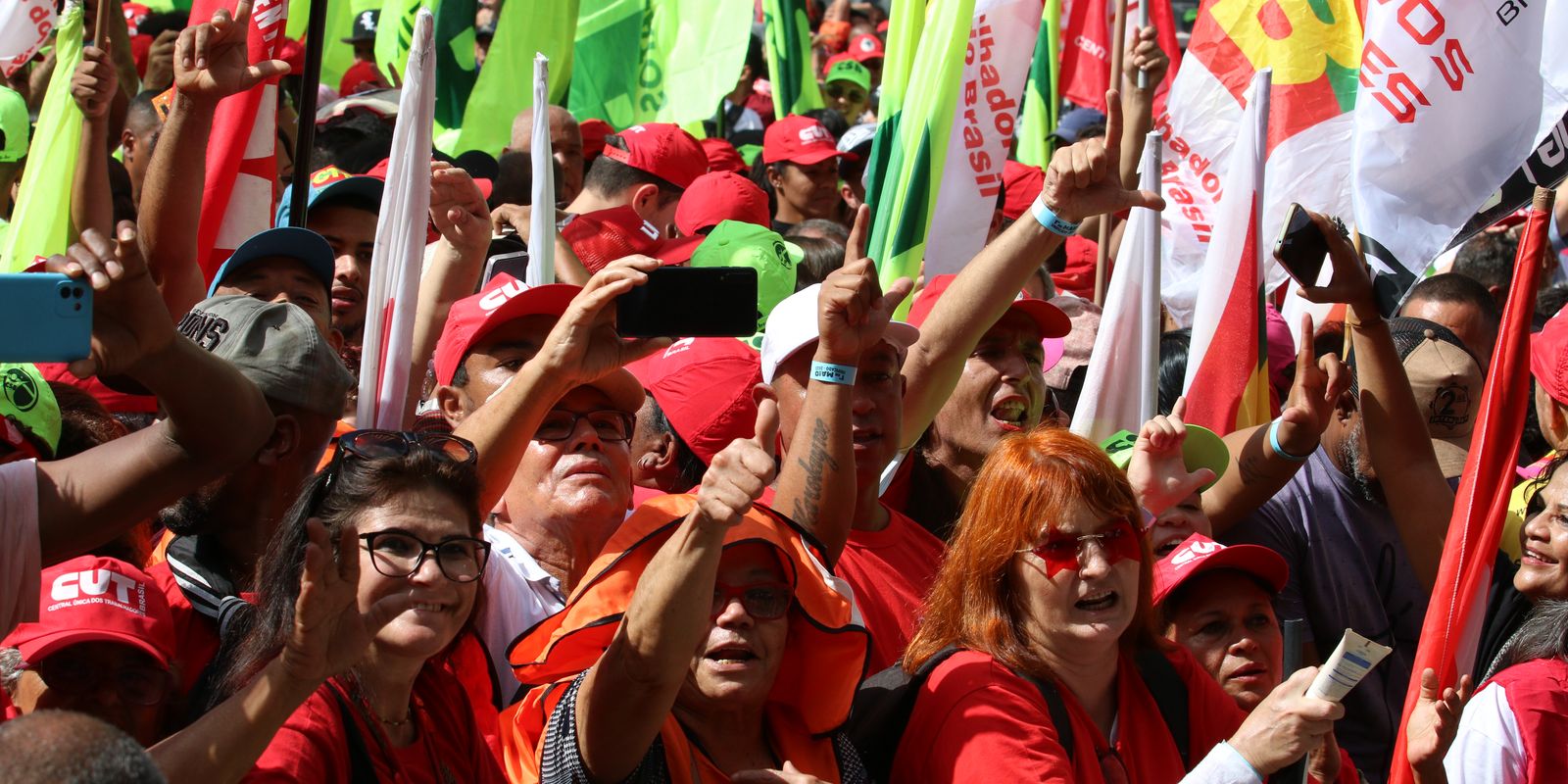
Created in 1936, on the initiative of then president Getúlio Vargas, the Minimum Wage Law turns 90 this Wednesday (14) and its importance for workers is celebrated by trade unions, which point out challenges for the present and future.
“The minimum wage is fundamental because it targets firstly those categories without a minimum salary. Secondly, retirees and pensioners. It ends up being an important instrument of income distribution in our country”, says João Carlos Gonçalves, known as Juruna, general secretary of Força Sindical.
Juruna recalls that the trade unions fought to ensure that the minimum wage adjustment became an instrument of income distribution. “The adjustment was achieved in Congress and, as a result, the minimum wage ended up achieving a real increase, which was cut in governments [Michel] fear and [Jair] Bolsonaro, leaving only the INPC”.
He recalls that the policy of real increase was revived during the government of President Luiz Inácio Lula da Silva. “Now the real marking has returned, a little smaller, which is still important, even if smaller”, he says.
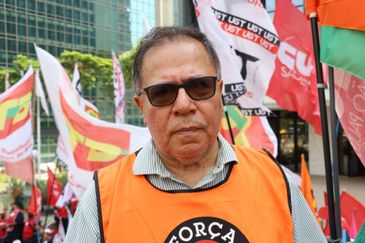
General Secretary of Força Sindical, João Carlos Gonçalves, remembers that the minimum wage is an instrument of income distribution – Photo: Rovena Rosa/Agência Brasil
For Ariovaldo de Camargo, Secretary of Administration and Finance at the Central Única dos Trabalhadores (CUT), the minimum wage “for active workers is a cushion, an important reference, but below what is necessary”.
Camargo argues that there needs to be a “more accelerated” recovery policy and that the real adjustment becomes a State policy and not just a government policy.
“After the 2016 coup [que tirou Dilma Rousseff do poder]when we went six years without having a replacement above inflation, at times even below, it was a discontinued policy, we can say”, he assesses.
According to Ariovaldo, “it is necessary to create a mechanism that is permanent, that is not a government policy, but a State policy, so that we can have a permanent recovery of the minimum wage”.
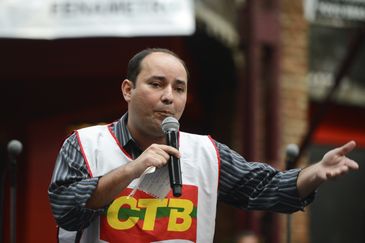
President of the Brazilian Workers’ Central, Ronaldo Leite, says that the minimum wage is a fundamental guarantee for workers – Photo: Tomaz Silva/Agência Brasil
Ronaldo Leite, president of the Central dos Trabalhadores do Brasil, also celebrates the importance of the minimum wage. “It is a fundamental guarantee for workers. The fact of having a constitutional floor guarantees at least the purchasing power of the working class.”
Leite highlights that the Lula government brought back the policy of increasing the minimum wage, which allows adjustments above inflation, but recognizes that there has been a devaluation over the years. “The minimum wage has lost much of its purchasing power compared to when it was established. Dieese calculates that the ideal value would currently be R$7,106.83. The CTB defends the maintenance and expansion of the policy of increasing the minimum wage to guarantee the working class improved living conditions.”
Juruna, from Força Sindical, has a similar thought to Leite. For him, it is necessary to “strengthen salary campaigns, raising floors and helping to increase domestic consumption and increase GDP and the like. Unions and workers have to seek the country’s growth.”