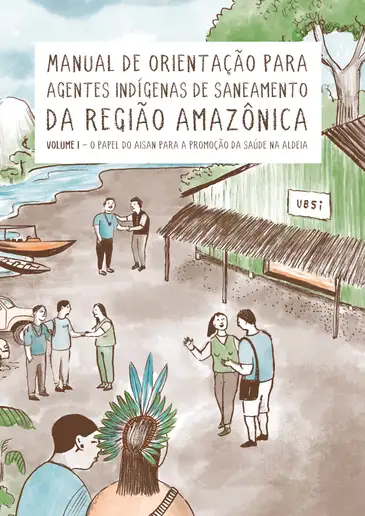
Brasília (DF), 17/02/2025 – UNICEF launches Guidance Manual for Indigenous Sanitation Agents of the Amazon. Photo: UNICEF/Press Release – UNICEF/DISCLOSURE
The United Nations Children’s Fund (UNICEF), in partnership with the Ministry of Health’s Indigenous Health Secretariat (Sesai), launched the Guidance Manual for Indigenous Sanitation Agents of the Amazon Region. The objective is to strengthen actions related to water, sanitation and hygiene in the villages of the Amazon region and provide technical knowledge.

With accessible language and didactic illustrations, the booklet contains guidance on the role of the indigenous agent in the communities of the Amazon region.
According to UNICEF, the initiative of the manual emerged at a crucial moment in indigenous health, when the federal government declared the emergency in public health of national importance in January 2023, in Yanomami territory.
The publication, divided into two volumes, was developed by the UNICEF Sanitation and Hygiene Water, Sanitation and Hygiene Program team, in collaboration with the Indigenous Health and Environmental Projects Department and Strategic Partnership of the Public Prosecutor’s Office (MPT).
Volume I of the manual addresses good practices for water treatment and home -level hygiene measures, explaining essential processes such as water filtering, the correct use of sodium hypochlorite 2.5% and the importance of handwashing for prevention of diseases.
Volume II details the operation of technologies such as filters, chloriners and rainwater capture, including procedures for cleaning water boxes, providing practical information so that agents can promote access to drinking water in their villages.
According to UNICEF, the material may contribute to the reduction of diseases related to inadequate environmental sanitation. Although the content was developed based on the reality of the Brazilian Amazon, it can be adapted to other regions.